



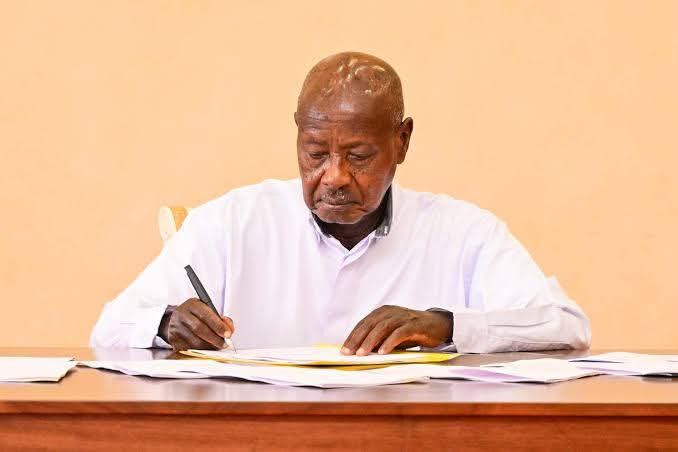
President Yoweri Museveni has signed into law the Uganda Peoples’ Defence Forces (Amendment) Act, 2025, granting military courts the power to try civilians—despite a 2021 Supreme Court ruling that such trials were unconstitutional.
The bill, pushed through Parliament in May by ruling National Resistance Movement (NRM) MPs, was assented to on Monday, according to an announcement made via Parliament’s official X (formerly Twitter) account, accompanied by screenshots of the signed legislation.
The new law introduces sweeping reforms to the military justice system. Notably, Section 117A introduces Schedule B, designating items like ceremonial shoes and pistols as restricted military stores. Section 83 adds Schedule 7A, reinforcing the military’s monopoly over certain weapons.
A key provision establishes a Directorate of Military Prosecutions, to be led by a serving officer of at least colonel rank and legally qualified to serve as a High Court judge. The law also spells out a detailed appeals process—from the Unit Court Martial to the Supreme Court—and requires judicial independence within courts martial.
President Museveni defended the move while addressing residents in Greater Luwero District, praising MPs for “saving the country from embarrassment” and stressing the need to curb armed criminality and the misuse of military equipment.
However, the law has drawn sharp criticism from opposition lawmakers and civil society groups. They accuse the government of sidestepping the Supreme Court’s judgment in Attorney General vs. Hon. Michael Kabaziguruka, which had declared the military trial of civilians unconstitutional.
Opposition MPs have vowed to challenge the legislation in court, citing lack of public consultation and judicial overreach. Civil society activists, many of whom played key roles in the earlier legal battle, warn that the law could erode civil liberties and entrench military influence in Uganda’s justice system.