


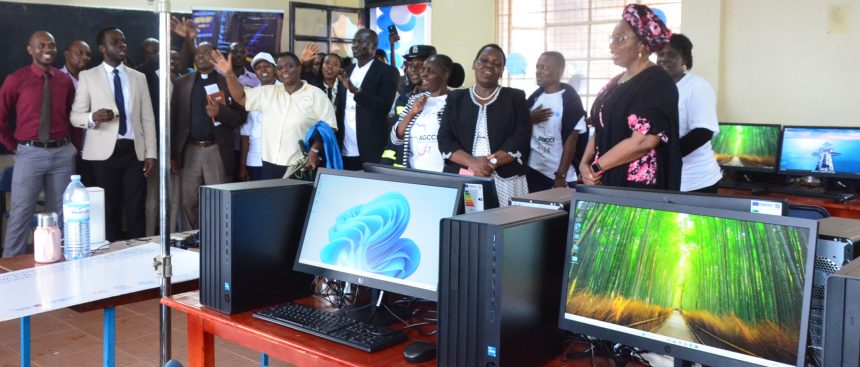
UN Women, in partnership with the African Union Commission (AUC), the International Telecommunication Union (ITU), and the Government of Uganda, has launched a new ICT Hub at Kyebambe Girls’ Secondary School in Fort Portal, marking a strategic investment in digital skills development for young women in the Rwenzori sub-region.
The facility, established under the African Girls Can Code Initiative (AGCCI), is equipped with 60 computers and is designed to function as a training, innovation, and mentorship centre for girls pursuing careers in science, technology, and digital entrepreneurship.
The hub will train students in coding, digital literacy, robotics, and other ICT-related competencies, preparing them for emerging opportunities in Uganda’s growing tech ecosystem.
Speaking during the launch, UN Women Uganda Deputy Country Representative Adekemi Ndieli said the initiative is part of a broader effort to close the gender gap in technology and bridge socioeconomic inequalities.
“Empowering girls with digital skills is critical to achieving gender equality and sustainable development,” she said, noting that similar hubs already established in other regions have enabled girls “who had never used a computer” to advance into areas such as web design and software development.
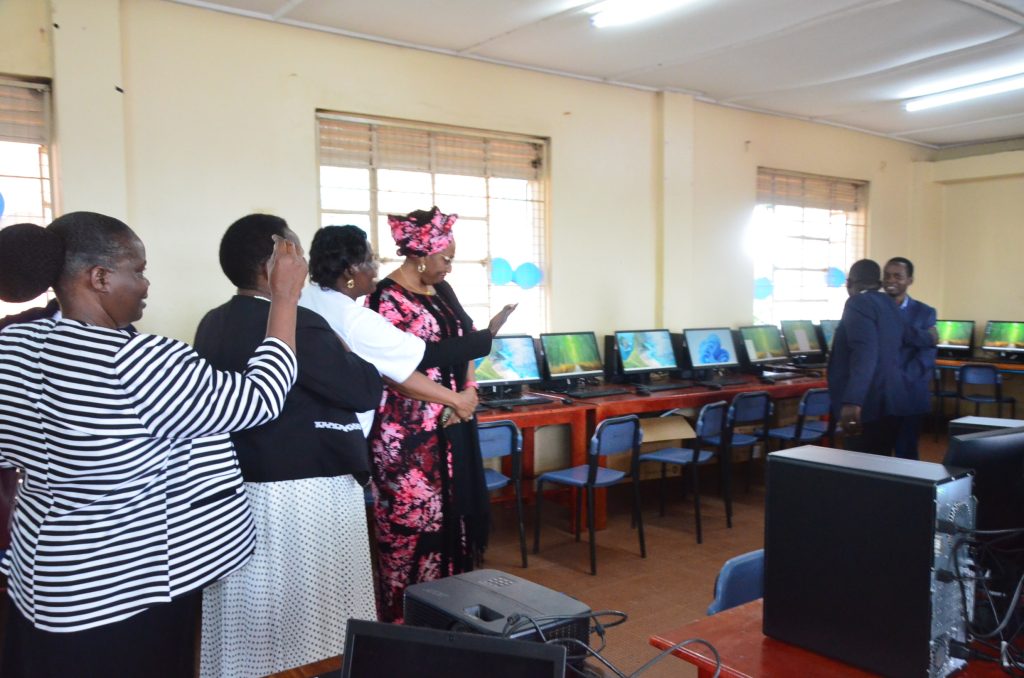
According to Ndieli, the initiative is already influencing career patterns, with vocational and ICT institutions reporting higher female enrollment and communities showing greater acceptance of girls in tech. She added that the ripple effects extend into job creation, with several beneficiaries starting technology-based enterprises.
Ruth Kwesiga Namanya, Head Teacher of Kyebambe Girls, described the hub as a turning point for rural schools that lack modern learning infrastructure. She said bridging ICT literacy gaps will position girls to compete globally and urged students to “guard the skills they acquire as a gateway to future opportunity.”
Representing the Ministry of Education, Juliet Muzora, Commissioner for Government Secondary Schools, said the government welcomes such partnerships, especially as Uganda accelerates its digital transformation agenda.
“The skills gained here could pave the way for future success,” she said, calling on girls in the region to maximise the hub’s resources.
The launch comes at a time when the digital economy is emerging as one of the fastest-growing sectors in Uganda and across Africa, yet women and girls remain underrepresented in STEM careers.
The AGCCI hub is expected to serve as a model for scaling similar initiatives in rural and peri-urban schools, strengthening the talent pipeline for ICT-driven development.