



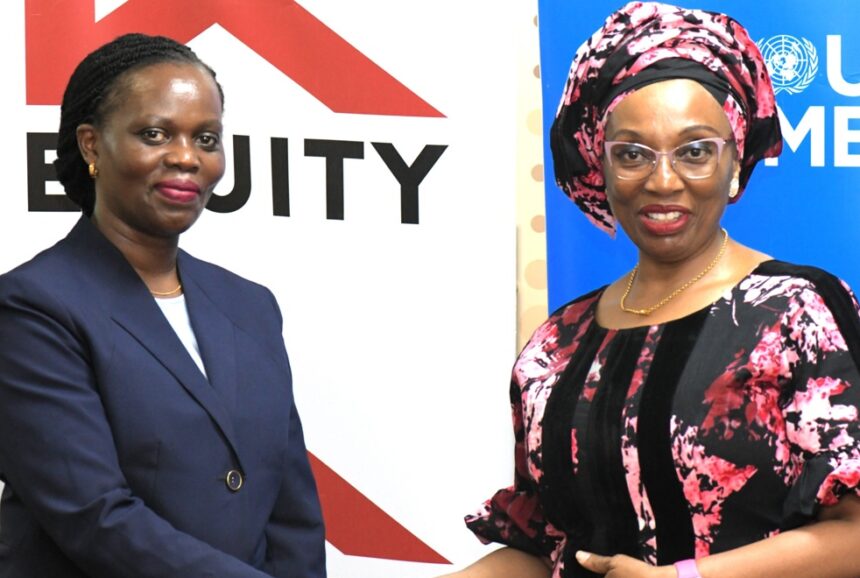
A new partnership between UN Women and Equity Bank Uganda Limited is being positioned as a strategic intervention against structural inequality, a long-standing constraint on women’s economic participation in Uganda.
Speaking at the signing of the Memorandum of Understanding, UN Women Deputy Country Representative Adekemi Ndieli framed the challenge as deeply systemic. She pointed to entrenched gender norms, discriminatory legal frameworks, and unequal access to productive resources as key drivers pushing women into low-income informal work.
This, she noted, not only suppresses earnings but also limits access to formal financial services such as credit, savings, and insurance—critical tools for wealth creation.
The two-year partnership, running through March 2028, signals a shift toward integrated solutions that combine policy advocacy with market-driven approaches.
Under the arrangement, UN Women will provide technical expertise and community mobilization, while Equity Bank will deploy tailored financial products, digital banking solutions, and advisory services. This dual approach reflects growing recognition that financial inclusion is not just about access to banking, but also about capability, trust, and relevance of services.
From a development perspective, the focus on underserved and refugee-hosting communities is particularly significant. These populations often face compounded vulnerabilities, where gender inequality intersects with displacement and limited economic infrastructure. By targeting these groups, the initiative aligns with broader global priorities on inclusive growth and resilience building.
Catherine Psomgen highlighted the private sector’s role in closing inclusion gaps, noting that sustainable impact requires moving beyond traditional banking. Her emphasis on digital literacy and entrepreneurship training highlights a critical evolution in financial inclusion strategies—one that recognizes the importance of skills and market access in addition to capital.
Notably, the program’s ambition to link women-led enterprises to regional markets under the African Continental Free Trade Area introduces a trade dimension to financial empowerment.
If effectively implemented, this could help transition women-owned businesses from subsistence to scale, positioning them as active participants in Africa’s expanding intra-continental trade.
Ultimately, the partnership reflects a broader shift toward collaborative, ecosystem-based solutions. Its success, however, will depend on how effectively structural barriers are addressed alongside financial access.