



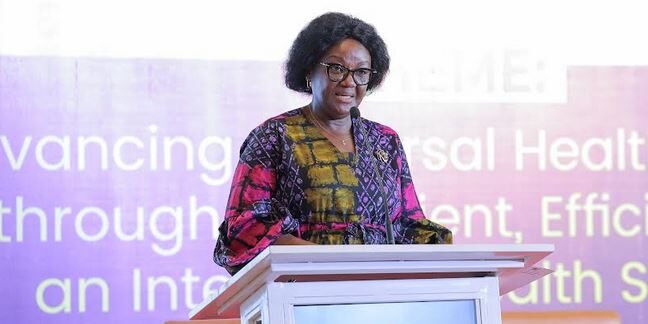
Public health expert and academic Dr. Rhoda Wanyenze has urged Uganda’s health sector to adopt a new leadership model—one that empowers health workers to innovate, learn, and deliver equitable services even in times of crisis.
She made the remarks while delivering her keynote address during the 31st Annual Health Sub-Programme Joint Review Mission that is being held under the theme,” Advancing Universal Health Coverage through resilient, efficient and integrated Health System.
Drawing on a multi-country study conducted during the COVID-19 pandemic across five African nations, Dr. Wanyenze said districts that sustained essential health services despite severe disruption were those where leaders created an environment of openness and collaboration.
“People felt they could voice their opinions… that their views were valued. That excitement encouraged innovations that kept services running,” she said.
She challenged leaders to reflect on whether their teams feel safe enough to speak honestly, report gaps, or propose solutions.
“If you had a challenge in your space, would your team freely tell you? Would you feel safe suggesting a solution?” she asked, emphasizing that creativity dies in spaces where leaders punish or ignore honest feedback.
Dr. Wanyenze stressed the urgent need to build a learning health system—one that consistently documents lessons, applies evidence, and adapts quickly. She questioned whether districts applied COVID-19 lessons when confronted with subsequent outbreaks such as Ebola, or whether the health system continues to repeat avoidable mistakes.
“Do we have learning systems? Do we gather information from our practice? Do we take learning seriously?” she asked.
A central part of her message focused on equity, which she described as an often-missed pillar of resilience. While Uganda regularly assesses health outcomes and quality of care, she said it pays insufficient attention to fairness in resource distribution—including medicines, financing, equipment, and health worker deployment.
“We fail on equity even at the level of processes,” she noted, calling on the sector to embed equity indicators in planning, supervision and evaluation.
On efficiency, Dr. Wanyenze reiterated persistent gaps such as inappropriate clinical procedures, drug misuse, staff absenteeism and fragmented services.
She pushed for “dynamic efficiency” enabled by innovation, technology adoption and a willingness to abandon outdated practices.
“Can we ever have enough money for what we want to do if we don’t change how we work?” she asked, urging teams to embrace integration and eliminate duplication.
As Uganda reforms its health system to deliver more patient-centred, integrated services—and confront challenges such as non-communicable diseases, financing pressures and climate-related health threats—Dr. Wanyenze said leadership will determine the country’s success.
“Innovation, creativity, efficiency and equity must be at the centre of our leadership,” she emphasized.