



By Amina Toure
For decades, debates about Africa’s position in the global economy have revolved around identifying the external power responsible for its recurring crises. At one point, blame was directed at Western governments and institutions. Today, scrutiny has shifted toward China. Tomorrow, it may focus on another emerging power.
While these conversations are not without merit, they often miss a more fundamental issue.
The central question is not which external actor approaches Africa with investment, loans, or trade offers. The deeper question is why African states so seldom possess the leverage to decline those offers.
In international politics, the power to say “no” is rooted in structural strength. Countries can reject unfavorable deals when they have alternatives, sufficient time, and enough internal stability to withstand the consequences of delay. Where foreign exchange reserves are thin, public budgets constrained, infrastructure deficits urgent, and political cycles short, refusal becomes economically and politically dangerous.
As a result, many negotiations begin with an inherent imbalance. What appears, on paper, to be a competitive choice among partners often amounts, in practice, to choosing between accepting imperfect terms immediately or confronting fiscal strain, investor anxiety, or domestic instability.
In such circumstances, agreements are driven less by strategic, long-term development planning and more by immediate survival needs.
This is not necessarily because African policymakers fail to recognize these structural constraints. Rather, they operate within them—and, in some cases, normalize them.
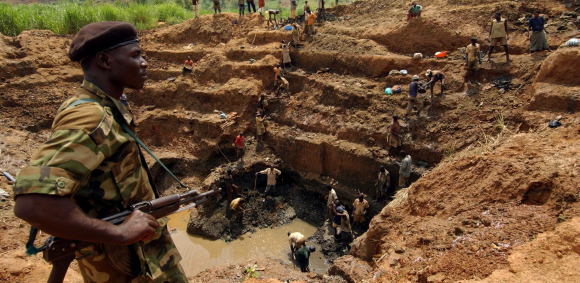
The rise of multipolarity is frequently portrayed as a solution. The logic suggests that with more global actors competing for influence, Africa’s bargaining power will improve. Yet additional partners do little to alter outcomes when underlying economic structures remain unchanged: exporting raw materials, importing finished goods, and retaining limited domestic value.
Without deeper industrial capacity and stronger institutions, diversification of partners risks becoming diversification of dependency.
The ability to refuse unfavorable terms ultimately depends on optionality. Optionality arises from productive capacity—being able to process, store, transform, and finance domestically—and from institutions resilient enough to permit governments to renegotiate or walk away without triggering crisis.
Until these structural foundations are strengthened, the identity of Africa’s partners will matter less than assumed. As long as refusal carries high economic cost, patterns of exploitation will persist—shifting in form, but not in substance.
The Author is Researcher in African Studies | MPhil Student at the University of Cambridge