



Global crude oil prices have surged by approximately 22%, with benchmark prices climbing to around $111 per barrel, marking one of the sharpest single-session increases in years and raising concerns about inflation and energy security worldwide.
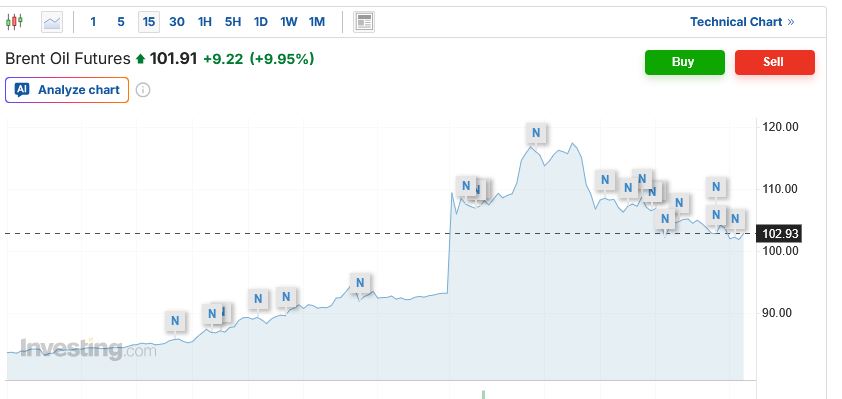
The sudden rally in oil prices is largely being driven by escalating geopolitical tensions in the Middle East, particularly the expanding conflict involving Iran, which has disrupted key oil supply routes and heightened fears of a prolonged supply shock in global energy markets.
During early trading on Monday, both major benchmarks — Brent crude and West Texas Intermediate (WTI) — recorded sharp gains. Brent crude briefly rose above $111 per barrel while WTI also surged past the $106 mark, with intraday spikes approaching the same $111 level.
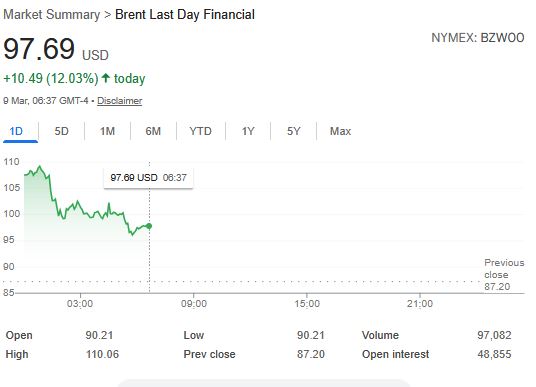
Analysts attribute the surge to growing concerns over disruptions in the Strait of Hormuz, a critical shipping corridor through which roughly one-fifth of the world’s oil supply passes. Heightened military activity and attacks on energy infrastructure have forced some producers to cut output and raised fears of tighter global supply.
The sharp price movement represents the largest oil market shock since the global energy crisis that followed the Russia-Ukraine conflict in 2022. Traders are now pricing in a significant geopolitical risk premium as uncertainty continues to dominate global commodity markets.
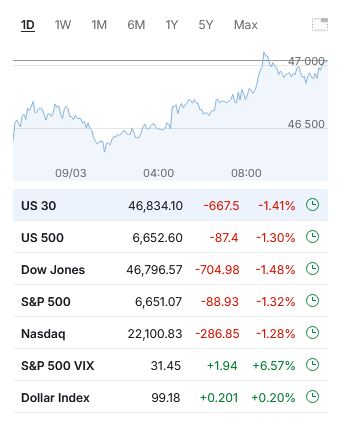
Financial markets have reacted swiftly. Global stock markets declined in several regions while energy companies and oil producers saw their shares rise on expectations of stronger revenues from higher crude prices.
For oil-importing economies, particularly in Africa and emerging markets, the surge could translate into higher fuel costs, rising transport expenses, and renewed inflationary pressure. Countries heavily dependent on imported petroleum products may face increased subsidy burdens and currency pressures if elevated prices persist.
Energy analysts warn that crude prices could climb further if the conflict intensifies or if supply disruptions in the Gulf region worsen. Some forecasts suggest oil could test levels above $120 per barrel in the coming weeks should geopolitical tensions remain unresolved.
For now, the global oil market remains on edge, with traders closely monitoring geopolitical developments that could determine the next direction of energy prices.