




Teen media entrepreneur Martin Luther Nyanzi has taken an unusual step for someone his age—petitioning Parliament of Uganda to introduce a law that would allow government funding for community-based organisations and local NGOs.
The 16-year-old student of Kisozi High School argues that grassroots organisations are a vital extension of government, especially in sectors like education, healthcare, youth empowerment and community development.
In his petition, Nyanzi calls for a structured legal framework that would enable Parliament to channel financial support directly to registered community organisations, helping them sustain their operations over the long term.
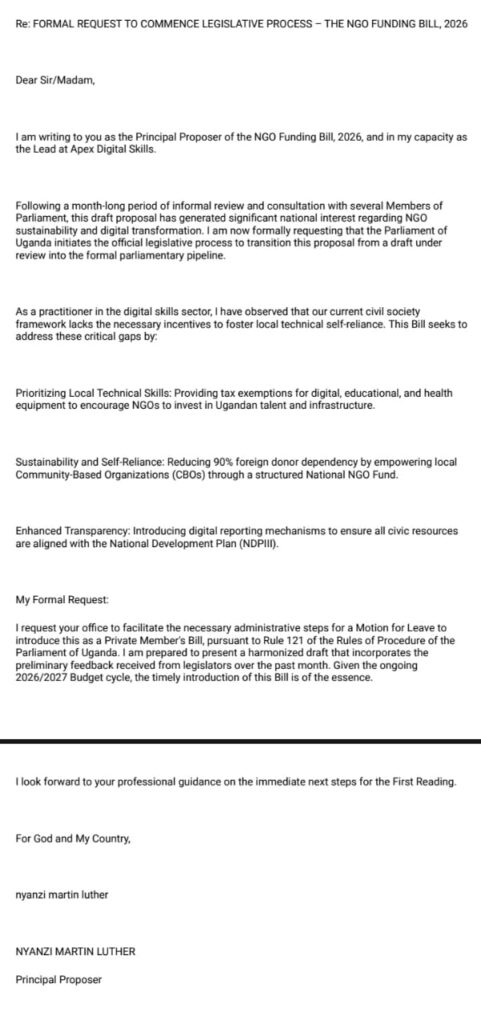
His proposal comes at a time when many NGOs are grappling with shrinking external funding. Nyanzi points to the suspension of the Democratic Governance Facility and reduced assistance from the United States Agency for International Development as major blows to grassroots initiatives. According to him, the funding gap has forced several organisations to scale down their activities or shut altogether.
“The absence of stable funding has left many organisations struggling, yet they provide essential services to vulnerable communities,” he notes in the petition.
To build momentum around the idea, Nyanzi has already engaged key lawmakers. He recently held discussions with Deputy Speaker Thomas Tayebwa and secured support from Elias Luyimbazi Nalukoola, who has indicated willingness to table the proposal as a Private Member’s Bill. Nalukoola, however, cautions that any new funding framework must align with existing NGO regulations.
Beyond policy advocacy, Nyanzi is also carving out a name in Uganda’s digital media space. He founded Block FM at just 13, creating a platform for young voices, and now serves as CEO of APEX Media Services, a company focused on digital content production and youth skills development. He also heads The Block Foundation, which provides free digital literacy training.
His petition is already drawing attention as a rare example of youth participation in shaping national policy, and could spark wider debate on how Uganda supports community-driven development initiatives.