



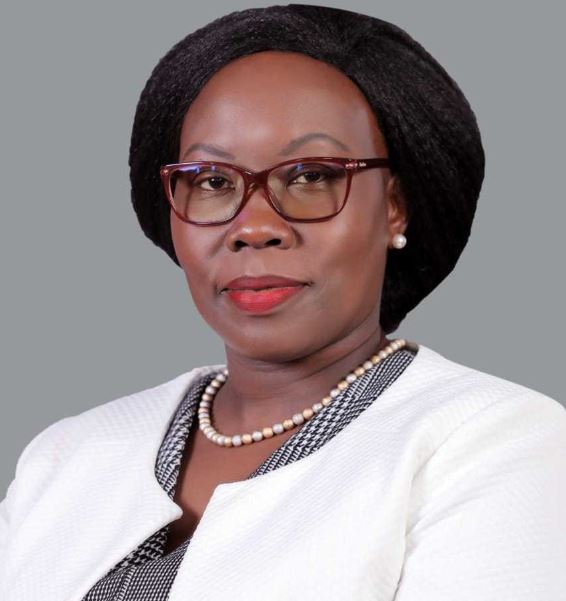
Capital Markets Authority Chief Executive Officer Josephine Okui Ossiya is calling for a nationwide shift in mindset and financial literacy to drive greater Ugandan participation in capital markets, arguing that billions in local savings remain underutilised despite growing economic opportunities.
Speaking in an interview, Okui said Uganda must break the long-standing perception that investing in stocks and capital markets is reserved for the elite, stressing that wealth creation depends more on financial discipline than income levels.
“There is this belief that capital markets are for a certain class of people, but that is not true. It’s about how disciplined you are to save and invest, regardless of how much you earn,” she said.
Her remarks come as Uganda seeks to deepen financial inclusion and mobilise domestic capital to fund development, amid rising concerns over reliance on external borrowing.
Okui pointed to regional contrasts, noting that in neighbouring Kenya, ordinary citizens actively participate in shareholder meetings and equity markets, a culture she believes Uganda must emulate to broaden its investor base.
At the core of her message is the need to prioritise financial literacy, particularly among young people, as a foundation for long-term wealth creation. While financial inclusion efforts have expanded access to banking services, she warned that inclusion without education risks limiting impact.
“Financial inclusion without financial literacy is not enough. People need to understand how to manage money, how to save, and how to invest if we are to build a strong investment culture,” she said.
Uganda already holds significant domestic savings, particularly within pension funds, which she estimates at approximately UGX 41 trillion. However, much of this capital remains concentrated in government securities and limited equity investments, highlighting untapped potential within the broader capital markets ecosystem.
She also highlighted the rapid growth of collective investment schemes as evidence that awareness and education can unlock new investment flows, noting that increased participation has already driven capital mobilisation within the sector.
Beyond domestic investors, Okui said Uganda has yet to fully tap into its diaspora, which could provide an additional pool of capital to finance infrastructure and development projects locally.
Her comments also signal a broader policy conversation around reducing dependence on costly external debt. Uganda has frequently turned to international lenders, including commercial institutions such as Citibank, to finance development, but Okui argues that a well-informed and engaged domestic investor base could offer a more sustainable and potentially cheaper alternative.
“If people understood how capital markets work and the benefits they offer, we could mobilise significant resources locally instead of relying heavily on expensive borrowing,” she said.
The CMA is now expected to intensify efforts around investor education and awareness, with a focus on building a savings culture that can channel domestic capital into productive investments.
For Uganda’s economy, the push represents a strategic shift toward leveraging internal financial resources to support national development, strengthen capital markets and expand opportunities for wealth creation among ordinary citizens.