



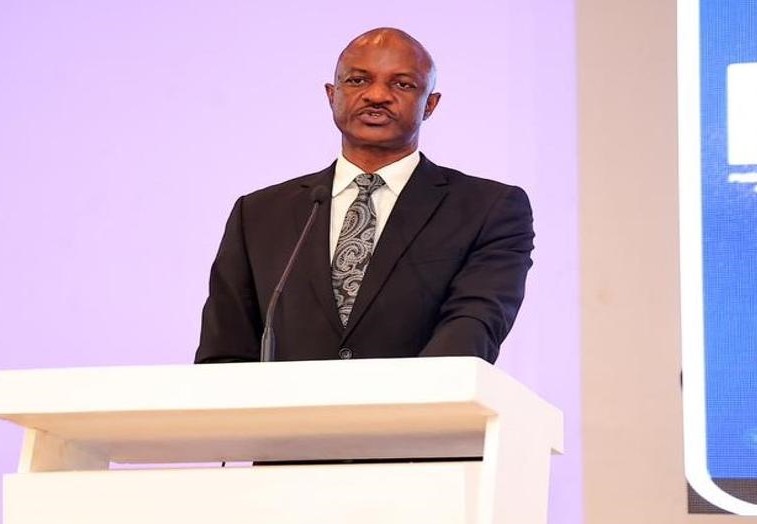
Uganda’s Permanent Secretary and Secretary to the Treasury, Ramathan Ggoobi, has issued one of the strongest warnings yet to public procurement officers, blaming corruption, delays, and bureaucratic inefficiency for slowing Uganda’s economic transformation.
Speaking at the Public Procurement Cadre Forum organised by the Public Procurement and Disposal of Public Assets Authority at Speke Resort Munyonyo, Ggoobi revealed that Uganda is now ranked the second worst country globally in delayed government projects — a crisis he said threatens the country’s ambition of growing the economy tenfold.
“We are now the second worst in the world in delayed projects,” Ggoobi said, citing remarks made to him by the World Bank during a recent trip to Washington. “This is not the spirit of tenfold growth.”
The Treasury chief said procurement officers must stop treating procurement as a routine compliance exercise and instead see it as the engine that drives Uganda’s roads, hospitals, energy projects, industrial parks, oil and gas investments, and job creation agenda.
“Procurement is development execution,” he declared. “Every delayed procurement is a delayed road, a delayed hospital, a delayed factory, and a delayed job.”
Ggoobi sharply criticised prolonged procurement timelines, weak contract management, endless committees, and escalating project costs, saying government can no longer tolerate a system that slows service delivery and wastes taxpayers’ money.
“We agree a building should cost a certain amount, then within no time someone writes asking for more money,” he said. “Is that how we do our own things? Why do we do them in government?”
He also accused non-professionals of infiltrating the procurement sector, arguing that too many middlemen and committees have crippled accountability and efficiency.
“Procurement is the only profession littered with people who are not procurement professionals,” he said. “Those committees where people sit endlessly just to procure meetings are going away.”
The PSST warned that government is preparing sweeping reforms that will eliminate unnecessary bureaucracy, simplify procurement processes, strengthen project oversight, and fully roll out the electronic government procurement system by July.
“Everybody should procure on the system. Failure to do so, somebody should not have a job,” he warned.
Ggoobi said Uganda’s economic ambitions will only be achieved if procurement officers become faster, more professional, and corruption-free.
“The people have lost confidence in us because of these simple things which we keep massaging around instead of solving,” he said. “You are either implementing Uganda’s transformation, or delaying it.”