



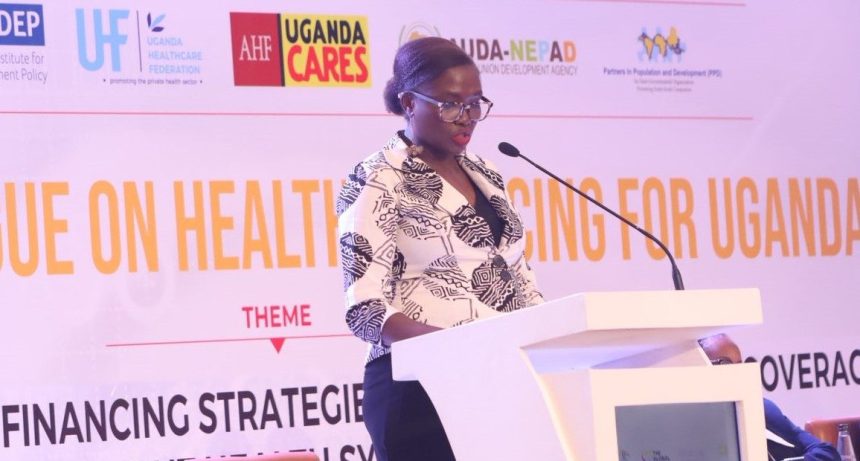
Stakeholders at Uganda’s National Dialogue on Health Financing have issued a strong call for increased funding, stronger accountability, and local pharmaceutical production to address the country’s healthcare challenges.
The meeting, which brought together government ministries, Members of Parliament, civil society organizations, and private sector leaders, highlighted critical gaps in Uganda’s health sector and proposed actionable solutions.
Key concerns included the high cost of HIV treatment—nearly 1 trillion shillings annually for 1.5 million patients—and the need for sustainable funding solutions.
Delegates emphasized the staggering cost of HIV treatment, which consumes nearly 1 trillion shillings annually for 1.5 million patients on antiretroviral therapy. With Uganda’s total health budget at just under 3 trillion shillings, experts warned that without additional funding, new HIV infections could rise to 1.6 million by 2050. Comparisons with other African nations revealed that East and Central Africa allocate less than 2.5% of GDP to health—far below global recommendations.
To bridge the funding gap, participants recommended debt-to-health swaps, citing successful examples in Germany, Australia, and Ethiopia. Another key proposal was the introduction of “sin taxes” on alcohol, tobacco, and sugary drinks, which could generate 1-3% of GDP for healthcare. The long-delayed National Health Insurance Scheme (NHIS) was also a major focus, with calls for subsidies to ensure affordability for low-income Ugandans.
Corruption remains a major drain on resources, with an estimated 0.5 billion shillings lost annually to graft, while absenteeism costs the health sector495 billion shillings. Delegates demanded stricter financial oversight, digitized tracking systems, and punitive measures to curb misuse of funds.
Despite Uganda’s capacity to manufacture HIV drugs, locally produced medications remain more expensive than imports. To address this, stakeholders urged the government to develop a pharmaceutical-specific strategy,streamline regulations, and offer incentives to make domestic production competitive.
Speakers stressed that political commitment—like that seen in Botswana and South Africa, which fund most of their HIV programs domestically—is essential for progress. MPs pledged to prioritize health as an economic driver, while civil society groups vowed to push for NHIS implementation. Additionally, delegates highlighted the need for better data systems and AI-driven solutions to improve efficiency and transparency.
The Director General of Health Services, Dr.Charles Olaro, announced plans for a follow-up dialogue in 2026 to assess progress. With Uganda’s debt repayments consuming 30-50% of the national budget, innovative financing and regional partnerships will be crucial for sustainable healthcare improvements.
As one delegate noted, “Repetition is how we learn—but action is how we change.” The challenge now is turning these recommendations into tangible reforms for Uganda’s health system.