



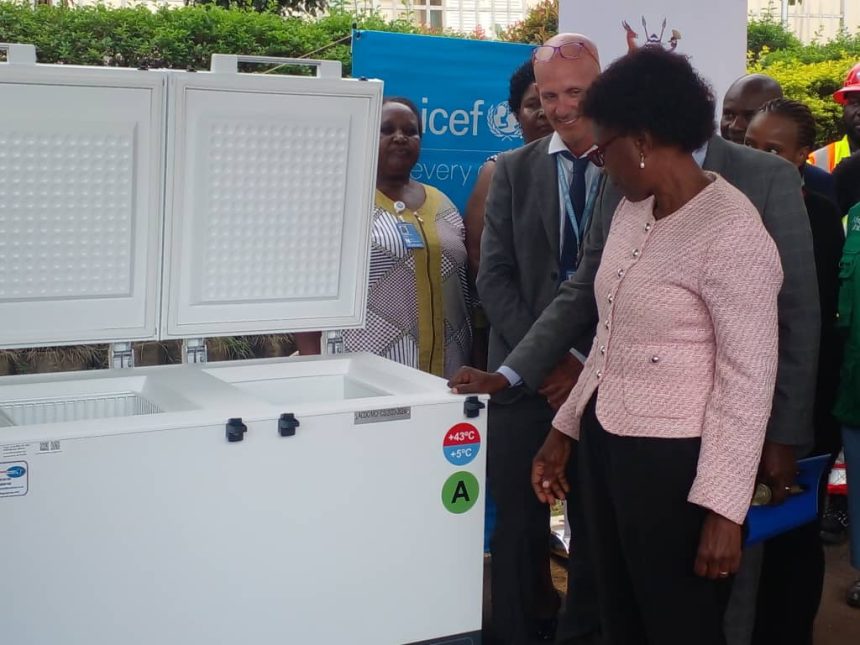
Uganda’s Ministry of Health has launched the nationwide distribution and installation of 500 solar direct-drive vaccine refrigerators, a strategic move aimed at strengthening the country’s cold chain infrastructure and ensuring uninterrupted immunization services, especially in hard-to-reach and off-grid areas.
The initiative, funded by the Africa Centres for Disease Control and Prevention (Africa CDC) with support from the Mastercard Foundation, was officially flagged off by Minister of Health Dr. Jane Ruth Aceng and Africa CDC’s Regional Director for Eastern Africa, Dr. Mazyanga Lucy.
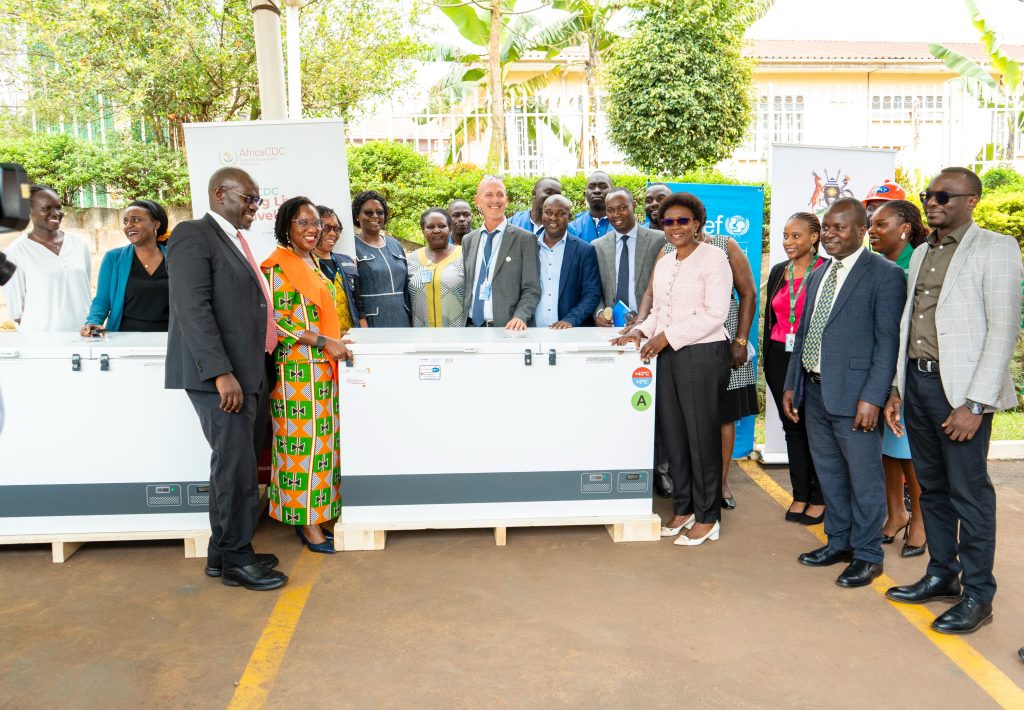
“This represents a significant boost in our immunization infrastructure and will address critical gaps in vaccine storage capacity,”
Dr. Aceng said during the launch event in Kampala. “These refrigerators, powered by Uganda’s abundant solar energy, will ensure continuous cold storage and reduce vaccine wastage while maintaining quality and potency.”
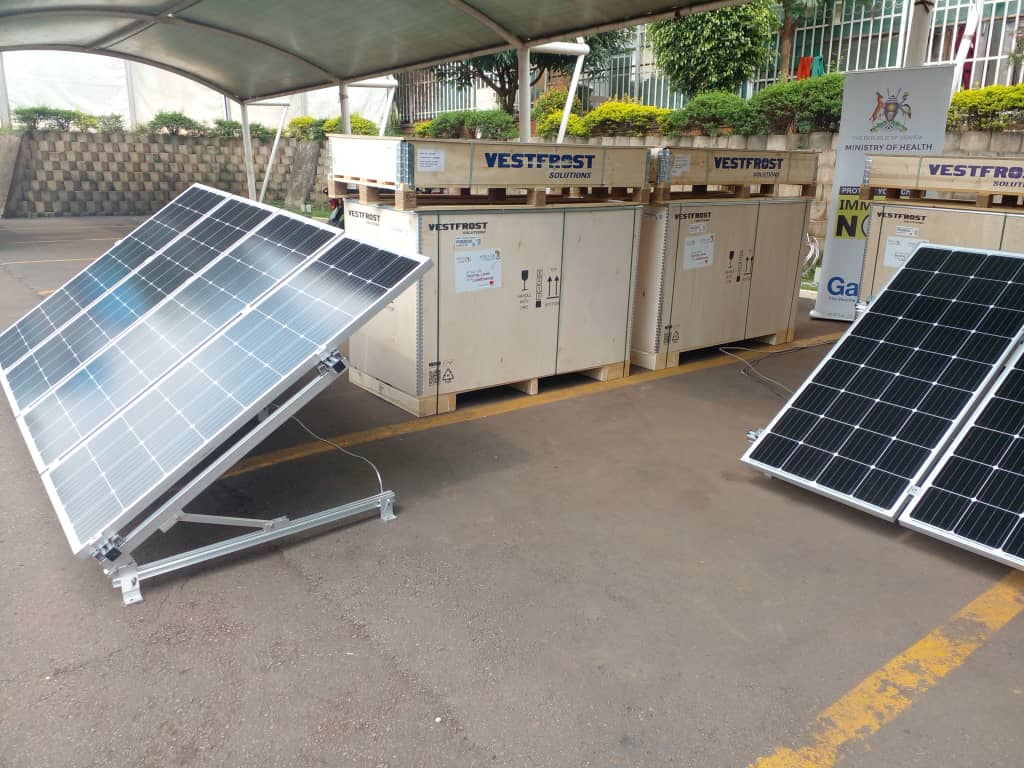
In addition to the 500 fridges, 1,746 remote temperature monitoring devices will be deployed to enable real-time oversight of cold chain performance across the country. This comes on the heels of an earlier contribution in November 2023, when Africa CDC and Mastercard Foundation supported Uganda with 38 fridges, 72 cold boxes, and over 4,200 vaccine carriers.
Installation and commissioning of the new equipment are expected to take two months, with technical support from UNICEF. The equipment will be installed in selected health facilities and district vaccine stores, many of which previously lacked adequate infrastructure due to power challenges.
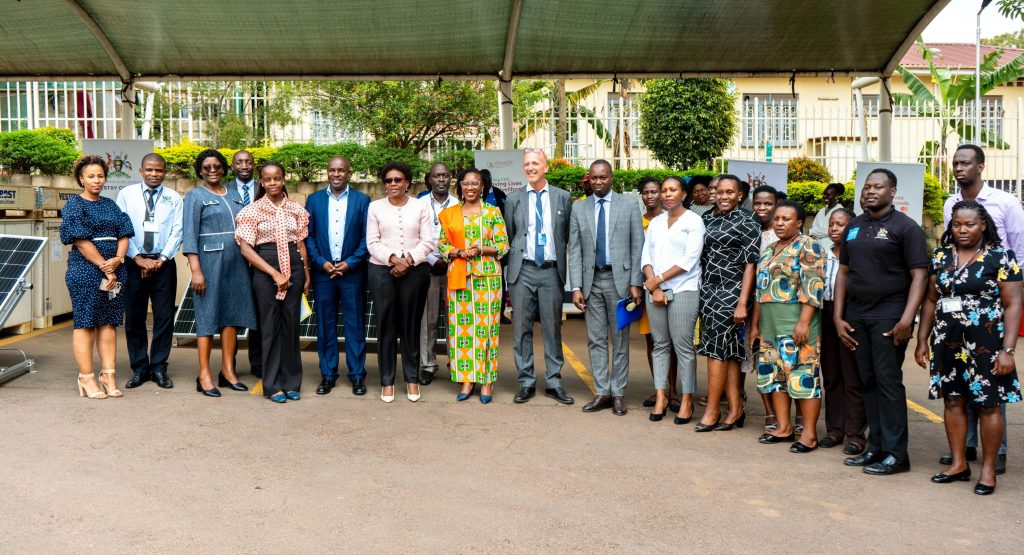
Dr. Mazyanga Lucy emphasized that the cold chain system is “an unsung hero in public health,” often overlooked yet essential for preserving the effectiveness of vaccines. She recounted a case from Zambia where compromised refrigeration led to a measles outbreak despite prior immunization, underscoring the life-saving value of a functional cold chain.
Beyond equipment delivery, Africa CDC’s partnership with Uganda includes broader health systems strengthening — such as training hundreds of health workers in outbreak response, installing genomic sequencing equipment, and integrating COVID-19 management into routine immunization programs.
“Our partnerships are the engine of this success,” Dr. Mazyanga added, acknowledging collaborators including WHO, UNICEF, PATH, the Clinton Health Access Initiative (CHAI), and the Uganda National Expanded Program on Immunization (UNEPI).
As Uganda’s population grows by an estimated 1.5 million babies annually, the demand for reliable vaccine storage and delivery systems intensifies. Dr. Aceng concluded with a call for continued investment in infrastructure, supplies, and the health workforce, stating, “To protect every child, we need a cold chain system that works — not only for routine vaccines but also during outbreaks.”
The rollout of this equipment is not just a logistics operation, but a powerful advocacy message: No child in Uganda should be left unprotected due to cold chain failure.