



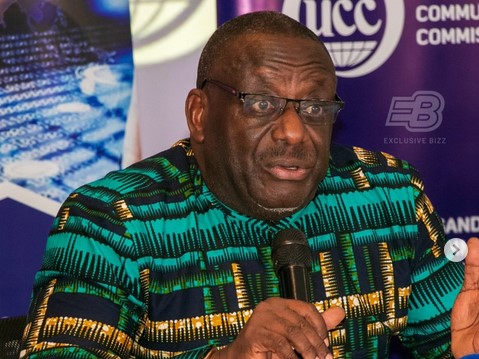
When Uganda’s internet flickered back to life at midnight on January 18, 2026, the announcement from Uganda Communications Commission (UCC) Executive Director Nyombi Thembo was framed as a reassurance.
The shutdown, he said, had been “necessary and proportionate,” taken on the strong recommendation of the Interagency Security Committee to protect public order during the general elections.
But behind the language of balance, responsibility, and national security lies a deeper and more troubling set of questions about digital rights, state surveillance, and the growing normalization of internet disruptions as a political tool.
For four days, more than 20 million Ugandans were cut off from full internet access at the height of the electoral process. According to UCC, this was done to curb misinformation, prevent electoral fraud, and stop incitement to violence. While general web access has now been restored, social media platforms and messaging applications remain restricted, effectively limiting political discourse, citizen journalism, and real-time scrutiny of the electoral outcome.
Security Versus Rights
Thembo repeatedly emphasized that Ugandans are, under the law, “consumers,” while government views them as “citizens or voters.” This framing is telling. It highlights the tension between the state’s regulatory authority and the constitutional rights of citizens to access information, express themselves, and participate freely in democratic processes.
UCC insists the suspension was not taken lightly. Yet, no public evidence has been presented detailing specific threats that justified a nationwide shutdown rather than targeted interventions. Civil society groups have long argued that blanket internet restrictions punish millions of lawful users for the potential actions of a few, disrupting businesses, education, healthcare services, and financial transactions.
Indeed, while UCC says essential services were restored, the continued blocking of social media undermines sectors that increasingly rely on platforms like WhatsApp, X, Facebook, and TikTok for marketing, customer service, news distribution, and emergency communication.
The VPN Warning: A Line Crossed?
Perhaps the most alarming element of Thembo’s remarks was her warning to citizens attempting to bypass restrictions using Virtual Private Networks (VPNs). She stated that UCC now has “reasonable capabilities” to identify users who bypass controls to “break the law,” adding that authorities could “attack your device directly” and potentially bar it from accessing networks again.
This raises profound concerns. Uganda’s legal framework does not clearly spell out the extent to which regulators can monitor individual devices, nor the safeguards in place to prevent abuse. Cybersecurity experts warn that such statements suggest expanded surveillance capabilities without transparent oversight, judicial warrants, or independent accountability mechanisms.
The threat to “attack” devices also introduces ambiguity. Does this mean blocking SIM cards, blacklisting devices, deep packet inspection, or active cyber countermeasures? UCC did not clarify. In a digital economy already struggling with trust deficits, such uncertainty can have chilling effects on innovation, journalism, and civic engagement.
Selective Freedom in the Digital Space
Thembo acknowledged that social media serves the “three Es” of enterprise, entertainment, and empowerment. Yet, by keeping OTT platforms restricted even after restoring general internet access, UCC effectively concedes that empowerment is conditional and revocable.
The commission’s insistence that citizens should “do your normal things” online, as long as they do not “break the law,” overlooks a critical reality: during elections, social media is not merely recreational. It is a central arena for political participation, accountability, and transparency. Restricting it after voting but before full resolution of electoral disputes risks shaping narratives and limiting public scrutiny.
A Pattern,Not An Exception
Uganda’s 2026 shutdown fits into a broader continental and global trend where governments increasingly justify internet disruptions on grounds of security and stability. However, repeated use of such measures risks turning extraordinary actions into routine governance tools.
The UCC praised the “largely peaceful” conduct of the elections as evidence of institutional strength. Critics argue the opposite: that reliance on shutdowns reflects a lack of confidence in institutions’ ability to manage dissent through lawful, open means.
As Uganda moves beyond the election period, several questions remain unresolved in regard to what specific intelligence justified a nationwide shutdown, who determines when misinformation reaches a threshold warranting such drastic action, what legal protections exist for citizens against unlawful surveillance or device-level sanctions and when will social media restrictions be fully lifted, and under what criteria?
The restoration of internet access is undoubtedly a relief for millions of Ugandans. But the episode has exposed the fragile state of digital freedoms and the expanding scope of regulatory power. As the country embraces connectivity once again, the challenge is not only responsible internet use by citizens, but responsible restraint by the state.
In a democracy, stability should be reinforced by trust, transparency, and rights, not prolonged restrictions and warnings of invisible digital reprisals. The real test for Uganda’s institutions now lies not in how effectively they can switch the internet off, but in how confidently they can keep it on.