



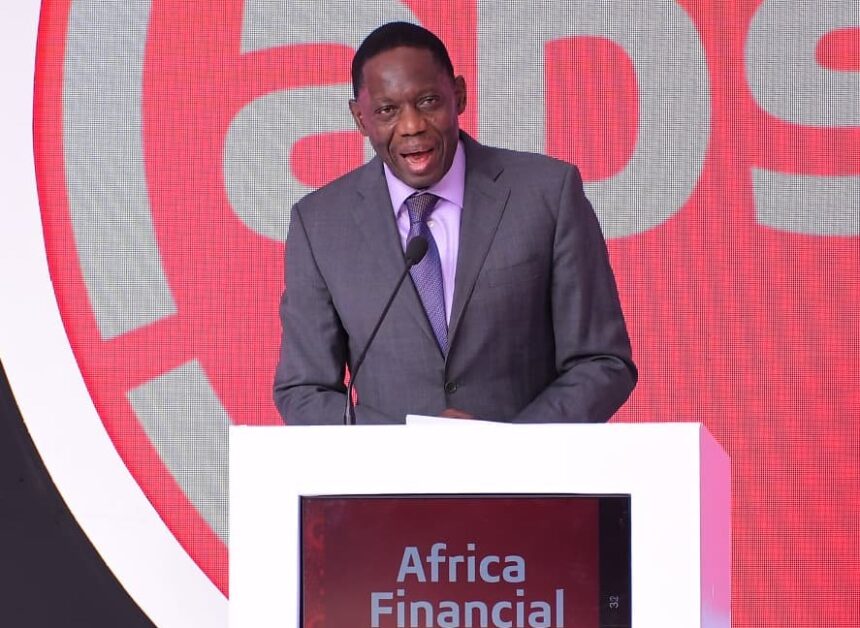
Uganda has consolidated its position as one of Africa’s most improved financial markets, rising to third place on the Africa Financial Markets Index (AFMI), as global economic uncertainty continues to test emerging and frontier economies.
Speaking at the Absa Africa Financial Markets Index & Economic Outlook Forum, Bank of Uganda (BoU) Governor Michael Atingi-Ego said the current global environment is markedly different from that of just a few years ago, citing persistent monetary tightening in advanced economies and rising geopolitical fragmentation as major headwinds.
“The global economic environment today bears little resemblance to what we knew just a few years ago,” Atingi-Ego told participants, noting that these pressures have tightened global liquidity and increased vulnerability for smaller and less diversified markets.
Against this backdrop, Uganda’s performance in the 9th edition of the AFMI stood out. The country scored 66 points, ranking third on the continent behind South Africa and Mauritius. This marks a significant improvement from 10th place in 2018, underscoring what the Governor described as sustained reform momentum and policy discipline.
The AFMI, produced by the Official Monetary and Financial Institutions Forum (OMFIF) in partnership with Absa Group, assesses countries across pillars including market depth, access to foreign exchange, transparency, legal frameworks and macroeconomic opportunity.
“Our biggest constraint today is not regulatory sophistication, it is capital mobilization and market depth,” Atingi-Ego said, pointing to the next phase of reforms Uganda must confront.
He outlined the central bank’s 2022–2027 strategic targets, which include achieving a financial inclusion index of 75% and an e-payments index of 46%, alongside continued development of domestic financial markets. According to the Governor, some of these market development targets have already been surpassed.
Recent gains, he added, have been driven by reforms in core market infrastructure, including the deepening of REPO and money markets. These advances, he said, reflect coordinated efforts across government, regulators, Parliament and private market participants.
However, challenges remain. Atingi-Ego identified pension fund development as Uganda’s most underdeveloped pillar, warning that existing market infrastructure is still underutilized.
Mobilising more long-term domestic capital, he said, will be critical if Uganda is to fully unlock its financial market potential and sustain resilience in an increasingly volatile global economy.