



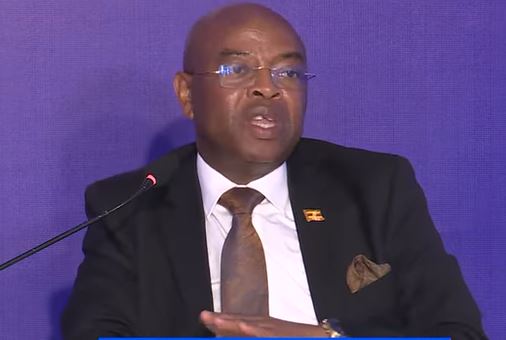
Prof. Augustus Nuwagaba, Deputy Governor of the Bank of Uganda, has said Uganda’s economy is at a critical turning point, backed by strong growth, low inflation and a stable financial system.
Speaking as a panelist at the Stanbic Economic Forum 2026 under the theme “Uganda’s Inflection Point: Competing in a Reconfigured Global Economy,” Nuwagaba said the central bank remains focused on its mandate “to promote price stability and a sound financial system in support of socio-economic transformation in Uganda.”
He noted that this mandate is closely aligned with the country’s development agenda under the fourth National Development Plan (NDP-IV), particularly the priority growth areas of Agro-industrialization, Tourism Development, Mineral-based Industrial Development, and Science, Technology and Innovation.
“Uganda’s economy is stable, resilient and continues to post strong growth,” Nuwagaba said, adding that GDP growth has averaged 6.4 percent over the past three years, supported by stable prices. He described the current phase as an inflection point that will be further strengthened by the onset of commercial oil and gas production.
Inflation has remained below the medium-term target of 5 percent, averaging 3.5 percent headline and 3.8 percent core in the 12 months to January 2026. “These outcomes reflect the robust tools and appropriate monetary policy actions deployed by the Bank of Uganda to maintain macroeconomic stability,” he said.
On the exchange rate, Nuwagaba said the Uganda shilling has remained stable against the US dollar, averaging UGX 3,592 over the same period. He attributed this to strong export earnings from coffee, cocoa and gold, as well as steady remittance inflows and offshore investor participation.
The central bank is also strengthening payment systems, including the Real Time Gross Settlement system, electronic funds transfers, mobile money platforms and fintech innovations, while prioritising financial inclusion to expand access to credit and accelerate economic transformation.