



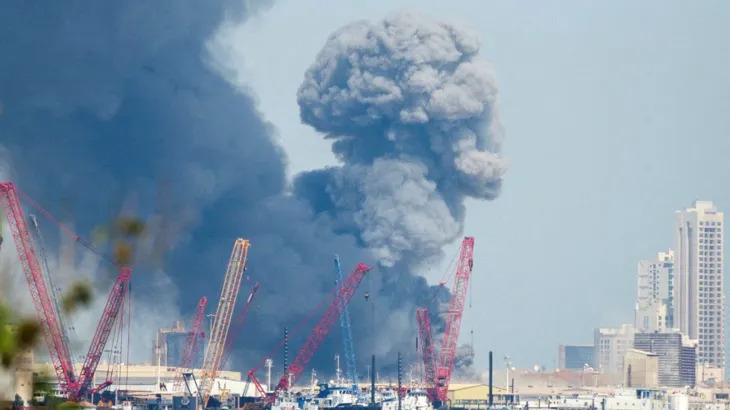
The United States and Israel have launched coordinated military strikes on Iran, with President Donald Trump confirming that “major combat operations” are under way and openly calling for regime change in Tehran — a dramatic escalation that is sending shockwaves through global markets and geopolitical circles.
In a televised address, Trump urged Iranians to “take over” their government, declaring: “This will be probably your only chance for generations.” The remarks signal that Washington’s objectives may extend beyond deterrence toward actively reshaping Iran’s political leadership, a move that significantly raises the stakes for regional stability and global commerce.
According to Iranian state media, the office of Supreme Leader Ali Khamenei and the presidential office in Tehran were among the targets, alongside multiple military installations across the country. At least 53 people were reported killed at a girls’ school, though those figures could not be independently verified.
Iran has responded with retaliatory missile strikes on Israel, the Israeli military said, triggering air raid sirens in major cities. Damage believed to have been caused by Iranian attacks has also been reported across parts of the Gulf, including Qatar, the United Arab Emirates and Kuwait.
In Bahrain — home to the US Navy’s Fifth Fleet — video circulating online appeared to show an Iranian missile streaking across the night sky near the American naval base, underscoring fears of a widening regional conflict.
On the ground in Tehran, reactions appear divided. While some residents described panic and hurried efforts to stockpile supplies, others expressed cautious optimism that external pressure could usher in political change after years of economic hardship driven by sanctions and domestic constraints.
For global business leaders and investors, the most immediate concern is energy security. Iran sits along the Strait of Hormuz, a strategic chokepoint through which roughly a fifth of the world’s oil supply passes. Any sustained disruption — whether through direct attacks, naval blockades or heightened insurance risks for tankers — could drive crude prices sharply higher.
A prolonged spike in oil would likely reignite inflationary pressures just as major central banks were considering easing monetary policy. Higher energy costs would ripple through transportation, manufacturing and food supply chains, squeezing corporate margins and household budgets alike. Oil-importing economies, particularly in Africa and parts of Asia, could face currency pressures and widening trade deficits.
Financial markets are already bracing for volatility. In periods of geopolitical crisis, capital typically rotates away from risk assets toward traditional safe havens such as gold, the US dollar and US Treasury bonds. Defense stocks may benefit from expectations of increased military spending, while airlines, shipping firms and tourism operators face downside risks from airspace closures, rising fuel prices and higher war-risk insurance premiums.
Emerging markets could see capital outflows if investors reassess risk exposure to regions perceived as vulnerable to energy shocks or currency instability. Sovereign borrowing costs may rise, complicating fiscal planning for governments already managing elevated debt loads.
International analysts note that Washington and Tel Aviv appear to view the Iranian leadership as vulnerable, calculating that this moment presents a strategic opportunity. However, history suggests that regime-change dynamics can introduce prolonged instability rather than rapid resolution.
UK Prime Minister Keir Starmer confirmed British aircraft “are in the sky today” as part of coordinated regional defensive operations aimed at protecting British interests and allies, signaling broader Western involvement in safeguarding strategic assets.
The trajectory of this conflict — whether it remains a contained military exchange or escalates into a broader Gulf confrontation — will determine whether markets experience a sharp but temporary shock or the onset of sustained global economic disruption. For now, uncertainty remains the dominant force shaping investor sentiment.