



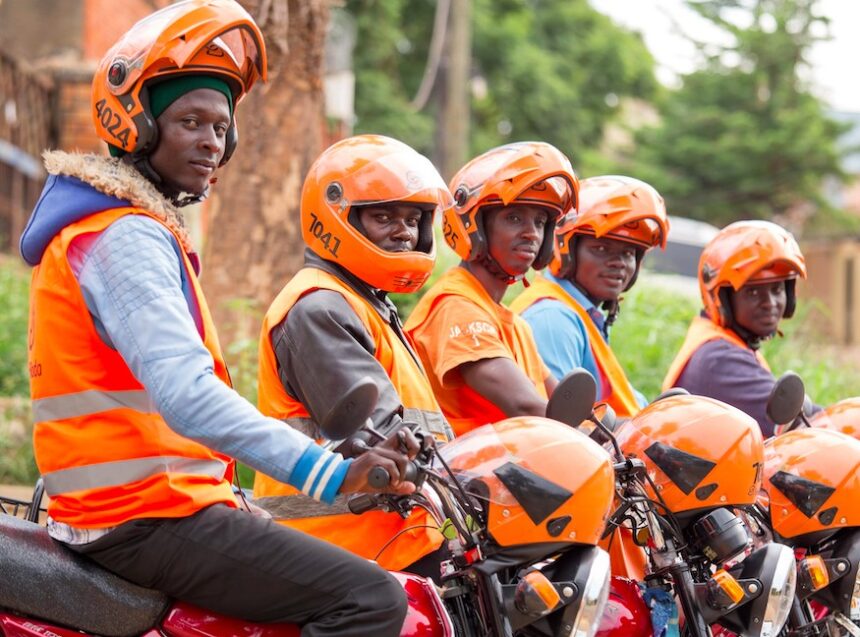
A recent directive by the Kampala Capital City Authority (KCCA) restricting boda boda access to parts of Kampala’s central business district is emerging as a key policy development for investors watching Uganda’s fast-growing digital mobility sector.
For more than a decade, SafeBoda has been at the forefront of formalising Uganda’s largely informal motorcycle taxi industry. Through its digital platform, the company has trained thousands of riders, introduced safety standards, and built a network that allows passengers to book boda boda rides through a mobile application.
However, the company has now raised concerns that the new KCCA restrictions could create operational uncertainty for digital ride-hailing platforms operating in the city.
In a statement, SafeBoda acknowledged that city authorities have made progress in improving order and traffic management in Kampala, but warned that the latest directive raises several unanswered questions for riders and operators.
“KCCA has made commendable efforts in recent years to bring order and sanity to the city, and we support those initiatives,” the company said. “However, the recent directive restricting boda bodas from accessing the city has raised several concerns among riders and digital transport operators.”
The policy limits boda boda operations in sections of the central business district and directs riders to operate from designated stages. While the measure is aimed at reducing congestion and improving urban management, SafeBoda argues that key implementation details remain unclear.
One of the major issues involves trip logistics for riders whose passengers are travelling to the city centre.
For example, the company questioned whether riders coming from high-traffic commuter areas such as Najjera or Kira would be required to terminate trips at peripheral areas like Wandegeya even when a passenger’s destination is City Square or Nakasero.
Such limitations, the company noted, could undermine the efficiency that has made app-based boda boda transport attractive to urban commuters.
Another concern relates to passenger access. SafeBoda questioned whether commuters would now be required to walk long distances to reach gazetted stages before negotiating with riders.
“Are customers expected to walk one or two kilometres to the nearest gazetted stage and negotiate with a rider there?” the company asked.
Beyond logistics, the company is also seeking clarity on the governance of the newly created boda boda stages. SafeBoda asked who owns these stages, how operators will be selected, and whether riders will be required to pay fees to operate from them.
For investors, the issue also raises broader questions about the future operating environment for Uganda’s ride-hailing sector, which includes digital platforms such as Faras and Union App.
SafeBoda’s business model relies heavily on flexible rider mobility and app-based ride matching. Restrictions that limit rider movement or confine them to fixed stages could potentially alter the efficiency of the platform’s network model.
Despite the concerns, SafeBoda emphasized that it is not opposing the city’s efforts to organise urban transport. Instead, the company is calling for structured engagement between regulators and industry players to ensure reforms are practical and sustainable.
“Kampala, like any modern city, relies on private sector participation in transport services,” the company noted. “This infrastructure supports daily economic activity and cannot simply be ignored.”
The firm has urged KCCA leadership to engage with industry stakeholders who possess operational data, rider networks, and technical infrastructure that could help shape workable urban transport solutions.
The outcome of this dialogue could prove pivotal — potentially defining how digital ride-hailing platforms scale within one of East Africa’s most dynamic urban transport markets.