



Uganda’s agriculture sector has long been described as the backbone of the economy, employing the majority of the population and contributing significantly to national output. Yet behind that central role lies a persistent structural weakness: low productivity driven by limited mechanisation.
Across much of the country, farming is still dominated by hand hoes and manual labour, a reality that continues to cap yields, delay planting seasons, and expose farmers to heavy post-harvest losses.
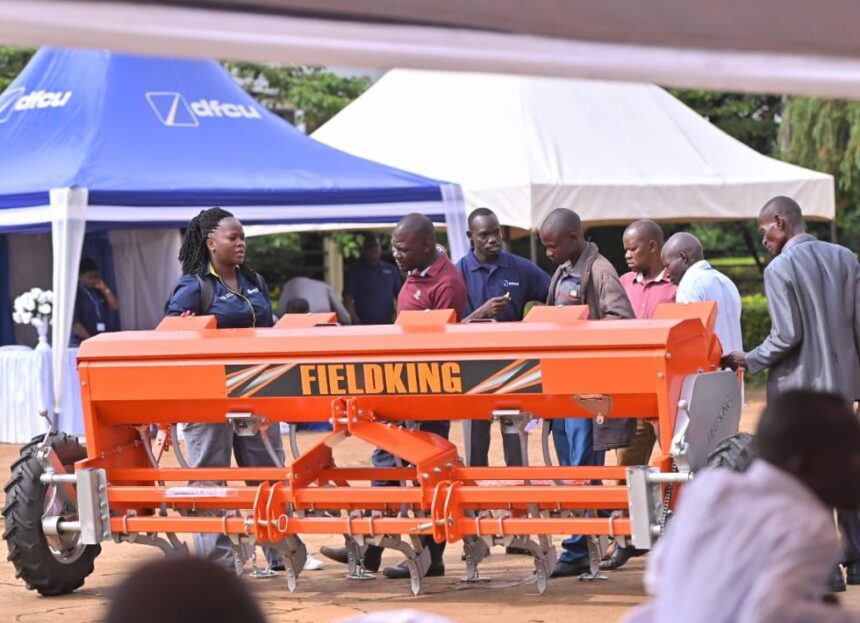
It is within this context that a new partnership between dfcu Bank and Meta Plant & Equipment Uganda is drawing attention. Launched in March 2026 at Kakira Sugar Factory, the initiative is designed to expand access to agricultural machinery by pairing equipment supply with flexible financing. The choice of Kakira—operated by the Madhvani Group—is significant.
The estate is one of Uganda’s largest agro-industrial hubs, supporting more than 13,000 outgrowers and processing thousands of tonnes of sugarcane daily, making it an ideal testbed for mechanisation-driven productivity gains.
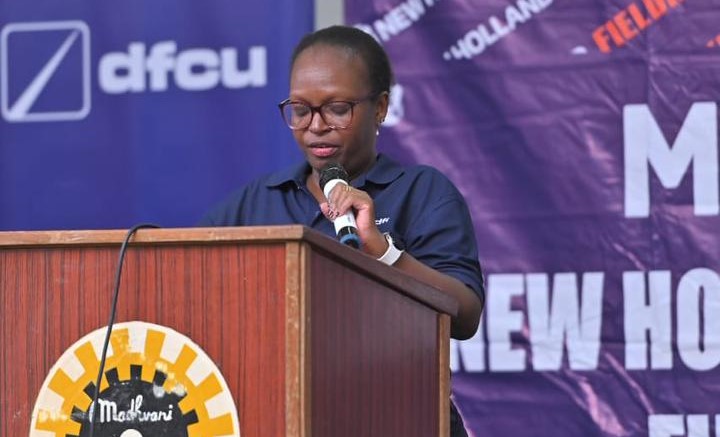
Annette Kiconco, Chief Retail Banking Officer at dfcu Bank, said: “At dfcu, we are deliberate about building partnerships that solve real sector challenges. Agriculture employs over 70 percent of Uganda’s population and contributes about a quarter of GDP, yet mechanisation remains low. Through our partnership with Meta, we are bringing financing closer to where decisions are made, enabling farmers and agribusinesses to access the equipment they need to improve productivity, reduce losses and grow sustainably.”
At the heart of the partnership is a simple but often elusive solution: affordability. Meta Plant & Equipment, the authorised dealer for global brands such as New Holland, Dezzi, and Fieldking, provides tractors, harvesters, irrigation systems, and related implements suited for Uganda’s farming conditions.
On the other side, dfcu Bank offers asset financing of up to 90 percent of the equipment cost, allowing farmers and agribusinesses to pay a relatively small upfront deposit and spread the remaining cost over time.
This model directly addresses one of the biggest barriers to mechanisation—the high upfront capital required to acquire machinery. For many smallholder and medium-scale farmers, the cost of a tractor has historically been prohibitive, effectively locking them out of productivity-enhancing technologies.
By aligning financing with seasonal cash flows, the partnership enables repayments to be made after harvests, reducing financial strain.
The urgency of such interventions becomes clearer when Uganda is compared to its regional peers. Tractor density—a common measure of mechanisation defined as the number of tractors per 100 square kilometres of arable land—remains extremely low in Uganda, estimated at fewer than 2 tractors per 100 square kilometres.
This places the country behind Kenya, where density is estimated at around 3 to 4 tractors, and significantly below Rwanda, which has made notable progress through government-backed mechanisation schemes and now averages closer to 5 tractors per 100 square kilometres in key farming zones.
These gaps have real economic consequences. In Uganda, delayed land preparation often results in missed planting windows, especially in rain-fed agriculture. Labour shortages during peak seasons further constrain acreage under cultivation, while inefficient harvesting methods contribute to losses that can reach up to 20–30 percent in some value chains. By contrast, countries with higher mechanisation rates are better able to stabilise production and integrate into regional markets.
Industry players say the dfcu–Meta partnership could begin to close this gap if scaled effectively. According to bank officials, agriculture remains a priority sector not only because of its contribution to GDP, but also due to its potential for transformation through targeted financing. By linking credit directly to productive assets, the model ensures that borrowing translates into tangible improvements on the ground.
For farmers in Busoga and beyond, the impact could be immediate. Outgrowers supplying Kakira Sugar Factory, for instance, stand to benefit from timely land preparation and harvesting, which in turn can improve cane quality and factory throughput. The ripple effects extend to rural incomes, employment, and supply chain stability.
There are also broader implications for Uganda’s economic trajectory. As pressure mounts to commercialise agriculture and boost exports, mechanisation is increasingly seen as non-negotiable. Without it, the sector risks remaining trapped in subsistence cycles, unable to meet the demands of a growing population and expanding regional trade opportunities.
Still, challenges remain. Access to financing, while improved, is not universal. Maintenance costs, technical skills, and infrastructure gaps continue to affect machinery utilisation. But initiatives like this signal a shift in approach—from isolated interventions to integrated solutions that combine equipment, financing, and after-sales support.
If sustained and replicated, such partnerships could gradually lift Uganda closer to regional benchmarks, narrowing the mechanisation gap with Kenya and Rwanda.
For now, the collaboration offers something more immediate: a practical pathway for farmers to move beyond hand tools and into a more productive, commercially viable future—one financed tractor at a time.