



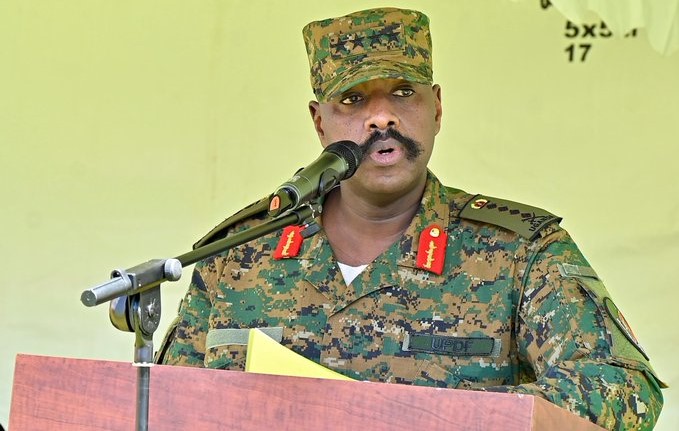
Diplomatic relations between Uganda and the United States are facing significant strain following alarming threats issued by General Muhoozi Kainerugaba, the Chief of Defence Forces and son of President Yoweri Museveni. The U.S. has responded with a stern warning that any further escalation could lead to “very serious” consequences.
In a series of now-deleted posts on social media platform X (formerly Twitter), Muhoozi demanded that U.S. Ambassador William Popp personally apologize to President Museveni by Monday morning. He accused the ambassador of disrespecting Uganda’s sovereignty and threatened a “serious confrontation” if his demands were not met.
This public outburst seems to be tied to an alleged letter from Ambassador Popp advising Museveni against running for re-election in 2026, citing concerns about stability in Uganda and the broader region.
The U.S. Senate Foreign Relations Committee swiftly responded to Muhoozi’s threats, underscoring that any further confrontation would be met with serious repercussions. This marks a significant shift in the U.S.’s previously amicable relations with Museveni’s regime, once seen as a key ally in regional security.
This incident is emblematic of a deeper crisis in U.S.-Uganda relations, particularly as concerns mount over human rights abuses in the country. Recently, the U.S. sanctioned four Ugandan police officers for gross violations of human rights, including torture.
The State Department cited credible reports from civil society and independent journalists, highlighting a troubling trend of rising torture cases in Uganda despite existing laws prohibiting such practices.
The U.S. has increasingly taken a critical stance on Museveni’s administration, which has been in power for nearly 40 years and shows signs of an intention to extend this rule beyond 2026.
Muhoozi’s reaction, while framed as a defense of Ugandan dignity, may also signal a struggle within the ruling elite. His earlier interest in succeeding his father has shifted to rallying support behind Museveni, indicating potential internal divisions and power dynamics at play.
Implications for Regional Stability
For both Ugandan citizens and international observers, the implications of this diplomatic fallout are significant. The U.S. has been a major player in supporting Uganda through various security and humanitarian initiatives. If tensions continue to escalate, the potential for sanctions or reduced support could adversely affect Uganda’s already precarious human rights situation and its economic stability.
As the U.S. seeks to balance its interests in the region with its commitment to human rights, Ugandans will be watching closely to see how this diplomatic standoff unfolds and what it means for their country’s future. The coming days may prove critical, not just for the leadership in Kampala but for the broader relationship between Uganda and one of its key international partners.