



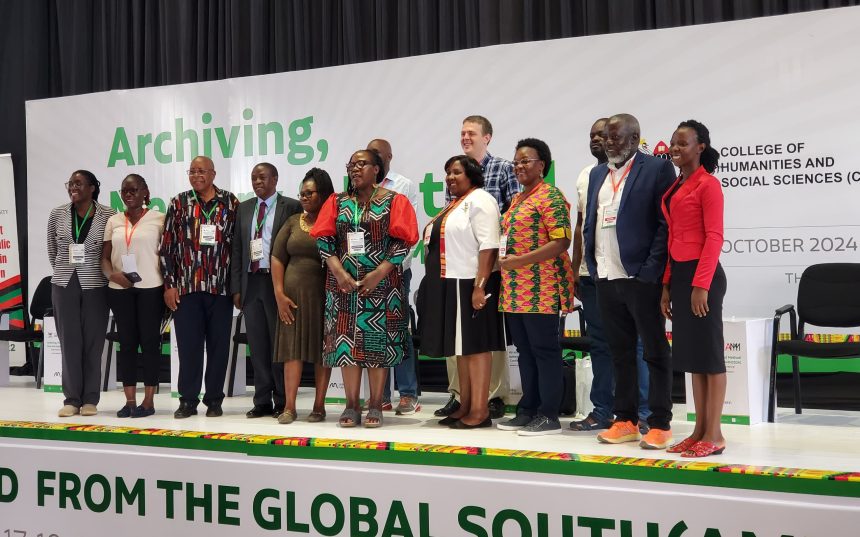
Budgetary constraints are jeopardizing the preservation of archives in the Global South, warns Dr. David Luyombya, an Associate Professor at Makerere University’s Department of Records and Archives Management.
Speaking at the Archiving, Memory, and Method from the Global South International Conference, Dr. Luyombya highlighted that underfunding in the archiving sector has resulted in inadequate facilities to properly safeguard memory for future generations.
Dr. Luyombya noted the continued reliance on oral methods in memory preservation as a major challenge, emphasizing the need for durable solutions to protect heritage.
He also critiqued the colonial legacy of determining what is considered valuable for archiving, which has hindered inclusive approaches to preserving diverse histories and cultures.
The conference, held from October 17 to 19, 2024, at Makerere University’s Yusuf Lule Teaching Facility, attracted experts from countries such as South Korea, Burundi, and South Africa. It provided a platform to discuss challenges and opportunities in the archiving sector.
Dr. Jimmy Spire Sentongo, also a speaker at the event, pointed out that museums and other archiving facilities often reflect colonial perspectives, reducing their function to mere observation rather than fostering meaningful engagement.
“Artifacts are displayed, but the narratives and experiences they represent are often lost,” he remarked.
Vincent Abigaba, Registrar for the College of Humanities and Social Sciences (CHUSS), underscored the importance of capacity building to ensure archives remain organized and accessible.
He stressed the need for trained personnel to manage the increasingly complex requirements of modern archiving systems.
In addition, Mr. Ronald Kabunga, a gender specialist at Uganda’s Ministry of Education and Sports, proposed adopting offshore backup servers to safeguard archives from risks such as arson and natural disasters.
The conference was part of a project supported by the Mellon Foundation, led by Dr. Sylvia Tamale Ahikire at CHUSS. The event called for renewed efforts to secure adequate funding and embrace inclusive approaches that prioritize the preservation of memory across diverse contexts.