



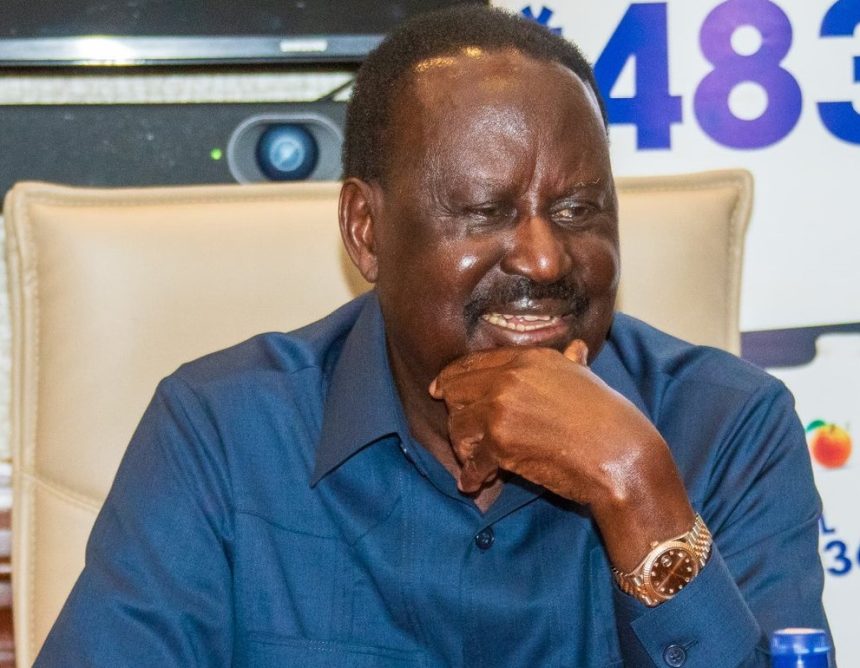
On October 15, 2025, Kenya lost one of its most enduring political figures. Raila Amolo Odinga, a long-time opposition leader, former Prime Minister, and champion of democratic reform, died at age 80 while receiving medical treatment in India following a cardiac arrest.
His death marks the end of an era — one filled with both turbulent politics and transformative institutional change. For the business community, his legacy and its aftermath carry significant implications.
Odinga’s political life was inseparable from Kenya’s transition toward more accountable governance. He was a driving force behind the reintroduction of multiparty democracy in 1991 and later played a pivotal role in the adoption of the 2010 Constitution, which significantly bolstered checks and balances in the Kenyan system.
These reforms helped create a more predictable legal and regulatory environment, essential to investor confidence. Businesses have benefited from greater transparency, stronger institutions like the judiciary, and more robust civil society oversight. Odinga’s activism, though often fractious, pushed the state to improve its mechanisms for accountability.
Business does not operate in a vacuum, and political transitions are often periods of uncertainty. Odinga’s repeated presidential bids and his prominent role as opposition leader meant that many businesses anticipated both risk and opportunity depending on election outcomes.
With his loss, there is a leadership void in the opposition. It remains unclear who will inherit his base, how parties will re-align, and whether coalitions will remain stable as the country approaches the next major elections in 2027.
For businesses, this translates into uncertainty over policy continuity, regulatory consistency, and possibly increased political risk. Investors may become more cautious until a new, stable equilibrium is established.
The Kenyan government declared a seven-day national mourning period and ordered flags at half-mast, with a state funeral expected. These formalities are more than symbolic—they signal state continuity and institutional respect, important for preserving national stability.
Business sentiment tends to be fragile in moments of national grief or transition; clear, respectful handling of leadership changes can help maintain confidence.
The death of a towering figure like Raila Odinga does more than close a chapter—it forces a recalibration of political alliances, institutional expectations, and business risk assessments.
For Kenya’s corporate sector and the wider East African economy, the coming months will be vital in determining whether his legacy of reform deepens or whether the vacuum he leaves behind unsettles the country’s delicate balance between politics and enterprise.