



The Government of Uganda’s decision to inject an additional UGX 1 trillion into Uganda Development Bank is expected to significantly deepen the country’s development finance capacity, enabling the state-owned lender to scale up long-term funding for priority sectors of the economy.
Prime Minister Robinah Nabbanja said the additional capitalisation reflects Government’s recognition of UDB’s central role in driving Uganda’s socio-economic transformation.
“As you are aware, Government allocated an additional UGX 1 trillion to UDB in the current financial year. We recognise the need to further expand the Bank’s loan portfolio and remain committed to strengthening its capital base so that it can fully deliver on its mandate,” Nabbanja said.
Development finance institutions rely heavily on strong capital buffers to provide patient, affordable financing to sectors that commercial banks often avoid due to higher risk or longer payback periods.
With the additional funding, UDB is better positioned to extend long-tenor loans to manufacturing, agro-processing, infrastructure-related projects and export-oriented enterprises, all of which are critical to Uganda’s structural transformation agenda.
Nabbanja noted that Government’s broader objective is to use institutions such as UDB to nurture a strong class of Ugandan entrepreneurs. “Through institutions such as UDB, Government seeks to build a strong class of Ugandan entrepreneurs capable of driving sustainable socio-economic transformation,” she said, adding that the bank’s impact is already visible through job creation, higher tax revenues and foreign exchange generation.
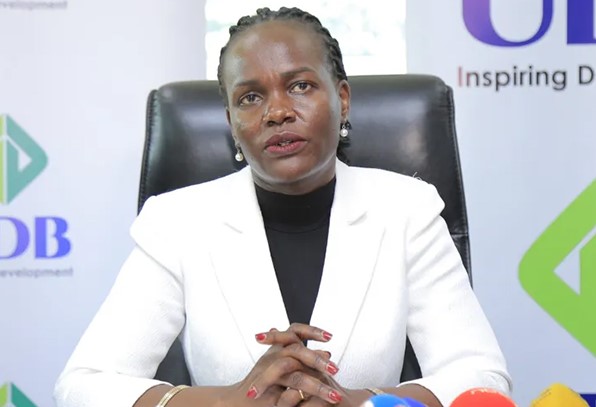
UDB Managing Director Patricia Ojangole said the stronger capital base enhances the bank’s ability to structure complex transactions and mobilise additional development finance.
“The skills and knowledge we are building, together with a stronger capital base, are critical as we implement UDB’s new five-year business strategy, which places greater emphasis on structuring, transaction advisory, and crowding in development finance from both local and international sources,” Ojangole said.
She added that a well-capitalised development bank improves Uganda’s competitiveness in a volatile global environment. “UDB remains committed to providing the right financial instruments and products to strengthen Uganda’s participation and competitiveness in the global economy, while supporting the private sector to grow and remain resilient,” Ojangole said.
As global financing conditions tighten, the additional capitalisation positions UDB to leverage public funds to attract private and multilateral financing, reinforcing its role as a cornerstone of Uganda’s long-term development finance ecosystem.