



Uganda’s fight against malaria is facing renewed financial scrutiny after senior government leaders called for stronger domestic funding to reverse rising cases and reduce dependence on donors.
Speaking at a high-level malaria meeting attended by representatives from 29 countries, the Minister of State for Primary Health Care, Margaret Muhanga, warned that malaria remains a major public health and economic burden despite years of progress.
Citing the 2025 World Malaria Report, Muhanga said Uganda is currently the third-largest contributor to global malaria cases and eighth in malaria deaths worldwide.
The disease accounts for between 30 and 50 percent of outpatient visits and 20 percent of hospital admissions across the country, costing the economy an estimated 577 million US dollars annually.
Although parasite prevalence among children under five dropped from 45 percent in 2009 to 9 percent in 2018, recent findings show a reversal to 12.5 percent, with 3.3 million additional cases recorded in 2022.
She described the setback as evidence of the fragility of earlier gains and stressed the urgent need to shift from malaria control to full elimination.
Under the Ministry of Health’s Malaria Elimination Strategic Plan 2026–2030, government is targeting zero malaria deaths and a 75 percent reduction in cases by 2030. Muhanga emphasized prevention, community engagement and sustained investment as critical pillars, noting that medicines alone are not enough without behavioural change and proper use of interventions such as mosquito nets.
Deputy Speaker of Parliament Thomas Tayebwa used the platform to challenge African governments to rethink their budget priorities. He criticized the tendency to rely heavily on international donors while domestic allocations remain insufficient.
Tayebwa said it is unacceptable for governments to consistently fund political allowances while failing to fully finance malaria programmes that directly affect citizens’ lives and productivity.
He pledged that Parliament would step up support in the upcoming national budget, adding that Uganda had already increased domestic contributions when donor funding declined.
Both leaders agreed that without stronger and predictable financing, Uganda risks undermining its elimination targets and continuing to export cases across borders, calling for malaria to be treated as a continental emergency requiring sustained political and financial commitment.
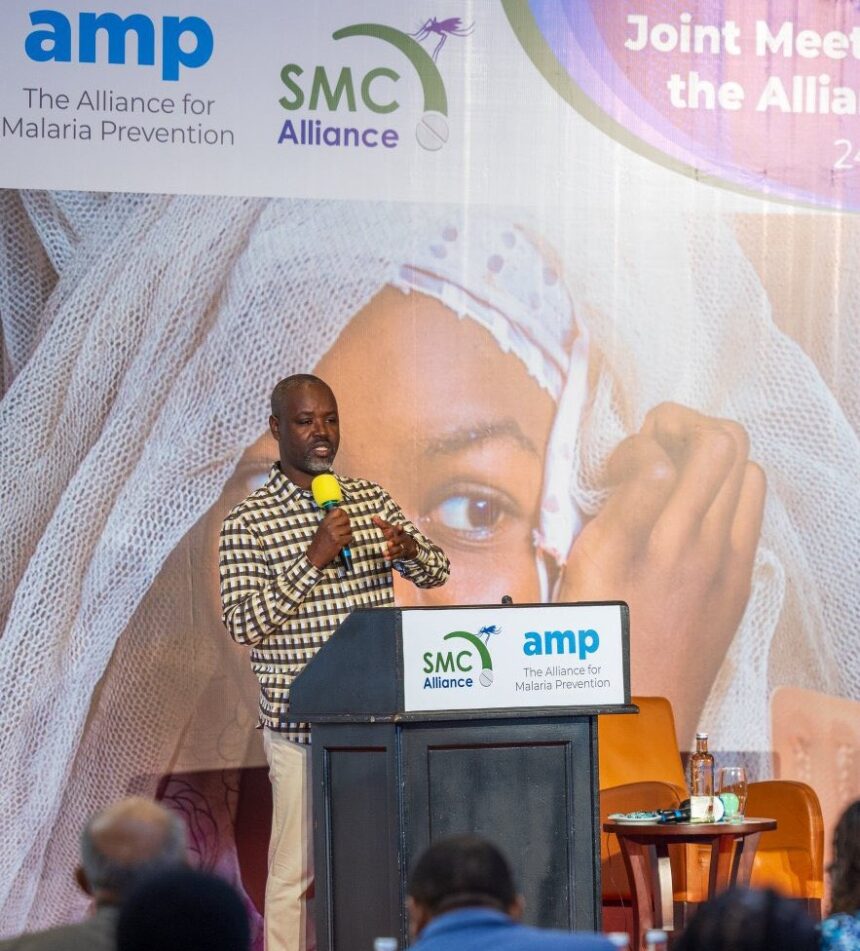
This was as they addressed the Joint Annual Meetings of the SMC Alliance and the Alliance for Malaria Prevention (AMP) which kicked off today, bringing together political leaders, policymakers, decision-makers and partners united in driving innovation, strengthening commitment and advancing global partnerships to accelerate the fight against malaria.