



The race for the speakership of Uganda’s 12th Parliament is shaping up as one of the most consequential moments in the country’s post‑independence political history — a juncture that many observers are calling “now or never” for the legislature as an institution.
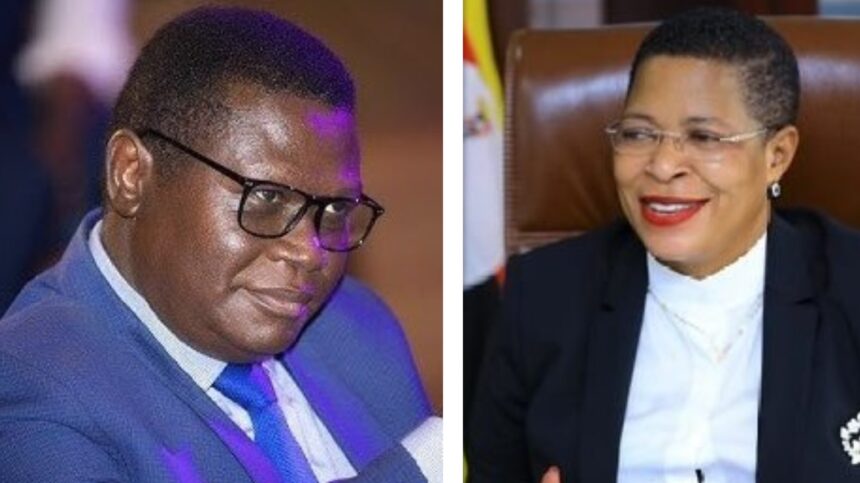
At its centre are incumbent speaker Anita Annet Among and opposition heavyweight Norbert Mao, but several other aspirants have entered the fray, complicating the dynamics of power, patronage and reform in a parliament long dogged by controversy.
Uganda’s Parliament, created with independence in 1962, has seen varied interpretations of its role: from assertive legislative oversight to a rubber‑stamp majority under President Yoweri Museveni’s long rule.
Speakers have included stalwarts such as Edward Rugumayo in the early years, Francis Ayume, and Rebecca Kadaga, who became Africa’s longest‑serving female deputy speaker before rising to the speakership herself. Across administrations, the role oscillated between championing legislative independence and accommodating executive dominance.
In recent years, the institution’s credibility has been tested by internal and public demands for accountability.
Anita Among’s ascendancy followed the 2022 death of then‑Speaker Jacob Oulanyah. Oulanyah, a leader respected on both sides of the aisle, had been elected in 2021 as a sign of parliamentary assertiveness.
His untimely death triggered a constitutional succession: the deputy speaker, Among, stepped in and was formally elected Speaker. Norbert Mao and others dismiss this as an “accidental” leadership transition — a placeholder rather than a deliberate choice by legislators about the future of the House.
Now, with the 12th Parliament about to be sworn in, the speakership contest is far from a foregone conclusion. Among — a lawyer, accountant and long‑time legislator who defected from the opposition Forum for Democratic Change to the National Resistance Movement (NRM) and rose through its ranks to become NRM National Vice Chairperson — seeks a second and final term.
Across the aisle, Norbert Mao — Democratic Party president and Minister of Justice and Constitutional Affairs — has entered the race, framing his bid as a fight against entrenched grand corruption and for strengthened legislative independence. His critics note DP’s small numbers in parliament, suggesting his bid may be symbolic unless he can woo cross‑benchers and even some NRM members.
But this race is not binary. Several other candidates have declared intentions to vie for the speakership, including Mbale City Woman MP‑elect Lydia Wanyoto, State Minister Persis Namuganza, and Aringa South MP Alioni Yorke Odria, each pitching different visions and critiques of parliamentary leadership. Wanyoto, for example, anchors her campaign in a 32‑year career free of scandal, appealing to those weary of high‑profile controversies.
Complicating the calculus is a dispute over whether the NRM’s apex body — its Central Executive Committee (CEC) — has formally endorsed Among and her deputy, Thomas Tayebwa, to run unopposed. Some party sources claimed the CEC had “cleared” them, effectively pre‑empting internal competition. Yet Odria and others dismiss those claims as baseless, insisting no such formal decision has been issued and calling instead for internal consultation and adherence to constitutional processes.
Underlying this contest is the wider credibility of Parliament itself, particularly how it manages and spends its budget. Parliament is one of Uganda’s most expensive state institutions. Estimates from parliamentary budget projections suggest its own operational vote runs into hundreds of billions of shillings annually, and external analysis pegged parliamentary daily spending at around Shs2.6 billion per day in recent years. Public scrutiny has intensified because of perceived gaps between listed mandates — law‑making, oversight and representation — and expensive internal costs.
These concerns are magnified by a series of scandals that have marred the House. Under Among’s leadership, detailed examinations by independent and media sources highlighted questionable expenditures — from multibillion‑shilling foreign trips, generous per diems above prescribed limits, to alleged deposits into private accounts for corporate social responsibility programs without clear oversight.
A parliamentary exhibition intended to showcase legislative achievements instead unearthed allegations of lavish spending on decorations, entertainment and catering, sparking public outcry and calls for transparency.
Further controversies include a contentious Shs1.7 billion “service award” distribution to select MPs under Among’s chairmanship that drew criticism for lack of accountability, and reports of allocations for projects or events that critics claim never materialised. These episodes have reinforced arguments from Mao and others that Parliament needs a reset in stewardship and financial oversight.
In this context, the speakership race is more than a ceremonial leadership election. It is a referendum on institutional credibility, budget discipline and whether Uganda’s legislature can reclaim trust among citizens who see it as both powerful and unaccountable.
With a crowded field, competing narratives, and deep public scrutiny over fiscal management, the outcome will signal whether Parliament chooses continuity, reform, or something in between — and set the tone for legislative conduct in a politically charged era leading up to the evening of the NRM government.