



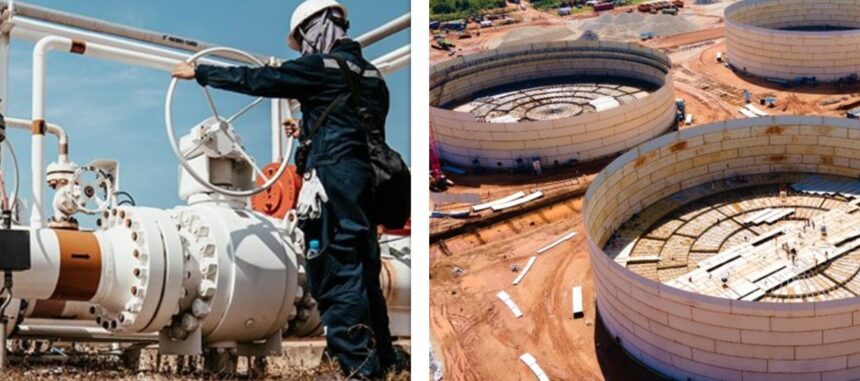
As Uganda edges closer to first oil, the government’s decision to develop both a domestic refinery and an export pipeline has drawn curiosity — and in some quarters, skepticism. Why build two major oil infrastructures at the same time? Wouldn’t one be enough?
The answer lies in strategy, not duplication.
Uganda’s oil reserves, discovered in the Albertine Graben, place the country in a unique but delicate position. As a landlocked producer, it must carefully design how it extracts, processes and sells its crude. The plan to construct a 60,000-barrel-per-day refinery in Hoima is primarily about energy security.
Today, Uganda imports nearly all its refined petroleum products. That dependence exposes the country to global price volatility, currency pressures and supply disruptions.
A domestic refinery changes that equation. By refining part of its crude at home, Uganda can supply its own petrol, diesel and jet fuel, significantly cutting the import bill. It also opens doors for downstream industries — petrochemicals, plastics, fertilizers — which could create jobs and deepen industrialization. In short, the refinery is about keeping value within the country.
But Uganda is not stopping there.
The East African Crude Oil Pipeline (EACOP), running from Hoima to Tanzania’s port of Tanga, is designed to transport up to 219,000 barrels of crude oil per day to international markets.
For Uganda, export access is critical. Oil revenues from global sales are expected to generate foreign exchange, boost national income and support infrastructure and social spending.
Relying solely on a refinery would limit the country’s earnings potential. Refining absorbs only a portion of production. The pipeline ensures Uganda can monetize its full output and participate competitively in global energy markets.
There is also a practical advantage to pursuing both projects. Oil operations require periodic maintenance and are subject to market dynamics. If one component slows down, the other can continue operating, reducing the risk of production standstills. This dual approach strengthens resilience.
Ultimately, the refinery and the pipeline serve different but complementary purposes. The refinery safeguards domestic energy needs and industrial growth.
The pipeline unlocks global revenue streams. Together, they form the backbone of Uganda’s oil strategy — one designed not just for extraction, but for long-term economic transformation.