



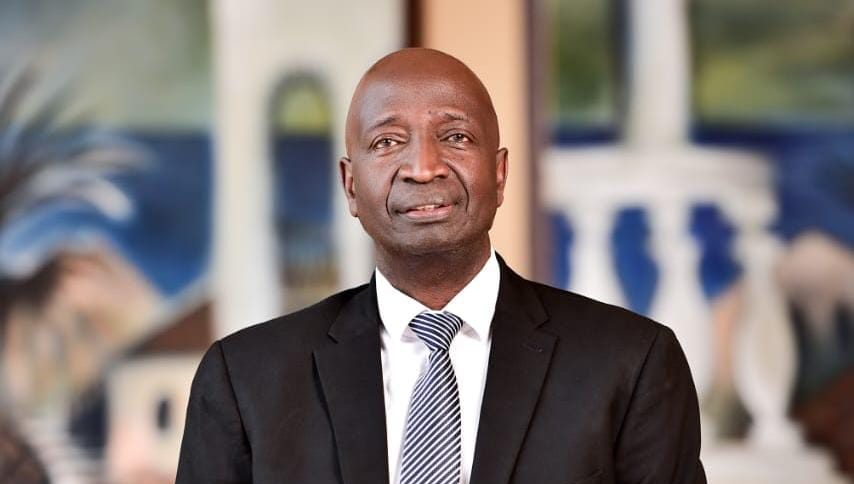
When Ernest Rubondo steps down in August 2026 after a decade at the helm of the Petroleum Authority of Uganda (PAU), the country’s oil and gas story will have a very human signature on it — his. From the dusty fields of early exploration to the gleaming pipeline welds stretching toward the coast, Rubondo’s tenure reads like a journey of relentless institution‑building, disciplined regulatory maturity, and strategic vision.
Born in Uganda’s Western Region and educated at Imperial College London with a Master’s in Petroleum Reservoir Geology, Rubondo returned home in 1990, determined to help his country harness its nascent energy potential.
For more than 30 years he worked inside the Ministry of Energy and Mineral Development, rising to lead the Petroleum Exploration and Production Department, then to become Director for Petroleum, before being tapped in 2016 to build and lead the newly‑formed PAU.
“I’ve always believed that regulation isn’t a barrier to development — it’s the foundation of sustainable investment,” Rubondo once told the media and that ethos has shaped his decade of service.
Under his leadership, PAU grew from a skeleton staff and fledgling mandate into a world‑class energy regulator. The Authority today boasts over 220 specialists, 48 operational manuals, and a reputation strong enough to earn African Petroleum Regulator of the Year — a recognition Rubondo accepted by pointing to collective effort, not individual glory.
Perhaps his proudest legacy is how PAU balanced Uganda’s economic aspirations with disciplined governance. When the Final Investment Decision (FID) on major upstream projects came in 2022 — setting in motion investments exceeding US$15 billion — it was under Rubondo’s stewardship that licensing, monitoring, and national content obligations were enforced with rigor.
Ugandan firms today hold billions in contracts and thousands of citizens are employed across the value chain — from welders and truck drivers to engineers and data specialists — thanks to policies he championed to prioritize local participation.
Challenges Along the Way
Rubondo’s road wasn’t free of friction. Aligning government interests with those of multinational oil companies proved complex, requiring patience and careful negotiation. “There are times when national and company interests don’t align,” he conceded in a past interview, “and it takes effort and dialogue to bridge that gap.”
Global energy price volatility and the broader shift toward decarbonization also tested the balance he tried to strike between climate priorities and energy security — an issue he addressed repeatedly in public discussions about the sector’s future.
What Colleagues Say
Inside PAU hallways, staff describe Rubondo as quiet but firm, strategic yet approachable. One senior regulator, speaking on condition of anonymity, said: “He never wanted the spotlight — but he wanted results. He pushed us to think like engineers, act like economists, and most of all, to be honest in our work.”
Young professionals credit him for mentorship and opportunities, recalling how initiatives like the National Supplier Database and Talent Register opened unexpected doors for Ugandan businesses and graduates alike.
Rubondo’s journey offers enduring lessons for CEOs and managing directors. He has shown that building strong institutions, rather than seeking personal acclaim, creates a long-term impact that outlasts individual careers. His approach demonstrates that clarity often outweighs charisma; establishing operational manuals and predictable procedures not only strengthens internal governance but also attracts investor confidence.
By prioritizing people and empowering local talent, Rubondo has reinforced both legitimacy and sustainability within the sector. He has also shown the importance of balance, navigating the often competing interests of government, investors, and local communities — a challenge that is perhaps the most demanding yet vital aspect of leadership.
As Uganda prepares to usher in “first oil” later in 2026, Rubondo’s final act will be leaving behind a petroleum sector that is regulated, resilient, and ready — a legacy many nations would envy.