



Africa’s greenfield mineral exploration is gaining momentum as governments and investors race to unlock new reserves and strengthen the continent’s position in the global mining supply chain amid rising demand for critical minerals.
Across key mining jurisdictions including South Africa, Ghana and Namibia, record exploration activity is reshaping Africa’s role in supplying minerals essential to the global economy.
Industry stakeholders say the surge is being driven by expectations that demand for critical minerals used in clean energy technologies and advanced manufacturing could quadruple by 2040.
In South Africa, authorities have stepped up efforts to sustain the country’s global leadership in platinum group metals, chrome and manganese while reviving exploration in gold and iron ore.
In 2025 alone, the government issued 358 new prospecting rights and 32 mining rights, signaling renewed momentum in unlocking the country’s mineral wealth.
The government has also committed about R2 billion to support junior mining companies and expand exploration activities. Officials estimate that the country could mobilize as much as R2 trillion in investment in the critical minerals sector, while tapping into an estimated R40 trillion worth of untapped iron ore resources.
In West Africa, Ghana continues to consolidate its position as the continent’s top gold producer while diversifying into new minerals. The country currently hosts more than 90 active exploration projects and has attracted over $20 billion in mining and exploration investment in the past two years.
According to Ghana’s Minister for Lands and Natural Resources, Emmanuel Armah-Kofi Buah, the country’s mineral wealth extends beyond gold to include bauxite, manganese, iron ore, cobalt and nickel. He noted that ongoing exploration could lead to new discoveries of critical minerals needed for the global energy transition.
Meanwhile, Namibia is accelerating reforms to streamline licensing processes and unlock new mineral discoveries. The country currently holds 588 Exclusive Prospecting Licenses and has received more than 800 new exploration applications as interest in its uranium and diamond sectors grows.
Namibia’s Mining Commissioner Isabella Chirchir said the government is deploying digital licensing platforms to speed up approvals, reduce regulatory backlogs and improve efficiency within the mining sector.
Elsewhere on the continent, countries such as Zambia are expanding copper exploration to increase annual production to three million tonnes by 2031, while Guinea continues exploration activities linked to the massive Simandou iron ore project.
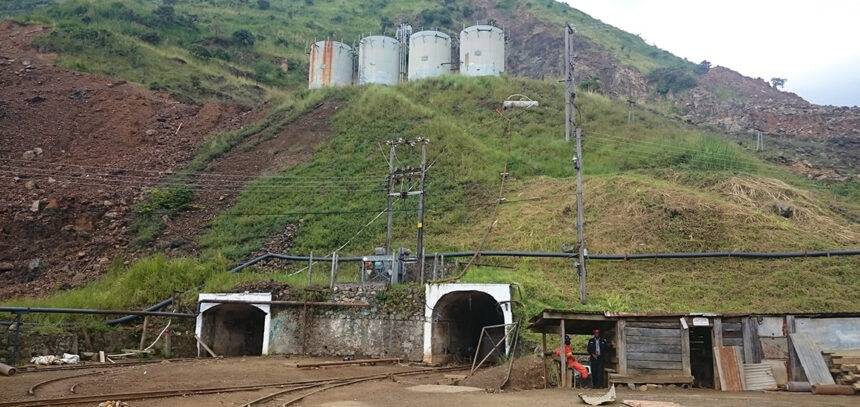
In Uganda,the long-awaited revival of the Kilembe Copper Mines has reached a critical milestone following the official handover of assets to a new investment consortium. In a move aimed at restoring Uganda’s status as a major mineral producer, the government recently finalized a Mineral Production Sharing Agreement (PSA) with a consortium led by Sarrai Group and Nile Fibreboard Limited.
Under the new 25-year lease, the Uganda National Mining Company (UNMC) maintains a 15% state stake. The developers have committed to an initial investment exceeding $230 million to dewater the mines, replace dilapidated 1950s-era infrastructure, and explore untapped reserves estimated at over four million tonnes of copper ore.
The momentum in exploration is expected to feature prominently at African Mining Week 2026 scheduled for October 14–16 in Cape Town, where investors, governments and industry leaders will showcase projects and investment opportunities aimed at unlocking Africa’s vast mineral potential.
Africa holds roughly 30% of the world’s mineral reserves, driving intense exploration for gold, copper, cobalt, and critical minerals essential for global energy transitions.
While Southern Africa and the DRC are major hubs, greenfield exploration is rising, alongside significant investment hurdles and sustainability efforts to boost local value