



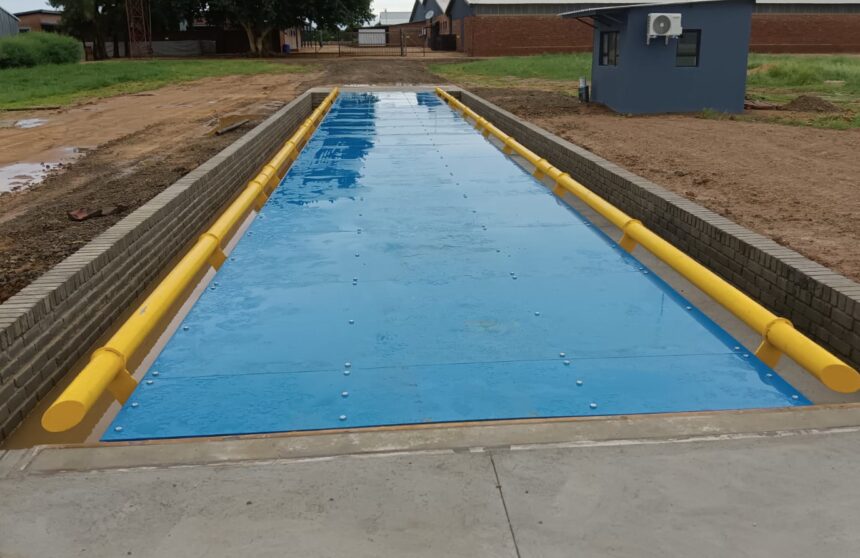
Uganda’s sugar sector is advancing regulatory reforms targeting weighbridge operations, a critical component of the industry’s value chain that determines farmer payments, prevents fraud, and supports accurate reporting for exports.
The resolutions, announced following a March 31 consultative meeting at Imperial Royale Hotel, aim to address long-standing concerns over irregular calibration, uneven distribution, and weak regulatory oversight.
The meeting, chaired by Hon. David Bahati, Minister of State for Trade, Industry and Cooperatives (Industry), convened sugar millers, farmer cooperative societies, district officials, URA, UNBS, and representatives from the Ministries of Finance and Lands.
Stakeholders reached a consensus on three major interventions: regular calibration and inspection of weighbridges by UNBS, streamlining licensing under strengthened Sugar Regulations 2021, and restricting operations to existing weighbridges to maintain industry consistency. The Ministry has tasked the Attorney General to draft a statutory instrument to operationalize these measures.
Uganda’s sugar industry remains a key economic driver, producing 650,000–700,000 metric tons annually, with domestic consumption at approximately 450,000 tons and exports ranging from 200,000–250,000 tons, making the country a net exporter within the East African Community.
Fourteen operational mills crush over eight million tonnes of cane per year, largely sourced from out-growers. The sector contributes an estimated 5% of GDP, generates UGX 500 billion in tax revenue annually, and directly employs 50,000 factory workers while supporting hundreds of thousands in transport, trading, and ancillary services.
Farmers supplying cane fall into three categories: aided out-growers, who receive inputs, technical support, and credit through formal contracts; unaided out-growers, independent operators leveraging market flexibility but with limited support; and nucleus estate farms owned by millers.
Weighbridges, concentrated in districts like Masindi and Hoima, are essential for all three groups to ascertain accurate cane weight, negotiate fair prices, and settle payments.
Industry consultations revealed that most weighbridges are owned by millers and are not regularly calibrated, raising the risk of payment discrepancies for farmers.
While weighbridges contribute to local employment, the lack of regulatory clarity and standardization has prompted repeated interventions, including directives from President Yoweri Museveni emphasizing their continued role as instruments of fair measurement.
Formalizing weighbridge operations could strengthen Uganda’s sugar industry by enhancing transparency, reducing disputes, and protecting farmer incomes. Reliable weight measurement also supports accurate export reporting and competitiveness in regional markets.
According to UNBS data, calibrated weighbridges could reduce measurement discrepancies by up to 8–10%, translating into significant revenue protection for out-growers supplying 70% of the country’s cane.
However, the sector faces structural challenges. Expanding weighbridge coverage to under-served districts, implementing rigorous monitoring, and ensuring operators’ technical capacity remain critical for achieving reform goals.
Observers note that without strict enforcement, regulatory improvements may fall short of guaranteeing fair practices, particularly for unaided out-growers who are most vulnerable to measurement errors.
With these reforms, Uganda signals a strategic approach to consolidating its net exporter position, protecting farmer livelihoods, and ensuring that industrial growth is underpinned by transparent, standardized, and market-aligned processes—key considerations for investors evaluating opportunities in the country’s agro-industrial sector.