



Fuel prices across Africa have continued their upward climb in April 2026, exposing the continent’s persistent vulnerability to global oil market shocks and its heavy dependence on imported refined petroleum products.
According to data from GlobalPetrolPrices, several African countries now rank among those with the highest fuel costs globally, as international supply disruptions push pump prices higher.
The global average fuel price rose from $1.34 per litre last month to $1.48 per litre in April, reflecting tightening global supply conditions and renewed geopolitical tensions affecting key shipping routes such as the Strait of Hormuz.
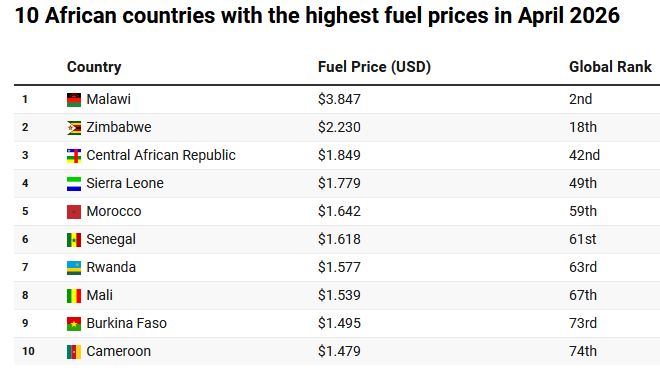
This upward trend has been felt unevenly across Africa, with some countries experiencing sharp increases while others recorded slight relief.
Countries such as Malawi, Zimbabwe, Sierra Leone, Ghana, Tanzania, Morocco, Rwanda, and Mali feature prominently among those with the highest fuel prices this month. Some of these nations are new entrants to the list, replacing others like Burundi, Seychelles, and Côte d’Ivoire, highlighting how quickly fuel markets can shift in response to global and domestic dynamics.
In several markets, prices have risen by double digits within weeks. West Africa has been particularly hard hit, where fuel inflation has translated into significantly higher transport and logistics costs. Nigeria, despite being a major crude oil producer, has seen petrol prices rise by more than 50 percent and diesel by over 70 percent in recent months, underscoring the region’s refining gap.
The broader impact is being felt across economies. Rising fuel costs increase the price of moving goods, delivering services, and transporting raw materials, feeding directly into inflation. Households face higher living costs as businesses pass on expenses to consumers, while industries struggle with shrinking margins.
Governments have responded in different ways. Some, including South Africa, have introduced temporary tax relief measures or fuel duty adjustments, while others are considering subsidies and price caps. However, these interventions strain already limited public finances.
Economists warn that prolonged fuel volatility could deter investment, as energy costs remain a key factor in industrial competitiveness. Without expanded refining capacity and regional energy cooperation, Africa’s exposure to global price swings is likely to persist, keeping fuel costs high for millions of consumers across the continent.
Source: Global Petrol Prices