



Africa’s fragile economic recovery is facing a new test, as the ongoing crisis in the Middle East threatens to slow growth across the continent in 2026.
A new joint policy report by the African Development Bank Group, the African Union Commission, the United Nations Economic Commission for Africa and the United Nations Development Programme warns that African economies could lose up to 0.2 percentage points in growth due to the ripple effects of the conflict.
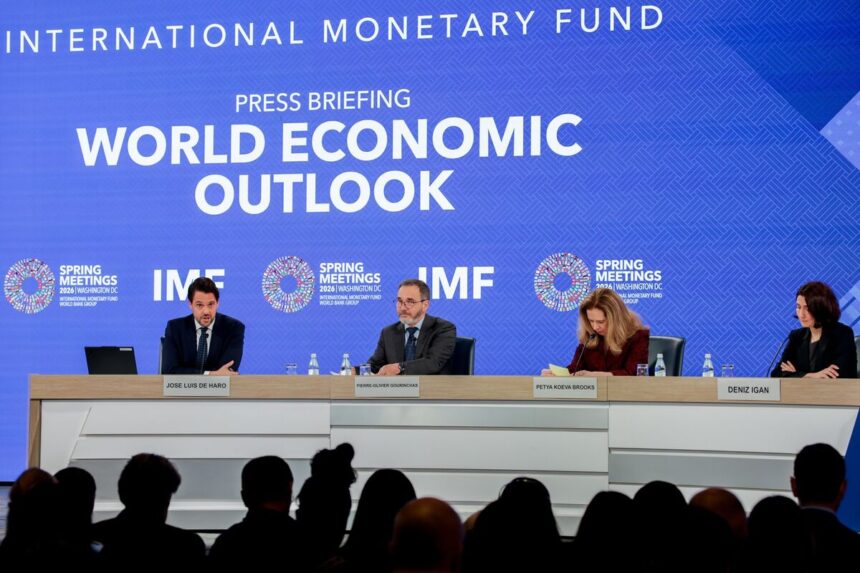
The findings were presented in Washington, D.C. on the sidelines of the Spring Meetings of the International Monetary Fund and the World Bank.
While 0.2% may seem small, economists say it comes at a delicate time. Many African economies are still recovering from the shocks of the COVID-19 pandemic, the Russia–Ukraine War, and rising global trade tensions.
At the heart of the concern is the disruption of key global supply routes, particularly the Strait of Hormuz, a critical artery for oil shipments. Any instability there has immediate consequences for transport costs, trade flows and energy prices worldwide.
The report highlights three major pressure points for African economies: rising costs of fuel, food and fertilisers; disruptions to supply chains; and increased volatility in currency and financial markets.
Africa’s heavy dependence on imports from the Middle East makes the situation more acute. According to the report, about 80% of the oil imported into Africa comes from the region, along with half of its refined petroleum products. As a result, at least 31 African countries are already experiencing currency depreciation.
Despite these challenges, African policymakers are being urged to stay calm and avoid knee-jerk reactions. AfDB Chief Economist Kevin Urama cautioned governments against taking hasty fiscal decisions that could worsen already strained public finances.
Instead, the report calls for measured and targeted responses. These include managing inflation carefully to keep prices stable in the short term, while protecting vulnerable populations through temporary and well-targeted social support programmes.
For oil-exporting countries, the advice is to exercise discipline by managing any windfall revenues prudently, strengthening debt oversight, and making strategic use of energy reserves. At the same time, governments are warned against introducing broad subsidies that could deepen long-term fiscal deficits.
A key long-term solution lies in reducing dependence on external shocks. The report urges African countries to diversify energy sources, food systems and industrial inputs, while strengthening regional trade.
In this regard, accelerating the implementation of the African Continental Free Trade Area is seen as critical to boosting intra-African trade and building resilience against global disruptions.
There is also a strong push for investment in renewable energy and gas, alongside efforts to mobilise more domestic capital through reforms under the New African Financial Architecture for Development.
Global cooperation will also be essential. Development partners and multilateral institutions are being called upon to step in with emergency financing and technical support, much like they did during previous crises.
Ultimately, while Africa is once again facing external shocks, the continent has both the tools and the resilience to navigate them—provided responses are coordinated, disciplined and forward-looking.