



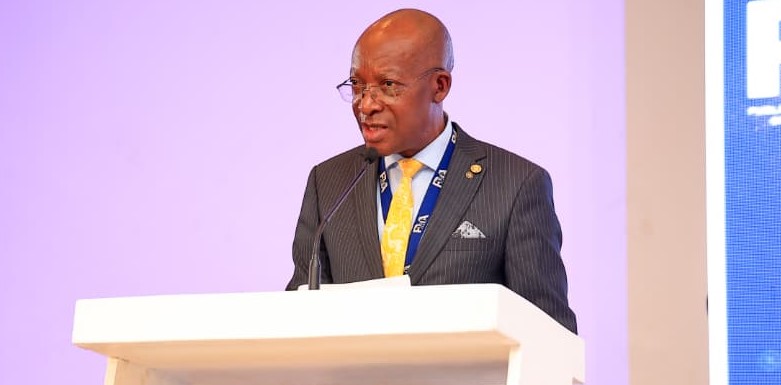
The Executive Director of the Public Procurement and Disposal of Public Assets Authority, Benson Turamye, has unveiled sweeping procurement reforms aimed at cutting delays, supporting local contractors, and accelerating Uganda’s ambitious plan to grow the economy tenfold within the next 15 years.
Speaking during the Public Procurement Cadre Forum at Speke Resort Munyonyo, Turamye said procurement reforms are now central to Uganda’s economic transformation agenda under the Public Investment Management Plus (PIM Plus) framework, the Fourth National Development Plan (NDP IV), and Uganda Vision 2040.
“Public procurement represents between 14 and 19 percent of Uganda’s GDP and accounts for approximately 65 percent of the national budget,” Turamye said. “This makes procurement the single largest source of business opportunities in the country.”
The PPDA boss acknowledged persistent concerns surrounding procurement delays, cost overruns, poor contract execution, and inefficiencies, saying government is now focusing on practical administrative reforms that can improve service delivery without necessarily changing the law.
“As government officials, we must ask ourselves how public procurement can contribute directly to economic growth and national transformation,” he said.
Turamye traced Uganda’s procurement evolution from the old Central Tender Board system established under the 1964 Public Finance Act to the modern PPDA framework introduced in 2003 to improve accountability, transparency, and value for money.
He said PPDA currently oversees procurement compliance across 348 government entities, 34 foreign missions, and over 1,000 schools nationwide.
A major focus of the reforms, according to Turamye, is strengthening local content and ensuring Ugandan businesses benefit more from government contracts.
“You are aware there are products reserved for local providers, including uniforms, clothing, and motorcycles assembled in Uganda,” he said. “Government procurement must support domestic industries, youth, women, and persons with disabilities.”
He revealed that at least 15 percent of procurement budgets are expected to support special interest groups under government policy.
Turamye also highlighted progress in digitising procurement through the Electronic Government Procurement (e-GP) system, currently operational in 36 high-spending entities managing a combined budget of Shs5.4 trillion.
According to PPDA, the system already has 9,530 registered providers and has facilitated the award of 2,756 contracts electronically.
To address poor contract execution, PPDA introduced a digital contract monitoring platform in 2022 that allows real-time reporting and tracking of government projects. The authority has so far handled 1,296 contract-related complaints through the system.
Turamye further proposed the establishment of a contract financing guarantee fund to help small and medium contractors access financing, as well as a national construction equipment leasing pool to support local firms executing government projects.
He also pushed for collaborative procurement arrangements for vehicles, furniture, computers, motorcycles, and tyres to reduce costs and eliminate repetitive procurement cycles across government agencies.
“As procurement professionals, you must move beyond ticking boxes,” Turamye told participants. “You are expected to drive innovation, efficiency, transparency, and real economic impact.”
He said PPDA remains committed to supporting Uganda’s target of expanding the economy from about $50 billion to $500 billion through faster, cleaner, and more efficient public procurement systems.