



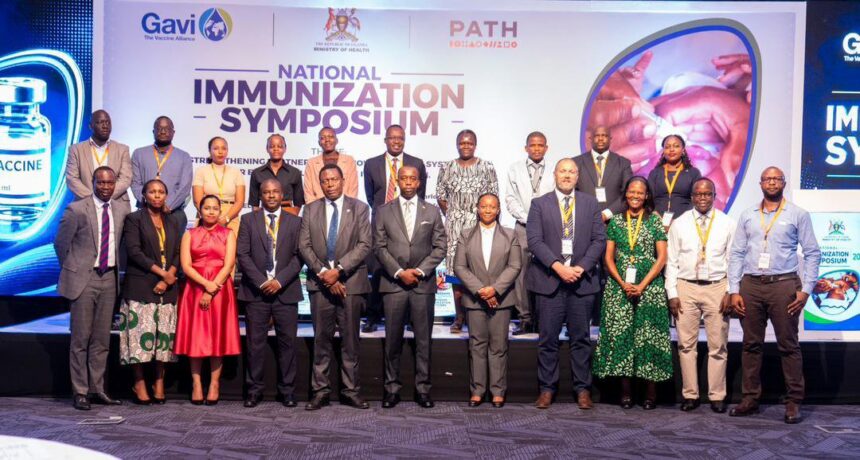
Uganda’s Ministry of Health has called for intensified research into reducing the number of injections required under multi-dose childhood vaccination schedules, warning that complex immunisation regimens are contributing to lower completion rates despite the country’s strong overall vaccine coverage.
Speaking during the National Immunisation Symposium, officials said Uganda has maintained more than 90% coverage for most routine childhood vaccines.
However, newer vaccines requiring multiple doses—particularly the malaria vaccine introduced in 2025—are experiencing significant drop-offs after the first injection.
The malaria vaccine, administered at six, seven, eight and 18 months, recorded strong uptake for the first dose following its rollout across 107 high- and moderate-malaria burden districts.
However, health officials noted that completion rates continue to decline with each subsequent dose, limiting the vaccine’s effectiveness in reducing malaria infections and deaths.
“Our goal is for every child and every high-risk group to be fully vaccinated with safe and effective vaccines according to national guidelines,” officials said, noting that improving demand for immunisation services remains one of the programme’s key priorities.
Health experts attributed the decline largely to behavioural and logistical challenges. Unlike traditional immunisation schedules that conclude before a child’s first birthday, the malaria vaccine requires caregivers to make additional visits to health facilities during the second year of life—a practice many families are not yet accustomed to.
“The community has historically associated vaccination with the first year of life,” officials explained. “Returning for doses at seven months, eight months and finally at 18 months requires sustained awareness, reminders and motivation.”
The ministry is now exploring strategies to simplify vaccination schedules through scientific research and innovations that could reduce the number of injections while maintaining vaccine effectiveness.
Officials believe such advances would improve completion rates and strengthen protection against preventable diseases.
Although Uganda currently administers 14 vaccines targeting childhood and adolescent diseases, disparities remain across districts.
While national coverage appears strong, several regions continue to record lower uptake, particularly among children living in urban informal settlements, refugee-hosting districts, fishing communities and hard-to-reach areas.
The ministry also expressed concern over recurring measles outbreaks, linking them to immunity gaps caused by children missing recommended vaccine doses. Since January, 24 districts have reported measles outbreaks, prompting plans for a nationwide vaccination campaign in October targeting approximately seven million children.
To improve immunisation coverage, the government is expanding integrated outreach services, increasing the number of health facilities offering vaccination, strengthening solar-powered cold chain infrastructure and piloting last-mile vaccine delivery directly to health centres.
However, officials acknowledged that challenges remain, including reliance on paper-based data systems that make it difficult to track children who miss appointments, monitor vaccine stock and generate timely information for decision-making.
Health authorities said addressing these gaps will be essential if Uganda is to sustain high immunisation coverage and ensure every child receives the full protection offered by life-saving vaccines.