



HIV/AIDS researchers based at the Makerere University-Johns Hopkins University (MU–JHU) are urging the government and partners to support Ugandans in affording the HIV – Prevention drug, Lenacapavir.
The drug has so far demonstrated 100% efficacy and superiority over pre-existing medicines and is by end of this year or early 2025, be in pharmacies.
The cost of the drug remains key among other issues once it is officially approved globally according to the Director Research, MU-JHU, Dr. Flavia Matovu Kiweewa.
“What is on my mind currently is how can we have it accessible, for especially for Uganda where we have put in so much?”
“We have policy makers like World Health Organization (WHO), the National Drug Authority (NDA) to fast track approval, the Ministry of Health (MOH) to fast-track changing guidelines to incorporate it, but most importantly, cost remains an issue”, she remarks.
Expert in Epidemiology, Biostatistics and Clinical trials, Noah Kiwanuka however cautions the public not to relax and be reckless but rather stick to the available methods as they await the rollout of Lenacapavir.
“As we roll out these other measures, please choose what works for you currently in the pack that we have including; the ABC strategy, circumcision, and ARVs for prevention such the Oral drugs, the Vaginal ring and injectables like Cabotegravir, so that Lenacapavir can still find you HIV Negative and be eligible for it.”
“One of our strategies is adopting new methods and once approved we shall fast track its implementation in the country” he adds.
The PURPOSE 1 study focused on adolescent girls , young women and those who frequently change partners for financial gain, between the ages of 18 to 24,however,experts warn that all sex is transactional and a medium of exchange that is not only for the group that it was done.
“The risk profile does not stop at this category. Lenacapavir should be used by all females as per now although is has proven to work in males also at a protection rate of 96%.
The PrEP Coordinator at the Ministry of Health, Dr.Herbert Kadama says the drug should not be mistaken for PrEP because those entitled to it are those not exposed at all.
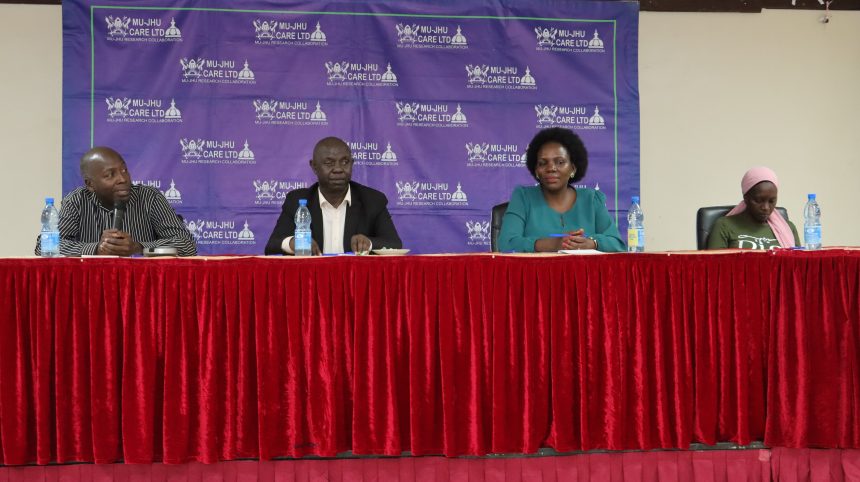
Their remarks came during the National Stakeholders Engagement Meeting organized by MU-JHU Research Collaboration in partnership with the Ministry of Health, to share remarkable findings from the PURPOSE 1 clinical trial and discuss implications of the results on the HIV prevention landscape.
Married women have been urged to go for HIV testing to know their status due to the increasing rate of infection among married couples.