



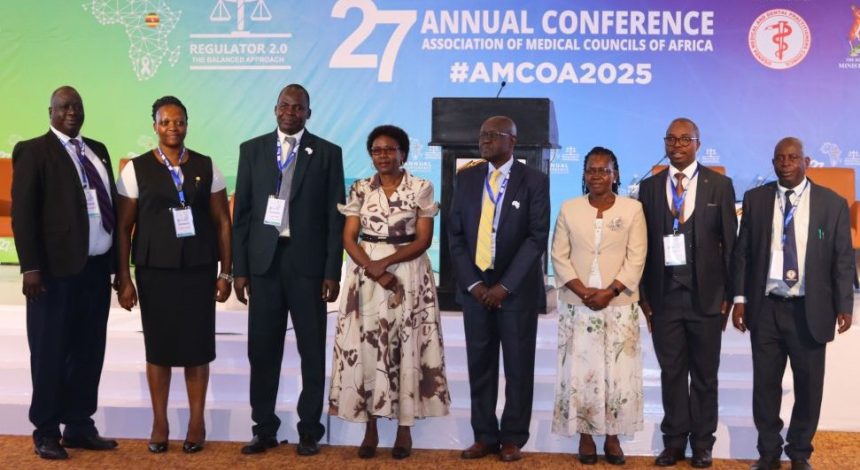
Uganda’s Minister of Health, Dr. Jane Ruth Aceng, has called on African medical regulatory authorities to prioritize both patient safety and health worker well-being as they shape policies and standards across the continent’s healthcare systems.
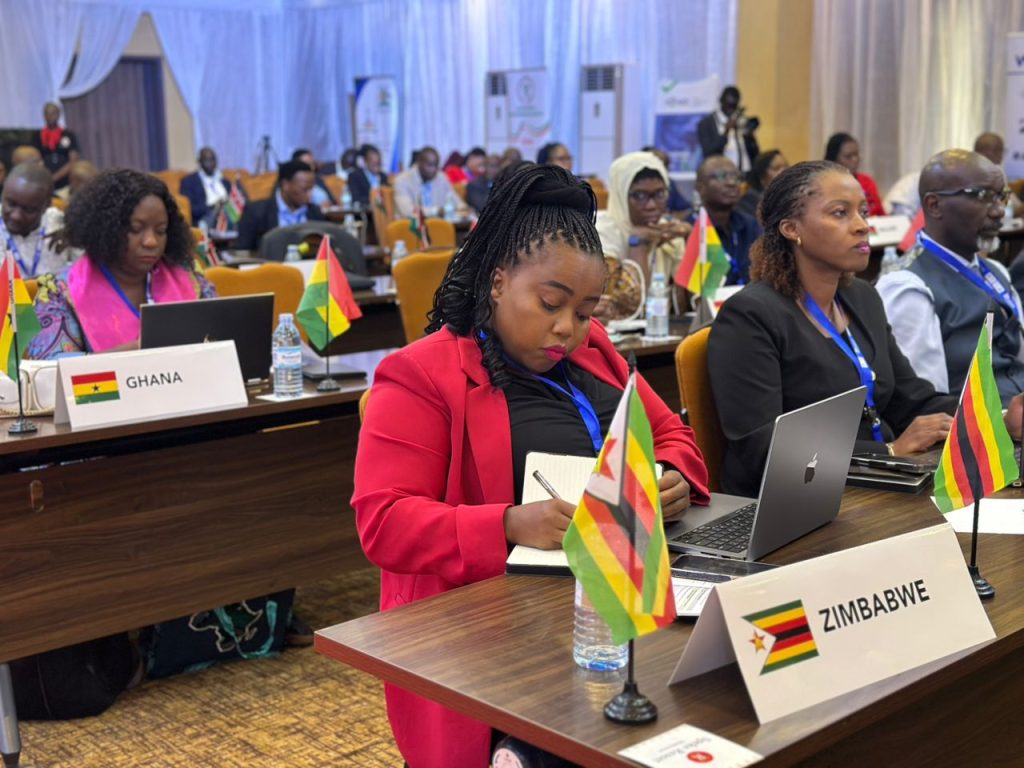
She made the remarks while opening the 27th Annual Conference of the Association of Medical Councils of Africa (AMCOA), hosted in Kampala.
Addressing delegates from across Africa, Dr. Aceng emphasized that medical regulators bear the responsibility of ensuring healthcare delivery systems are safe, inclusive, and efficient.
“You have a duty to protect, promote and maintain the health and safety of the public by ensuring proper standards of training and practice in the profession of medicine,” she said.
She highlighted key areas requiring urgent attention, including creating safe working environments for health workers, addressing mental health challenges, promoting continuous professional development, and ensuring data-driven policymaking to improve healthcare delivery.
“The welfare of the medical profession is a critical component of a safe and effective healthcare system,” Dr. Aceng noted. She warned that burnout among health workers could lead to increased medical errors and stressed the importance of reducing stigma around mental health in the profession.
Dr. Aceng also reaffirmed the Ugandan government’s commitment to support regulatory bodies in delivering their mandates. “We look forward to the outcomes and recommendations from this conference and the contribution they will make in strengthening our healthcare systems,” she added.
In a candid keynote, Prof. Francis Omaswa, Executive Director of the African Centre for Global Health and Social Transformation (ACHEST), addressed the systemic leadership gaps in managing health workforces across the continent.
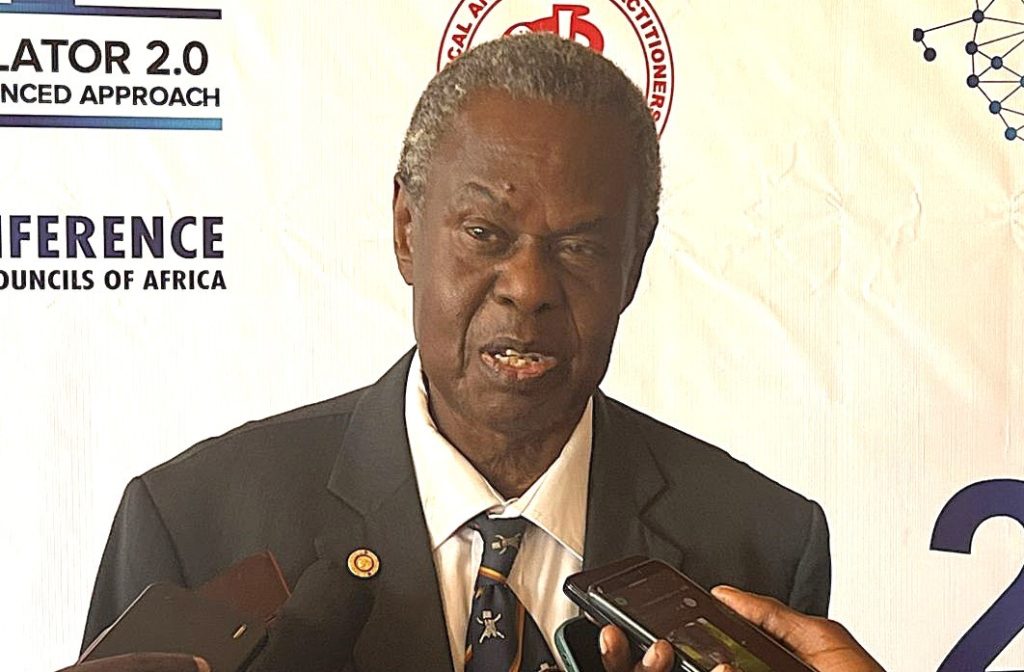
He pointed out that many health ministries focus on administrative tasks rather than aligning workforce planning with disease burden and national health needs.
“There’s a serious gap in leadership when it comes to understanding the link between health worker skills and population needs,” Prof. Omaswa said. He advocated for the teaching of specialized health workforce management curricula and called for greater resistance to political interference in training institutions, particularly from profit-driven private entities that compromise education quality.
Prof. Omaswa also weighed in on the growing trend of health worker migration to the Global North, stating that it is inevitable due to global demographics but emphasized that African governments should negotiate better conditions to protect their professionals abroad.
“The WHO Code on International Recruitment of Health Personnel is very good. We must ensure our people are treated with dignity when they go to work abroad,”he noted.
Prof. Joel Okullo, Chairperson of the Uganda Medical and Dental Practitioners Council (UMDPC), echoed Dr. Aceng’s concerns, stating that efforts have been made to ensure harmonized training standards across East Africa.
“We have inspected every university in Uganda and extended our collaboration to all East African countries to ensure the quality of health worker training is consistent,” he said.
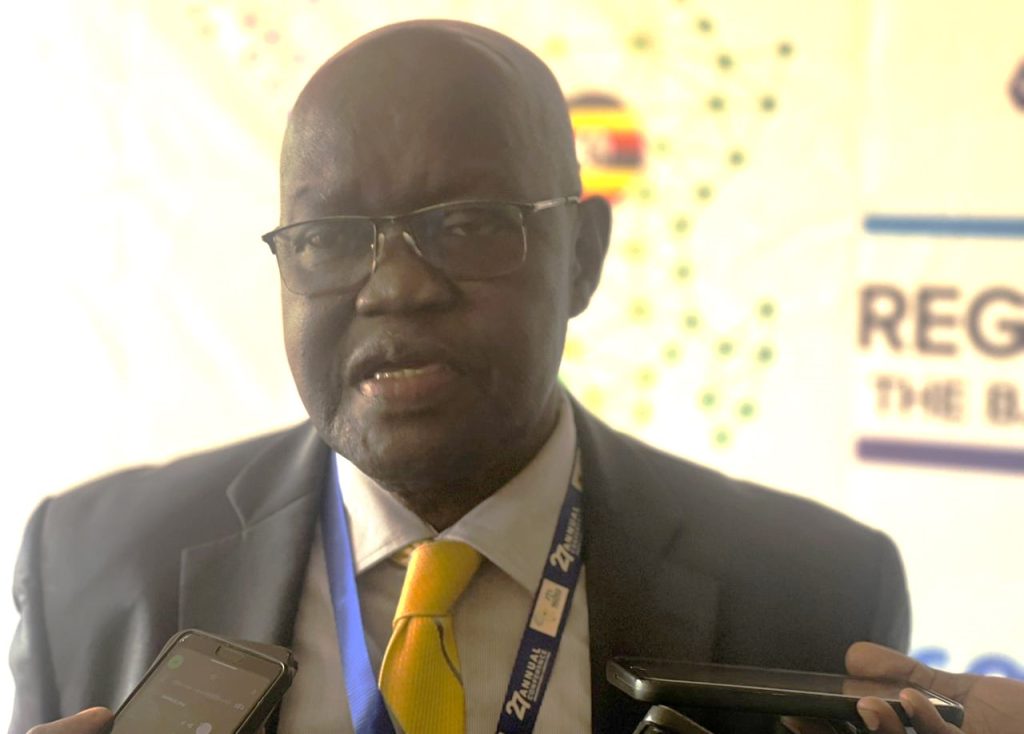
Prof. Okullo noted the growing threat of unqualified practitioners, or “quacks,” infiltrating the system and affirmed that UMDPC is working hard to detect and manage such threats to protect public health.
He also emphasized the importance of pan-African cooperation through platforms like AMCOA, which unites medical councils across East, West, and Southern Africa, and called for inclusion of North African countries to achieve full continental representation.
The conference continues this week with sessions on standardizing regulation, improving training, and enhancing regional and global collaboration to strengthen Africa’s healthcare workforce.