



Local leaders in Kabarole District have renewed calls for communities to actively embrace climate-smart agriculture as Uganda intensifies efforts to cushion farmers against the growing impact of climate change.
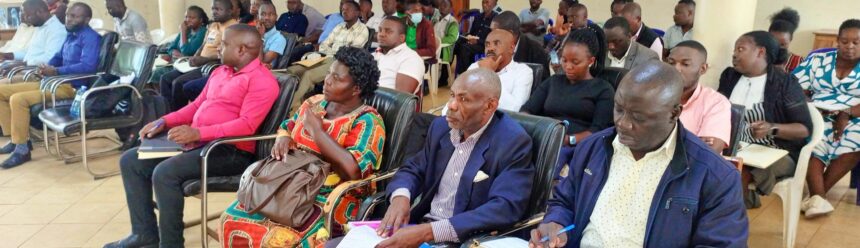
The call was made during a quarterly review meeting of the Uganda Climate Smart Agricultural Transformation Project, where officials assessed progress, discussed challenges and mapped out priorities for the coming period.
Addressing participants, the Deputy Chief Administrative Officer of Kabarole, Arthur Nzeimaana, urged leaders and technical staff to take the project beyond meeting rooms and into the communities it is meant to serve.
He stressed that meaningful transformation would only be achieved if local leaders consistently engaged farmers and ensured that those participating were ready to adopt modern, climate-resilient practices.
He noted that while the project is intended to improve livelihoods, it targets active farmers willing to invest in sustainable production rather than handouts, calling on community development officers and agriculture extension workers to properly screen and guide beneficiaries.
The district focal person for the project, Solomon Musinguzi, said the six-year initiative is designed to raise agricultural productivity, improve access to markets and strengthen resilience across selected value chains.
He explained that participating farmers are expected to contribute 20 percent of the investment costs, with government covering the remaining 80 percent, a model he said promotes ownership and long-term sustainability.
According to Musinguzi, coordinated action among district leaders, technical staff and farmers will be critical if Kabarole is to fully benefit from the project.
The Assistant Resident District Commissioner, Frank Asaba, used the meeting to caution against politicising development programmes, saying the focus should now shift squarely to implementation.
He challenged political leaders, extension workers and community development officers to intensify mobilisation and sensitisation so communities clearly understand government programmes such as climate-smart agriculture and the Parish Development Model.
Agriculture officers also highlighted the importance of integrating the project with other ongoing initiatives. Sunday Simon from Karangura Sub-county said using every available platform to explain the project to farmers would significantly boost its impact, noting that coordinated messaging can accelerate adoption of improved farming methods and spur local economic growth.
Participants reviewed proposed infrastructure and natural resource investments meant to support climate-smart agriculture, including improvements to rural access roads, swamp crossings and bridges to ease the movement of farm inputs and produce.
Several sites have also been earmarked for valley tanks to support water harvesting and livestock production in areas prone to dry spells, reflecting the project’s emphasis on building resilience to climate shocks.
The proposed activities of the project focus on improving key rural infrastructure and water resources to support climate-smart agriculture across Kabarole District.
Planned road chokes and access improvements will cover the Katoma–Bwabya road connecting Rwengaju Sub-county, Kidubuli Health Centre III and Rwengaju Sub-county, the Buzinda swamp linking Rwengaju Sub-county to the Central Division of Fort Portal City, the Mbagani–Kirere road, the Ruteete–Mituuli road, the Kahangi–Mbagani road, the Busanga–Myeri–Kagagona road, and the Kyogya–Busanga swamp link connecting Mugusu Sub-county to the North Division.
Other proposed interventions include works along River Mahoma connecting Kyanyaitemba to Mukatika to link Kabarole to Bunyangabo, the River Mahamo access link along Kamigani–Kiyombya, the River Mukumiri access link to Nyakitokoli Health Centre III, the Nyakitokoli Primary School access for bridging River Mukumiri, the Mahyoro Primary School access for bridging and opening, and the Mahoma bridge on the Magunga–Bukorakole access road.
Additional sites include the Nyansimbi swamp linking Hakibaale Sub-county to Kibasi Town Council for bridging, the Kyarwagonya bridge linking Hakibaale Sub-county to Kibasi Town Council, the Kyamasongi–Busoro access with rock cropping linking Kirere to Kabegira, the Kitangira–Kahondo swamp linking Kyakagusa market and Kicwamba to Bwanika and Buhara, the Kanyatete access for sand and stone removal and spot graveling, the Kyakaigo–Harugongo road linking Kicwamba to Kiburara and Nyabukaara, and the Nyantaboma–Buzinda road connecting to Kidubuli–Rwenganju.
The project also proposes the construction of valley tanks at selected farms to enhance water harvesting and climate resilience, including Nyakabira Farm in Bulyambuzi–Harugongo Sub-county, Masongora Farm in Kabende, Mpinga Muhenda Farm in Harugongo, Kabagambe Frank’s farm in Magunga, Mugusu, Kakyoma Erisa’s farm in Hakibaale, Nkwasibwe Denis’ farm in Kasenda, Joan Gava’s farm in Rwengaju, Frank Niwagaba’s farm in Kakunwa–Harugongo, Rwengaju Mwikya Farm in Rwengaju, and Kabigambwa Farm in Rugando, Kibasi Town Council.
The meeting concluded with a resolution to sustain environmental screening of all climate-smart investments, including roads, irrigation sites and valley dams, while stepping up farmer mobilisation, sensitisation and group registration for the e-voucher system. District leaders said these measures are essential to ensure transparency, environmental protection and effective delivery of project benefits.
As Uganda pursues its ambition of becoming a middle-income country, officials said climate-smart agriculture is no longer optional but central to economic transformation.
For Kabarole, sustained commitment from leaders and farmers alike is expected to translate into higher productivity, stronger resilience and improved livelihoods, positioning agriculture as a driver of inclusive and sustainable growth.