



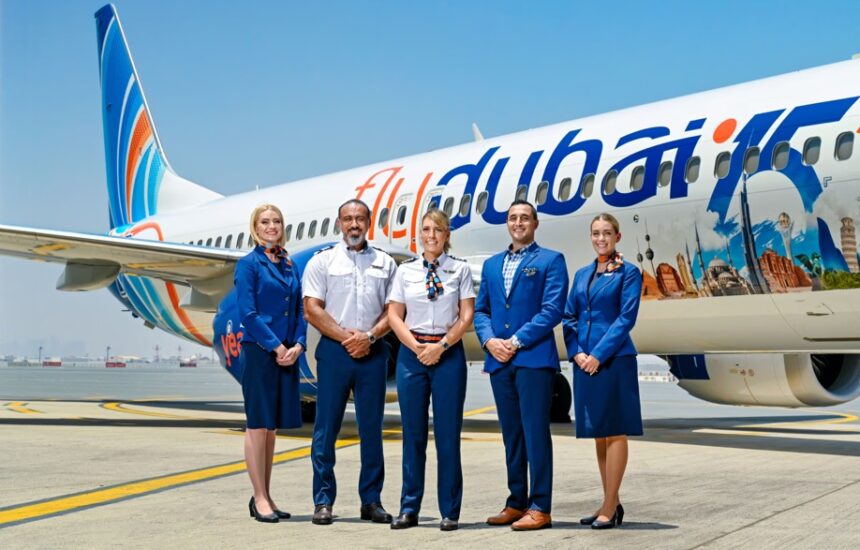
flydubai has delivered a strong set of results for the financial year ended 31 December 2025, underpinned by record passenger numbers, steady revenue growth and continued strategic expansion of its global network.
The Dubai-based carrier reported a pre-tax profit of AED 2.2 billion (USD 591 million), while profit after tax reached AED 1.9 billion (USD 531 million). Total revenue rose 6% year-on-year to AED 13.6 billion (USD 3.7 billion), compared with AED 12.8 billion in 2024. EBITDA remained robust at AED 4.0 billion (USD 1.1 billion), highlighting sustained operational resilience despite geopolitical uncertainty and supply chain constraints.
The airline carried a record 15.7 million passengers across 140 destinations in 58 countries, reflecting strong demand for both business and leisure travel. Business Class uptake rose 19% compared to 2024, while overall capacity, measured in Available Seat Kilometres (ASKM), increased 6% to 47,148 million. Revenue Passenger Kilometres (RPKM) also climbed 6%, with passenger yield improving 3%.
flydubai operated 126,604 flights during the year, recording more than 400 departures in a single day at peak periods. On-time performance improved by 6% year-on-year, reinforcing its operational efficiency drive. Fuel accounted for 25% of total operating costs, while closing cash and bank balances stood at AED 5.6 billion (USD 1.5 billion), including pre-delivery payments.
Chairman His Highness Sheikh Ahmed bin Saeed Al Maktoum said the airline’s fifth consecutive year of strong profitability aligns closely with Dubai’s broader economic vision, positioning aviation as a cornerstone of growth under the Dubai Economic Agenda (D33).
Chief Executive Officer Ghaith Al Ghaith said the airline’s performance reflects the resilience of its business model and disciplined expansion strategy.
During 2025, flydubai launched nine new destinations and resumed three routes, strengthening connectivity across underserved markets in the Middle East, Africa and Europe.
Fleet expansion remained central to growth plans. The airline took delivery of 12 Boeing 737 MAX 8 aircraft, expanding its fleet to 97 aircraft with an average age of 5.5 years, while retiring older 737-800s. A retrofit programme enhanced product consistency across cabins, and new aircraft orders announced at the Dubai Airshow — including Airbus A321neos and Boeing 737 MAX aircraft — signaled long-term fleet diversification.
Strategic partnerships also deepened. Its collaboration with Emirates enabled more than 2.5 million passengers to access a joint network of 243 destinations, while interline agreements expanded its global reach to over 300 destinations.
Looking ahead to 2026, flydubai expects to take delivery of 12 additional aircraft, expand frequencies on key routes and launch Bangkok as a gateway into Southeast Asia, reinforcing its ambition to remain a central pillar of Dubai’s global aviation hub strategy.