



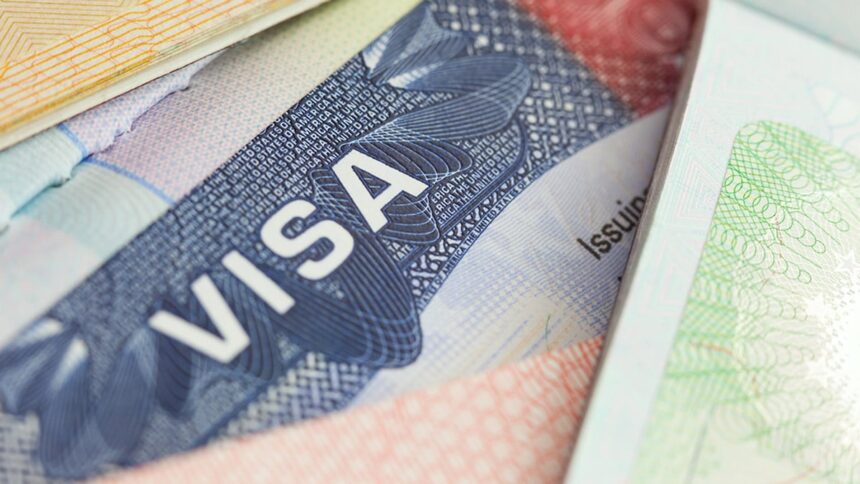
Ugandan travelers planning trips to the United States will face new financial and procedural requirements from January 21, 2026, after the U.S. Department of State included Uganda on a list of countries subject to a new visa bond pilot programme.
Under the policy, Ugandan passport holders who are otherwise eligible for U.S. B1/B2 visitor visas for business or tourism may be required to post a visa bond ranging from $5,000 to $15,000.
The bond amount will be determined during the visa interview and is intended to address concerns linked to visa overstay rates, based on data from the U.S. Department of Homeland Security.
The measure places Uganda alongside several African and developing economies, including Nigeria, Tanzania, Zambia and Zimbabwe, whose nationals will also be affected by the new rules.
For Uganda’s growing outbound travel market, particularly business travelers, students’ families, religious visitors and tourists, the change introduces an additional cost and planning layer to U.S.-bound travel.
Applicants directed to post a bond will be required to submit a Department of Homeland Security Form I-352 and make payment through the U.S. Treasury’s Pay.gov platform.
U.S. authorities have cautioned applicants not to pay any fees unless specifically instructed by a consular officer, noting that payment of a bond does not guarantee visa issuance and that unauthorized payments will not be refunded.
As part of the bond conditions, affected travelers must also enter and exit the United States through designated airports: Boston Logan International Airport, John F. Kennedy International Airport in New York, or Washington Dulles International Airport.
Failure to comply with these entry and exit requirements could result in denied entry or complications in recording lawful departure.
For Ugandan travelers who comply fully with visa conditions, the bond is designed to be refundable. The funds will be returned automatically if the traveler departs the United States on or before the authorized date of stay, does not travel before the visa expires, or is denied admission at the port of entry.
However, overstaying, remaining in the U.S. unlawfully, or applying to adjust status, including asylum claims, could lead to forfeiture of the bond following review by U.S. immigration authorities.
Travel industry players in Uganda are expected to closely monitor how the new policy affects demand for U.S. travel, particularly among middle-income travelers and small business owners for whom the bond amounts may be prohibitive.
The development comes at a time when international travel from Uganda has been steadily recovering, supported by increased business mobility, diaspora ties and tourism-related exchanges.