



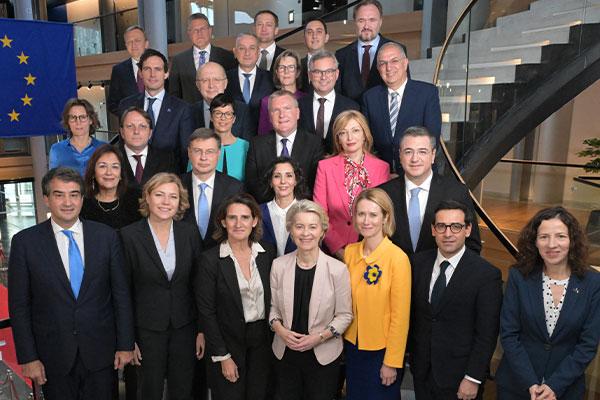
Health advocates in Uganda and across Africa have urged European policymakers to support stronger global health equity provisions as negotiations continue over the implementation of the World Health Organization pandemic agreement.
At a press conference held on March 9 in Kampala, AHF Uganda Cares, in partnership with the Resilience Action Network Africa (RANA) and the Coalition for Health Promotion and Social Development (HEPS-Uganda), called on the European Commission to support a legally binding Pathogen Access and Benefit-Sharing (PABS) annex before the agreement is finalised.
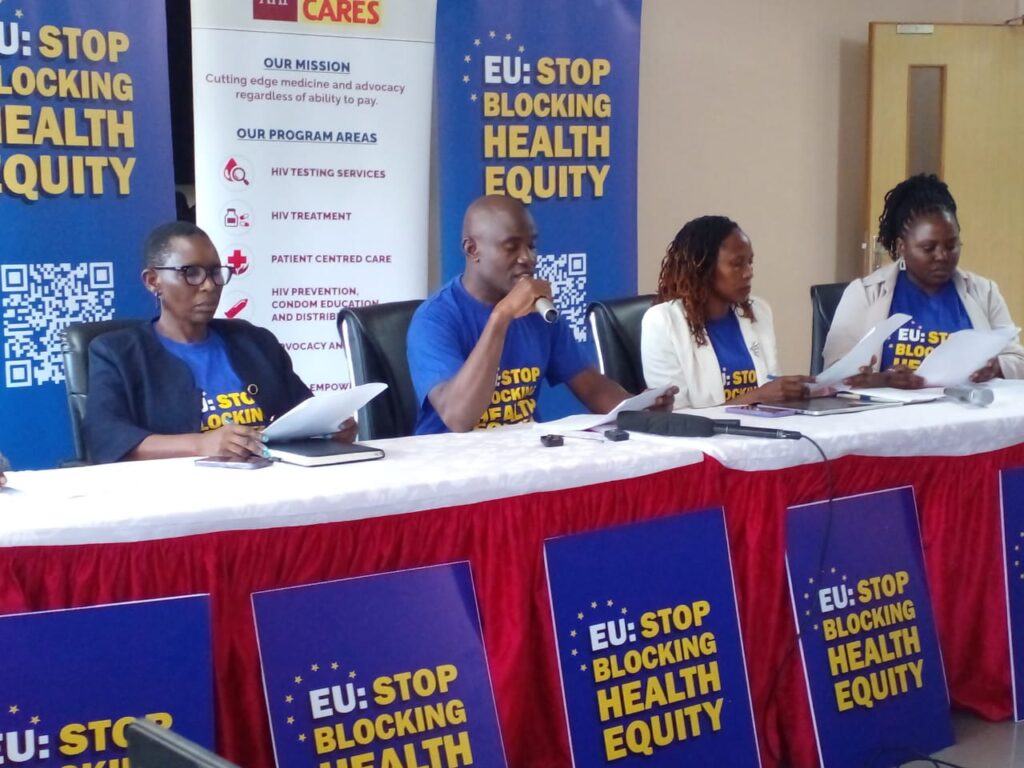
Leading the groups, Dr. Augustine Lubanga,National Medical Director-AHF Uganda Cares, warned that without binding provisions ensuring fair access to vaccines, diagnostics and treatments, the global health framework risks repeating the inequities witnessed during the COVID-19 pandemic.
The pandemic agreement adopted in May 2025 aims to strengthen global systems for preventing and responding to future health emergencies. However, it cannot advance until negotiations conclude on the PABS annex, which sets rules governing how pathogen samples and genetic data are shared internationally and how benefits from resulting medical innovations are distributed.
The advocates noted that negotiations remain stalled because several high-income countries, including members of the European Union, have resisted provisions guaranteeing equitable benefit sharing for developing countries.
“A weak annex would repeat the injustices seen during COVID-19,” the organisations said in a joint statement, urging European policymakers to support enforceable mechanisms that ensure fair access to life-saving health technologies.
African health groups say the issue is particularly urgent for the continent, where reliance on imported vaccines and pharmaceutical ingredients remains high. Although Africa accounts for roughly 25 percent of global vaccine demand, it represents only about 4 percent of the global vaccine market.
Public health data also show that millions of African children remain under-immunised. Each year, approximately 9.4 million children across the continent miss their third dose of the diphtheria-tetanus-pertussis vaccine, a critical component of routine childhood immunisation.
The advocates also highlighted limited pharmaceutical manufacturing capacity in regions such as the East African Community, where more than 70 percent of pharmaceutical products are imported.
The organisations are now urging the European Union to support binding commitments that guarantee benefit sharing, including technology transfer, non-exclusive licensing for manufacturers in developing countries and financial contributions from pharmaceutical companies using shared pathogen data.
With a May 2026 deadline approaching to finalise the annex, health advocates warn that failure to reach an agreement could delay ratification of the pandemic accord and weaken global preparedness for future outbreaks.
“A strong and equitable agreement is not just important for Africa,” the groups said. “It is essential for global health security.