



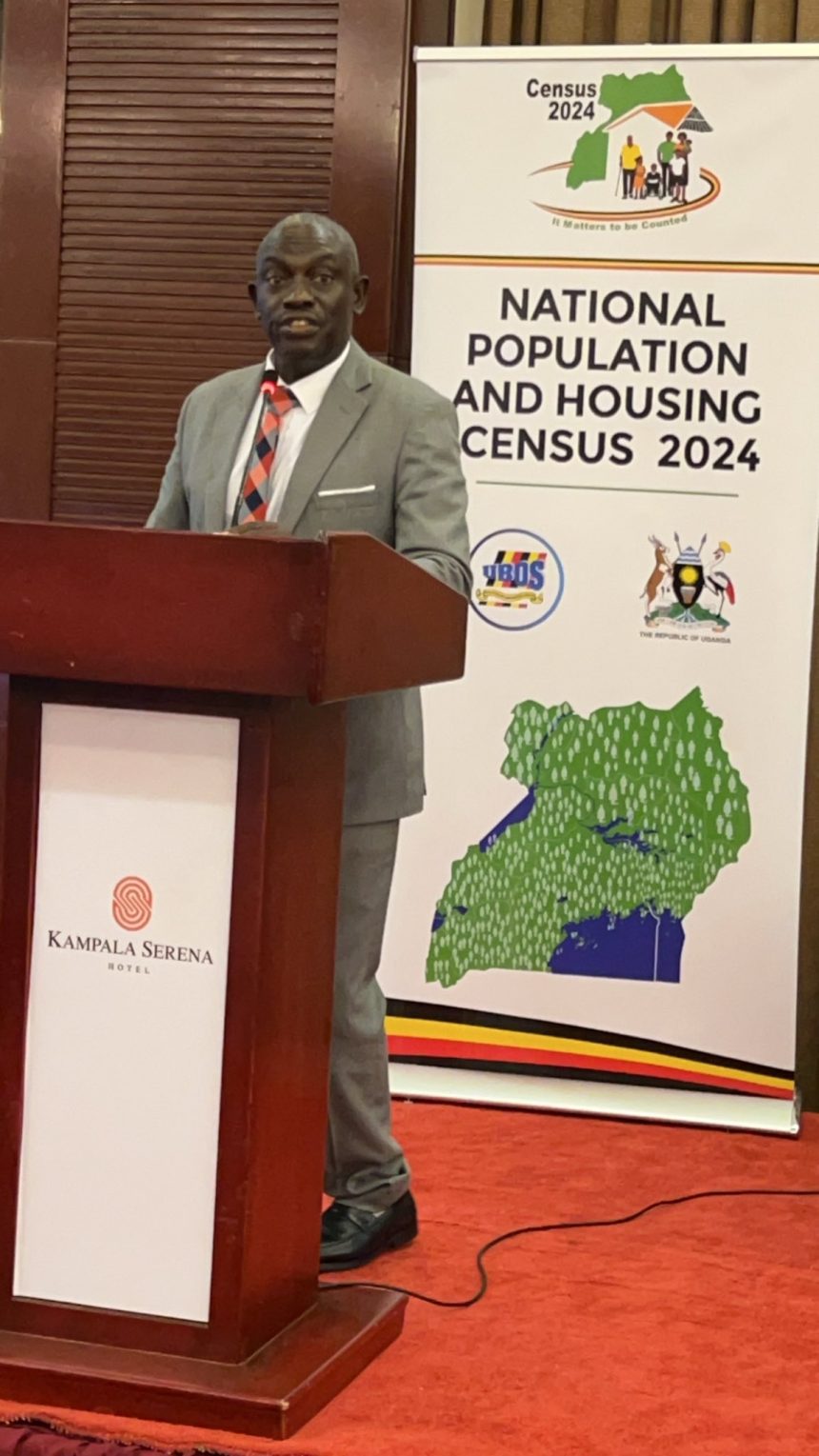
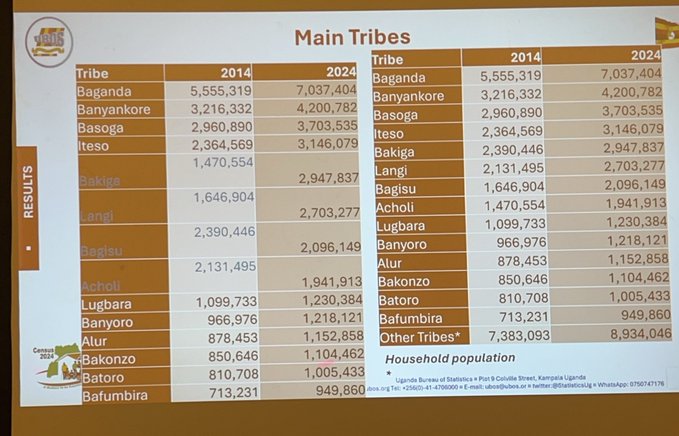
The Uganda Bureau of Statistics (UBOS) has addressed concerns regarding discrepancies in tribal population figures following the release of the 2024 national census.
Dr. Fred Ssennono, the Acting Deputy Executive Director at UBOS, reassured the public that while there were issues with data representation in the 2014 census, the 2024 figures are correct and offer an accurate reflection of Uganda’s ethnic composition.
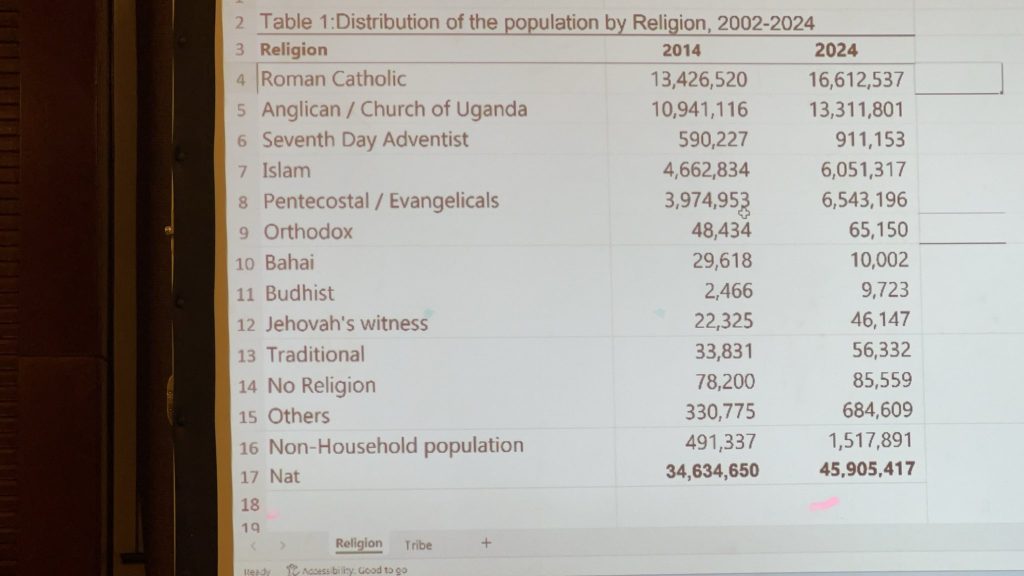
Dr. Ssennono emphasized that no religious or ethnic groups had experienced a decline in population, contrary to earlier claims.
“All religions in Uganda have seen an increase, although some are growing at a slower pace,” he stated, countering speculation that certain faiths had seen a decrease in membership.
In his remarks, Dr. Ssennono acknowledged that errors occurred in the 2014 census, which resulted in some tribal data being misattributed.
“For instance, the 2014 figures for the Bakiga tribe were mistakenly attributed to the Acholi, while those for the Langi were switched with the Bagisu. The corrected data now reflects the true distribution of these tribes,” he clarified.
UBOS affirmed that detailed information for all of Uganda’s tribes has been captured accurately in the 2024 census, with no intention to discredit any ethnic group.
Speaking at the media event, UBOS Executive Director Dr. Chris Mukiza categorically refused to resign in the wake of the error.
“A human who does not make errors has mental issues”, adding that small human error cannot make him resign.
Beyond tribal demographics, the report also revealed important insights into Uganda’s education sector. Approximately 89.4% of the country’s parishes have at least one primary school, with most institutions being government- or privately funded.
Meanwhile, 70.8% of sub-counties have secondary schools, 62.2% of which are government-funded, and 54.5% privately owned.
The 2024 census data will play a crucial role in guiding national policy and development initiatives.