



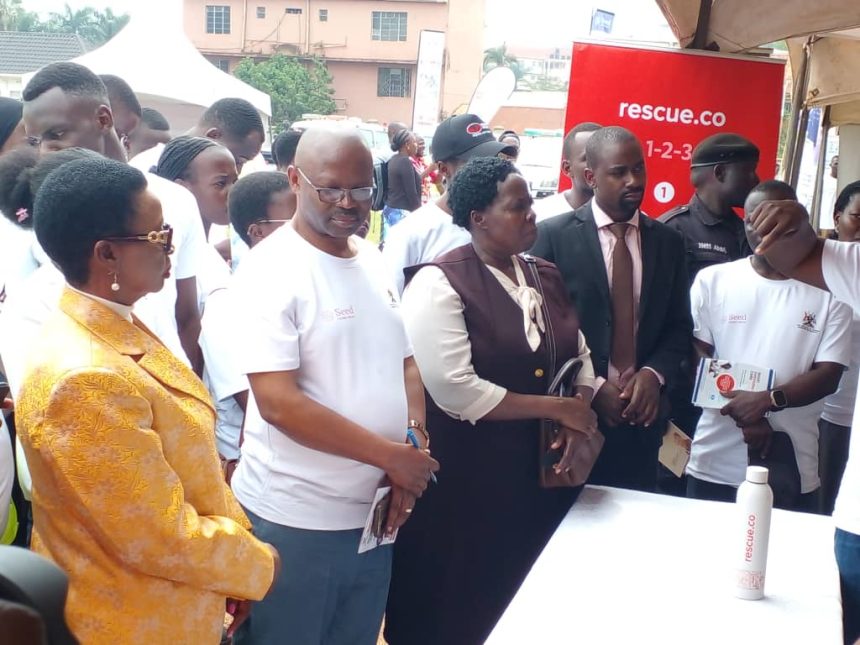
Uganda’s Ministry of Health, in collaboration with key stakeholders including the Uganda Red Cross Society and the Emergency Care Association of Uganda, has reiterated its commitment to strengthening the country’s emergency medical services (EMS) through enhanced training, better coordination, and strategic investment.
Speaking at a national event celebrating the progress and future of emergency care, the State Minister of Health , Hon. Anifah Kawooya, lauded the efforts of health professionals and partners, acknowledging that EMS in Uganda, though a relatively new department, has rapidly become a critical part of the healthcare system.
“It started as a dream, but it is a dream that has been realized today,” the Minister said, referencing the journey to build a robust emergency care system in Uganda. “Now the onus is on us as government to see how we can integrate emergency care professionals into our public health framework.”
The Minister underscored the need to ensure that trained emergency responders, or trainers, are well-resourced and adequately deployed.
“It’s not good to train while the trainers are wasted,” the Minister noted. “We must plan to utilize these trainers fully and encourage more to join the field.”
One of the key concerns raised was the lack of structured collaboration between trained emergency responders and community actors such as boda boda riders, who are often first on the scene of road traffic accidents.
The Minister called for formal training and integration of these riders into the emergency response ecosystem.
Citing World Health Organization (WHO) statistics, Irene Atuhaire- Seed Global Health, Country Director pointed out that emergency conditions, including road traffic injuries, account for over 54% of mortality, with road accidents surpassing other leading causes of death in Uganda.

“We must have a strategic plan for road accidents,” she emphasized, noting the urgent need for timely, professional intervention. “Early evacuation is critical, but how it is done can mean the difference between life and death.”
The police were also mentioned as key partners needing basic emergency medical training to avoid mishandling accident victims. Doreen Okong Alaleit ,President of the Association of Emergency Care,stressed the importance of inter-agency coordination and professional first aid before transporting casualties.
The Uganda Red Cross Society has procured 21 ambulances stationed along major highways and has actively trained boda boda riders in first aid.
“Accidents on highways will now be responded to quickly, and patients can receive care once they arrive at health facilities and we are proud of how far EMS has come,” said URCS Secretary General, Robert Kwesiga.
National Emergency Care Assessment
Officials from Global Health Uganda presented findings from a nationwide emergency medical assessment involving 74 health facilities. While the assessment revealed a 50% reduction in emergency-related deaths over 20 years, significant challenges remain:
- Inadequate training for health workers in emergency care.
- Shortages of critical medical supplies.
- Gaps in emergency data collection and management.
- Limited presence of emergency care specialists, especially upcountry.
“If you get an emergency today, you are more likely to survive than you were 20 years ago,” one researcher noted. “But we still have a long way to go in terms of training, resourcing, and integrating our emergency response,”they noted.