




The Ministry of Health has received a major boost in its efforts to support people with visual impairments, following the donation of over 50,000 reading glasses from two international partners—Evidence Action and the Clinton Health Access Initiative (CHAI).
The glasses, which will be distributed in the Busoga and Bukedi regions, are expected to improve the quality of life and productivity of thousands of Ugandans affected by age-related vision loss.
Speaking at the handover ceremony in Kampala, Dr. Charles Olaro, Director General of Health Services at the Ministry of Health, revealed that over six million Ugandans are living with some form of visual impairment, with approximately 400,000 of them totally blind.
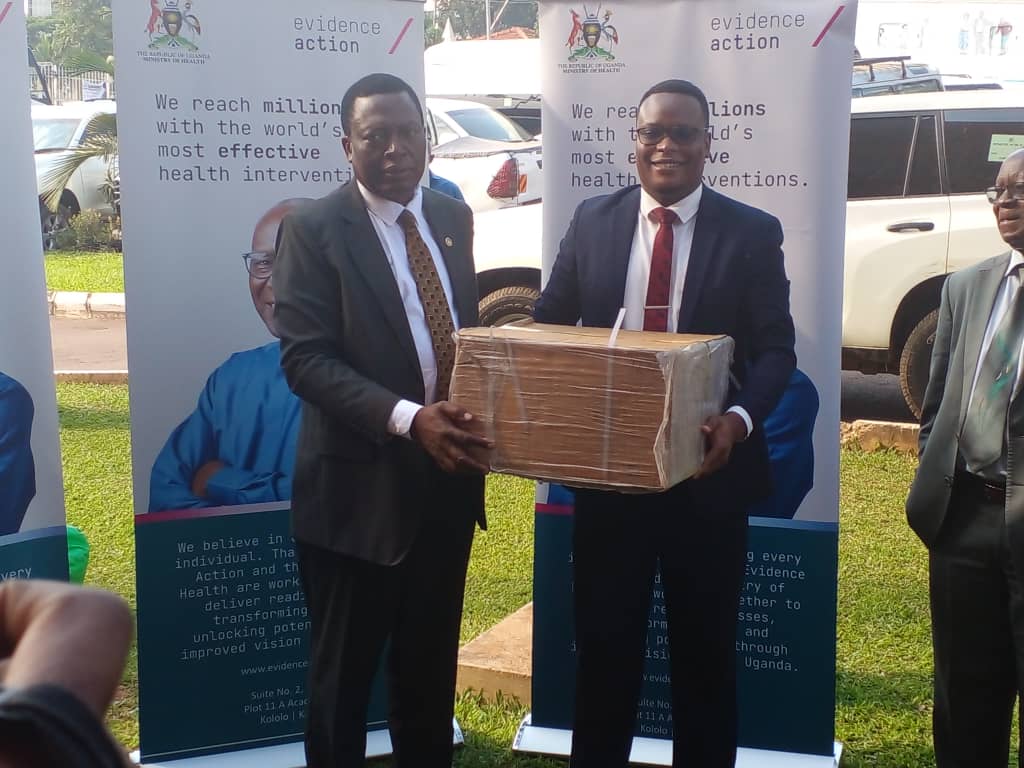
He stressed that visual challenges have serious consequences on individuals’ ability to work, earn a living, and live independently.
“Visual impairment has a huge socio-economic impact,” Dr. Olaro said. “It affects a person’s productivity, their ability to count money, or even carry out basic daily tasks like cooking or farming. When someone cannot see properly, their safety and economic contribution are compromised.”
According to Olaro, the Ministry received 36,000 reading glasses from Evidence Action and another 16,500 from CHAI. The distribution will begin in Busoga and Bukedi—regions identified as having the highest prevalence of visual impairment based on recent assessments. The initiative will be implemented through the Ministry’s existing health distribution networks.
The reading glasses target presbyopia, a common vision condition among people over 40 years of age caused by aging of the eye’s lens. “By the age of 40, many people start losing the ability to read small text without glasses,” Olaro explained. “At only one dollar per pair, these glasses offer incredible value. The benefits far outweigh the cost.”
Richard Kibuuka, Country Director of Evidence Action, said his organization is implementing the donation as part of a pilot to test scalable models for distributing reading glasses in low-resource settings.
“We are donating 33,000 pairs of reading glasses to be distributed in Mbale and Otalegia,” he said. “Research shows that one in six people over 40 has near vision loss. Our goal is to improve their well-being and test an affordable, scalable model for addressing this common condition.”
The total value of the Evidence Action donation is $36,000. Kibuuka added that the organization will monitor the pilot’s outcomes with the hope of expanding the model to other parts of the country.
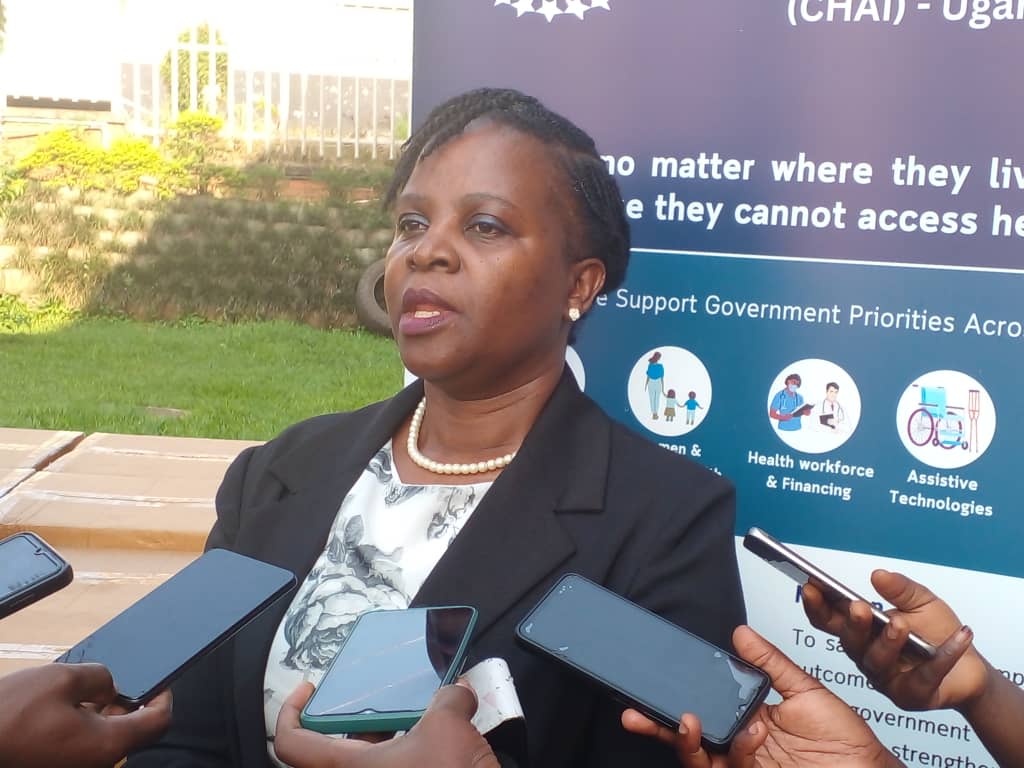
Joy Batusa, Country Director for CHAI in Uganda, emphasized that the initiative is supported by a solid policy framework. “Uganda now has a national strategy on assistive technologies, clear guidelines, and an approved list of assistive products,” she noted. “This ensures that any assistive devices—whether glasses or wheelchairs—are aligned with the country’s health priorities.”
Dr. Olaro said the initiative addresses a key pillar of Uganda’s Essential Health Care Package—rehabilitative services. “We aim to work with more partners to scale up this effort and integrate it into the national health system,” he concluded.