




A recent panel discussion on women in business has called for urgent interventions to strengthen the growth and sustainability of women-led enterprises in Uganda, highlighting financial literacy, asset ownership, and changing development trends as critical focus areas.
Speakers emphasized that when a woman succeeds in business, the impact extends well beyond the enterprise. Families, communities, and even the national economy benefit from the ripple effects of women’s economic empowerment. Yet, entrenched barriers continue to hold back women entrepreneurs, limiting their potential to fully contribute to the country’s economic transformation.
Financial Literacy Gap
The panel identified financial literacy as one of the most pressing challenges. Across Africa, most people still rely on friends or relatives for financial advice rather than trained professionals.
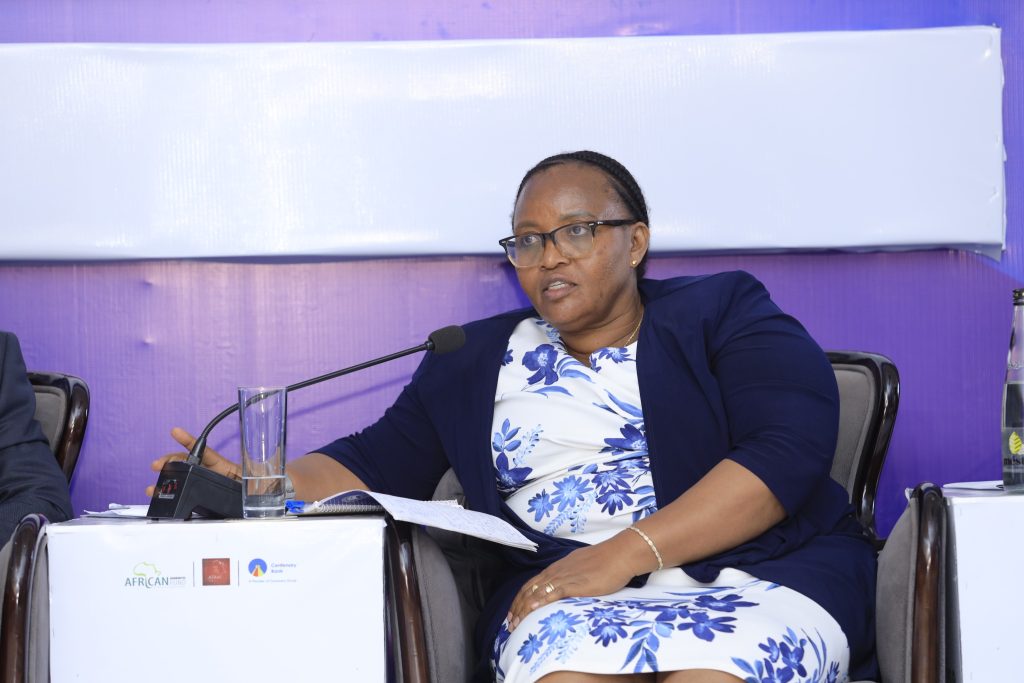
Dr. Theopista Ntale Sekitto, Uganda Country Director at New Faces New Voices and Africa Ambassador at the Global Banking Alliance for Women said , “The same way you need a doctor, a dentist, or a lawyer, you also need a financial advisor,” adding that financial guidance is often treated casually, with major consequences.
Survey data presented showed that 50 percent of entrepreneurs got financial advice from family or friends, while only a small minority turned to savings groups, farmer associations, or professional advisors. This reliance on informal sources, panelists argued, has contributed to widespread financial mismanagement.
A striking statistic underscored the problem: 68 percent of Ugandans who borrow money had never read the contracts they signed. Ms. Ntale Sekitto recalled a borrower who believed he had received a loan of 250 million shillings, only for the paperwork to reveal a debt obligation of 350 million.
“By the time most people are told their offer is ready, they just want the money. The other details are ignored,” she said.
Structural Barriers to Finance
Another obstacle highlighted was the limited ownership of productive assets by women. Only six percent of women in Uganda own land individually, compared to 12 percent of men. Because land remains the dominant form of collateral in the country, this imbalance directly affects women’s access to credit.
Despite numerous programs supporting women entrepreneurs, women account for just 24.4 percent of loan portfolios across financial institutions. “These statistics should make us all uncomfortable. They reveal deep inequalities that cannot be ignored,” a panelist remarked, borrowing Nelson Mandela’s words about letting injustice stir a hunger for change.
The Burden of Unpaid Work
Panelists also spoke about the disproportionate burden of unpaid domestic work carried by women. On average, women spend three times more hours on unpaid labor than men. “Yes, we are pregnant, we are breastfeeding, we are cooking, we are watching the children,” one contributor explained. “But this is time taken away from productive business activity.”
Although some government procurement policies have set aside quotas for women-owned businesses—such as the 15 percent allocation under the Public Procurement and Disposal of Public Assets Authority (PPDA)—panelists noted that women are not fully utilizing these opportunities. The time poverty created by unpaid work, they argued, remains a significant barrier to women’s economic participation.
Shifts in Global Development Trends
Beyond Uganda’s local challenges, the panel stressed that women entrepreneurs must prepare for global economic shifts. The era of donor-driven NGO support, especially in areas like HIV and refugee response, is giving way to private-sector-led development and green financing.

“Many development partners are closing traditional aid programs. Western countries are poorer and more business-oriented now,” Senior Consultant with the World Bank Dr. John Walugembe observed. “If you want financing, you have to align with green growth or social enterprise models. That is where the money is.”
The rise of artificial intelligence was also flagged as a disruptive force. From automated restaurants abroad to digital bookkeeping tools, technology is reshaping how businesses operate. Entrepreneurs were urged to embrace efficiency, cut excess labor costs, and avoid running their enterprises like NGOs.
“Many things will change. Sometimes you travel, and you find that a restaurant is operated by one person. You go, you pick what you want, you eat. But here you find a small restaurant with ten employees that are loitering around. You sit there, this one passes, the other one passes. And you wonder, how does this person make a profit? Sometimes we run our businesses like NGOs, isn’t it? ” Walugembe wondered.
The Role of Honesty and Relationships
Panelists concluded by stressing the importance of honesty and relationship-building in business. They urged entrepreneurs to be transparent with financial institutions and to push for better treatment when needed.
“If you feel your relationship manager is not treating you well, go to their boss. And if their boss is difficult, go higher,” one speaker advised. “Everyone has a boss above them.”
Even seemingly simple interactions—such as how receptionists handle clients—were cited as make-or-break moments in building trust and business networks. Respect, transparency, and proactive engagement with stakeholders, especially financial partners, were described as vital to long-term success.
A Call to Action
Despite the daunting statistics, panelists insisted that the current environment offers unprecedented opportunities for women entrepreneurs. A wide range of programs, from youth and women empowerment initiatives to green finance facilities, remain available. But these opportunities will not last forever.
“If I was a woman entrepreneur, I would take advantage of the current environment while many programs are still tailored for women and youth,” Dr. Walugembe concluded. “In the future, the focus may shift elsewhere. Now is the time to seize the chance to grow.”
The discussion ended with a clear message: sustaining women-led enterprises is not just about supporting individual entrepreneurs. It is about unlocking a multiplier effect that drives Uganda’s economic transformation and reshapes the country’s development trajectory for generations to come.