



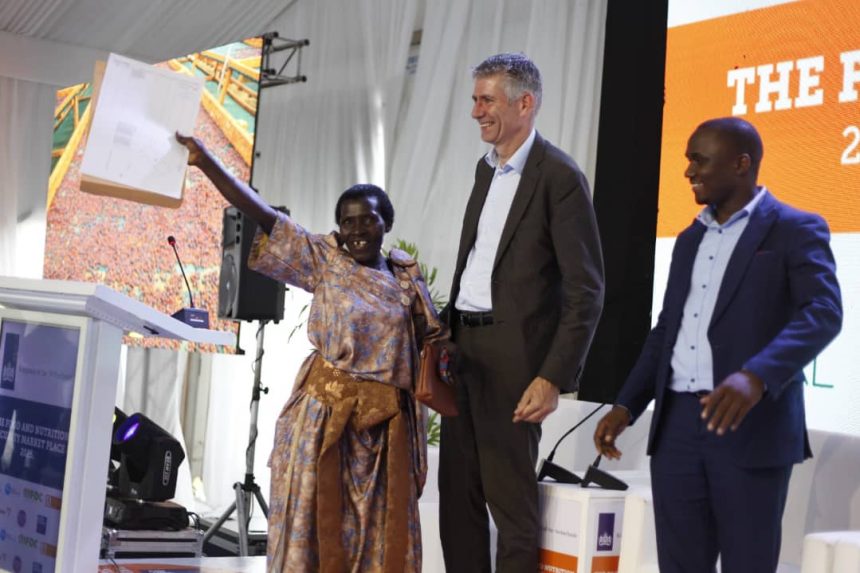
In eastern Uganda, at Butansi Sub-county Headquarters, Kamuli District a unique agricultural event recently brought together smallholder farmers, government officials, development partners, and private sector actors to showcase the impact of integrated food security and nutrition projects funded by the Embassy of the Kingdom of the Netherlands (EKN).
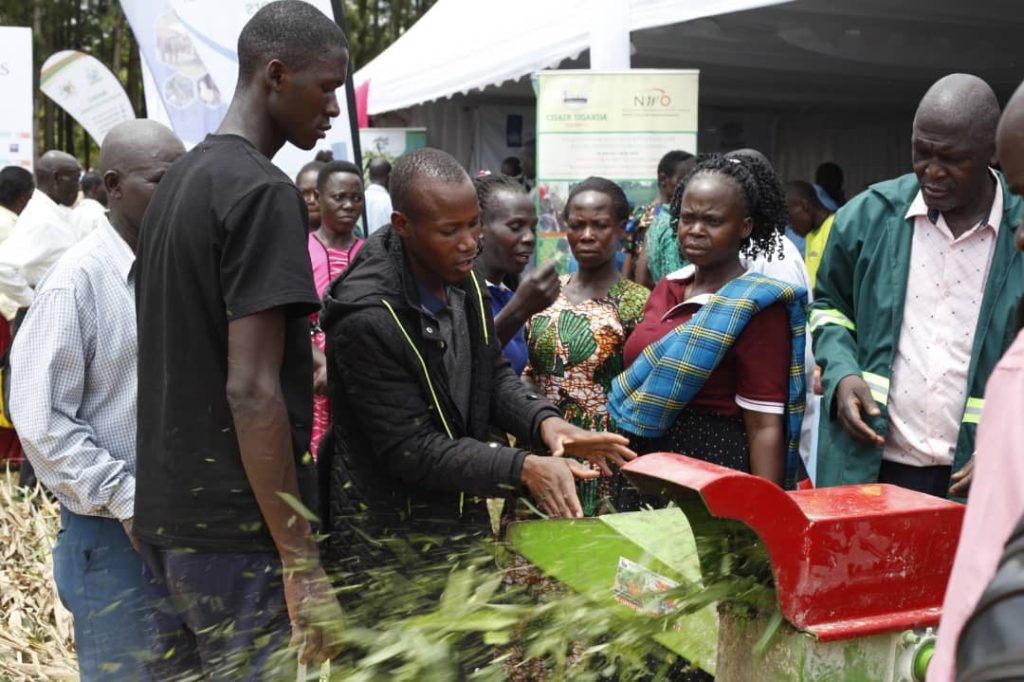
The food systems marketplace was not just a display of products and produce; it was a demonstration of a systemic approach to agriculture, where multiple complementary interventions work in concert to address production, governance, markets, finance, and nutrition outcomes.
The event illustrated how Uganda’s smallholder farmers—long at the heart of the country’s agricultural economy—can be empowered to transform their livelihoods through coordinated action, innovation, and collaboration.
Speaking at the event, Deputy Head of Mission Bouwe-Jan Smeding reflected on the significance of the initiative, emphasizing the participatory approach that underpins the marketplace concept.
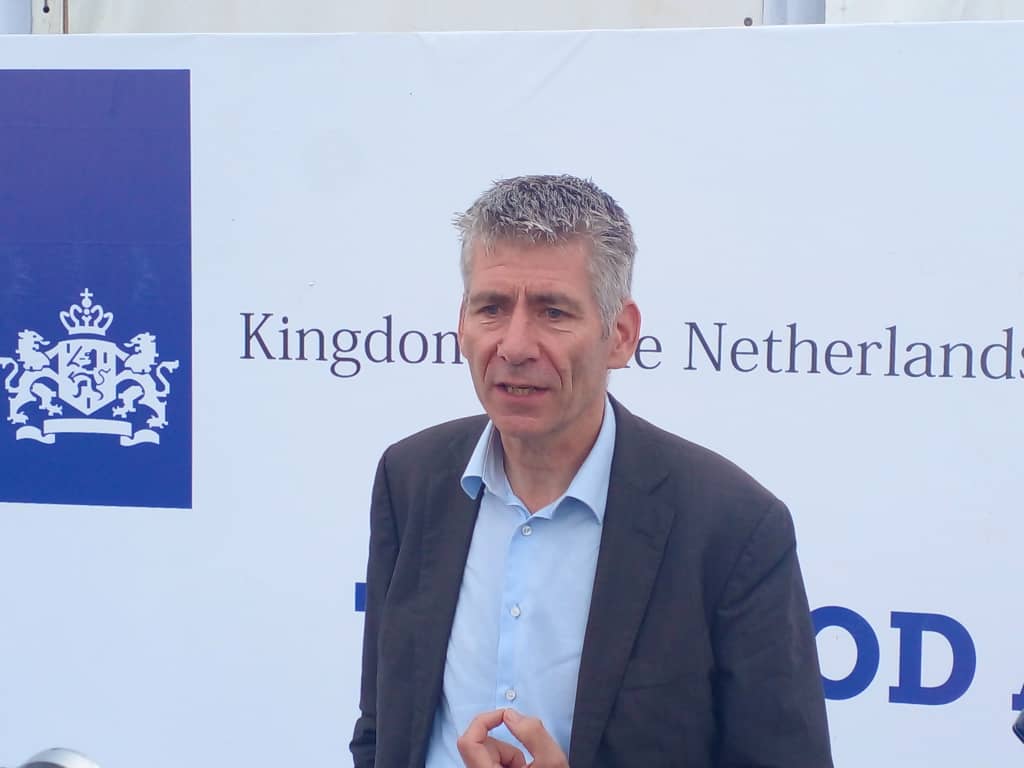
“Tell me and I forget, show me I might remember, involve me and I really learn,” he said, quoting a timeless adage that captures the essence of the projects on display. Smeding, who has decades of experience in East Africa, described the marketplace as a living testament to how inclusive, participatory agricultural programs can yield tangible benefits for rural communities.
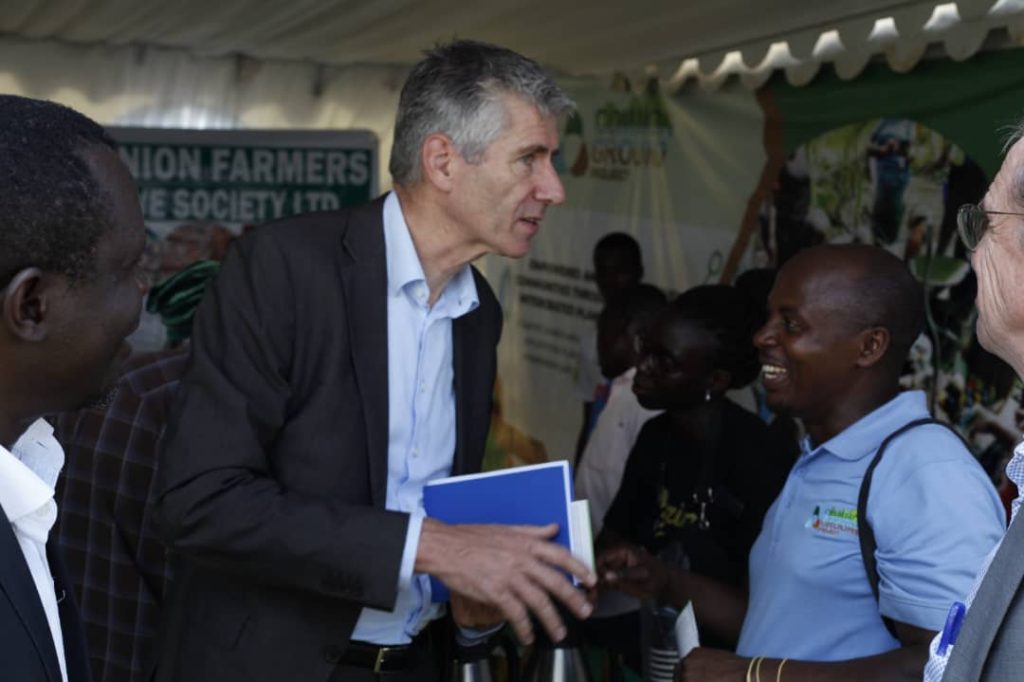
Walking among the stalls, he observed the pride with which farmers shared their successes and innovations, noting how smallholder farmers are increasingly becoming active participants in the value chain, rather than passive recipients of development aid.
The event highlighted seven EKN-funded projects working in harmony, each addressing specific aspects of Uganda’s food systems.
The INCLUDE Project, implemented by SNV, has made significant strides in improving livestock productivity, enhancing forage systems, and delivering better nutrition outcomes at the household level. Farmers participating in the project have reported increased milk yields, healthier animals, and improved dietary diversity for their families, illustrating the direct link between livestock interventions and nutrition security.
Similarly, the BRIGHT Project, coordinated by the International Fertilizer Development Centre (IFDC), is promoting climate-smart agricultural practices, sustainable natural resource management, and improved access to quality inputs. By equipping farmers with knowledge and tools to adapt to climate variability, BRIGHT is helping smallholder farmers increase yields while protecting the environment for future generations.
The Common Ground Project, implemented by Wageningen University & Research and the Integrated Seed Sector Development (ISSD) program, focuses on supporting integrated farming systems and enhancing policy linkages for resilient highland communities. Through this project, farmers are learning how to combine crop production, livestock management, and soil conservation in ways that boost productivity and reduce vulnerability to climate shocks.
The INSPIRE Project, led by GOAL Uganda, strengthens community resilience, develops inclusive markets, and supports the formation of strong farmer organisations. By connecting farmers directly to buyers and markets, INSPIRE enables communities to increase incomes and create sustainable commercial opportunities for smallholder producers.
A-GRIP, implemented by Cordaid, strengthens governance and accountability in agriculture through results-based financing mechanisms. By tying financial incentives to measurable outcomes, A-GRIP ensures that local governments and farmer groups prioritize interventions that have the greatest impact on food security and nutrition.
The FORT Project, run by Agriterra, builds strong cooperatives and farmer organisations, enhancing their capacity to engage competitively in markets. By equipping cooperatives with the knowledge, governance structures, and operational tools to function effectively, FORT ensures that farmers can collectively negotiate better prices, access inputs efficiently, and withstand market fluctuations.
Finally, Pearl Capital Partners (PCP) works to unlock financing for smallholder farmers and agribusinesses, accelerating growth and investment in the agricultural sector. Through targeted financial interventions and access to credit, PCP is helping farmers invest in equipment, seeds, livestock, and technologies that increase productivity and profitability.
These seven projects collectively support the vision that Ugandans can achieve improved food and nutrition security through more resilient and commercially viable food systems. By addressing the agricultural value chain in a holistic manner—from production to processing, markets, finance, and governance—the marketplace model demonstrates that coordinated interventions can have far-reaching impacts on rural livelihoods.
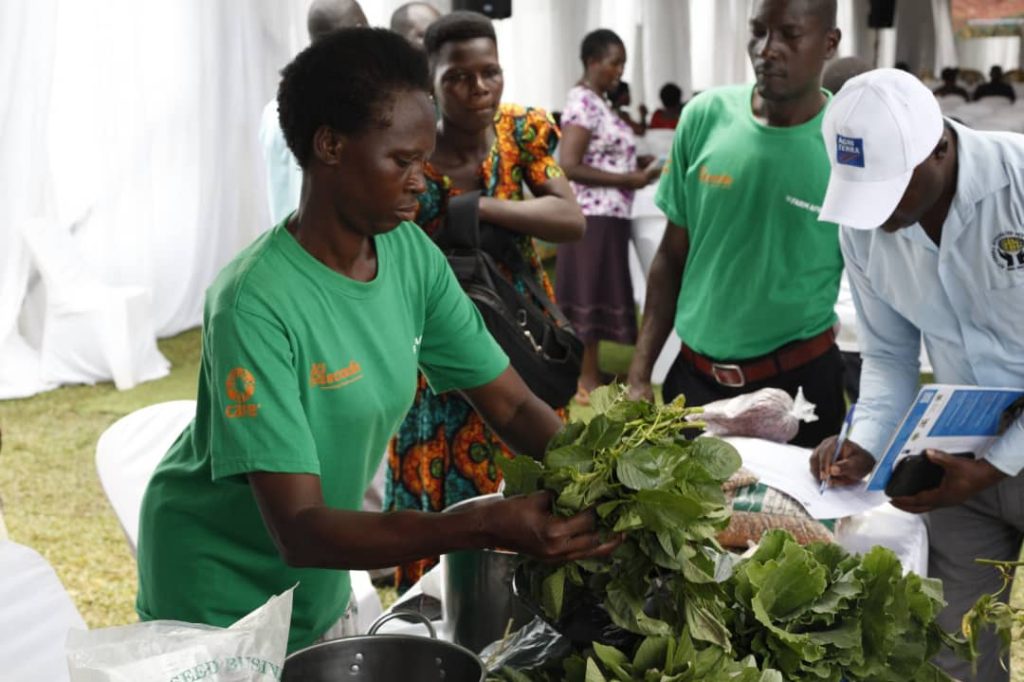
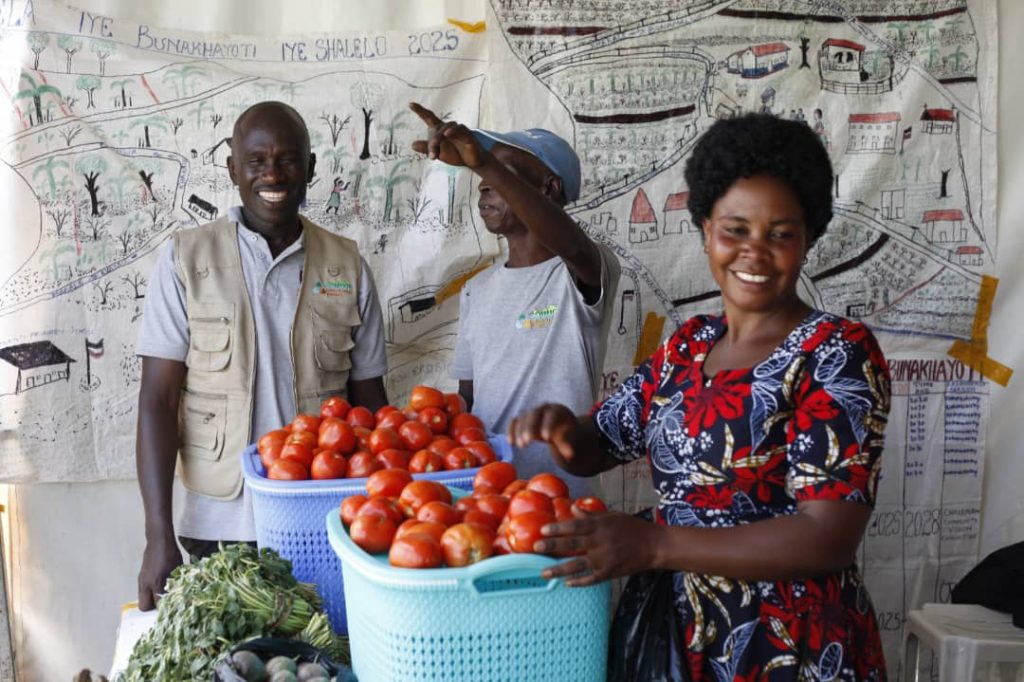
The marketplace itself was a vibrant and interactive space. Farmers displayed their produce, livestock, and value-added products, while development partners and private sector actors showcased innovations in finance, inputs, and technology.
The event also featured project pitches and interactive sessions where participants could exchange ideas, share success stories, and explore new approaches to long-standing challenges.
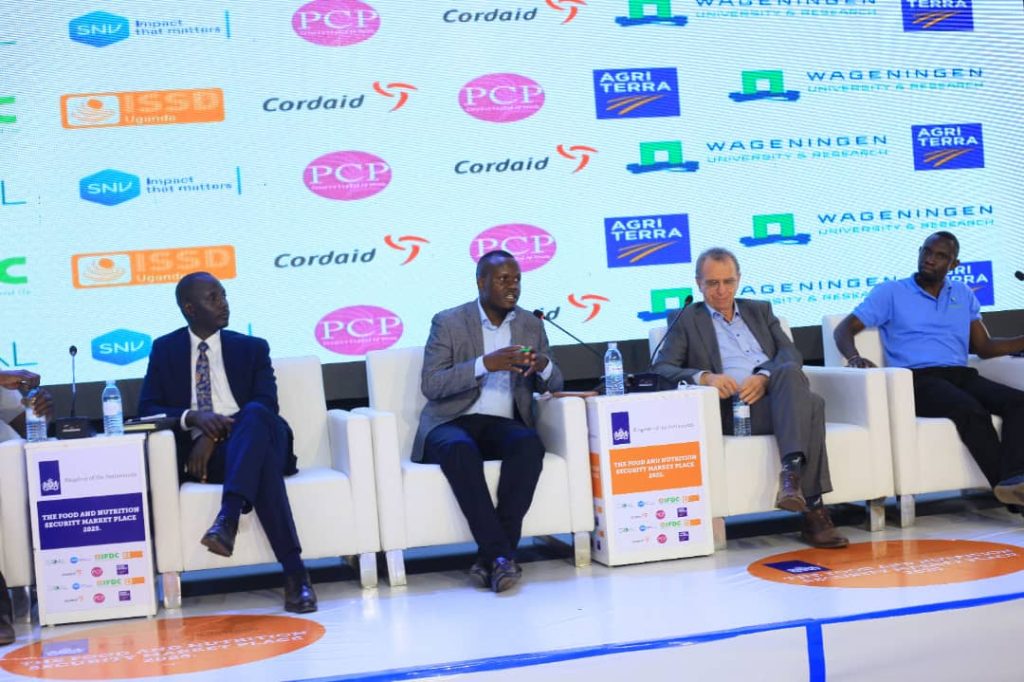
These sessions demonstrated that transformation in Uganda’s food systems is not solely about individual household efforts; it requires collaboration across sectors, linking farmers directly with markets, financial institutions, and service providers.
Business networking at the marketplace enabled farmer organisations to form new partnerships, negotiate better terms with input suppliers, and explore investment opportunities with agribusinesses and financiers.
Julius Twinamatsiko, Project Coordinator of the Uganda Multisectoral Food Security and Nutrition Project at the Ministry of Agriculture, Animal Industry and Fisheries (MAAIF), praised the marketplace as an illustration of the ministry’s commitment to value chain development and the commercialisation of agriculture.
Twinamatsiko emphasized that the initiative is aligned with MAAIF’s Strategic Plan 2020-2025 and Uganda’s National Development Plan IV, which prioritizes programmatic planning, commercialisation, and nutrition-sensitive agriculture. “What we are seeing here is agriculture value chain development at work—from production to post-harvest handling, markets, and value addition,” he said.
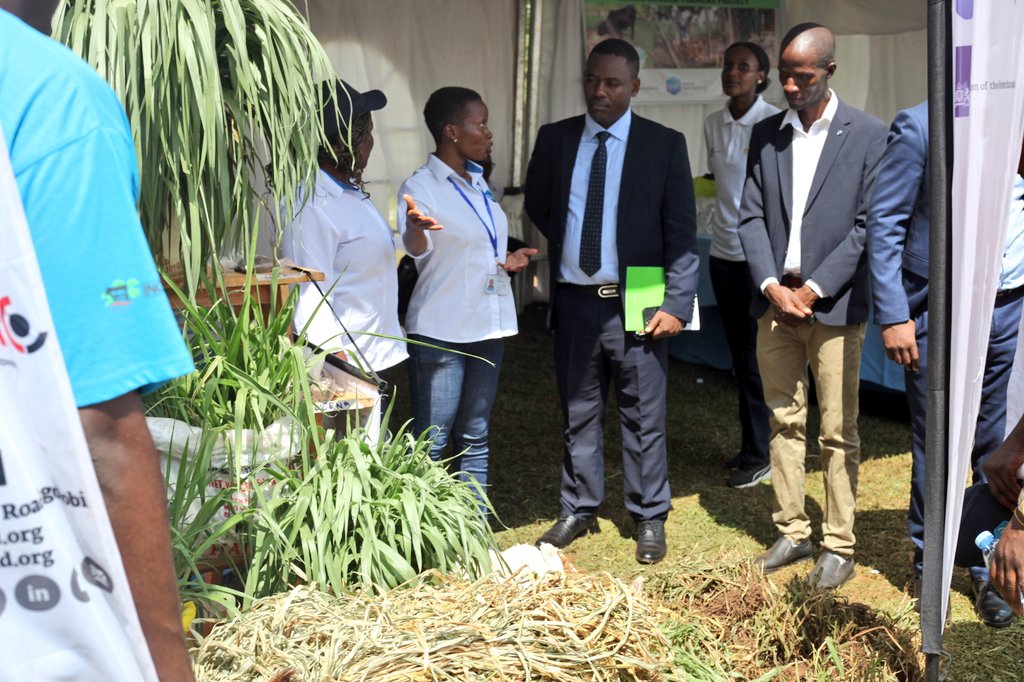
Twinamatsiko highlighted that farmers are not only adopting new technologies but are also taking active roles in training fellow farmers, applying post-harvest handling techniques, and participating in financial schemes, demonstrating that agriculture financing is viable when combined with strong cooperatives and functional market systems.
The participatory nature of the projects is also reshaping social dynamics in rural communities. Sheila Brenda, a sub-county chief, observed that integrating the Personal Initiative Planning (PIP) approach with the Parish Development Model has fostered greater transparency, accountability, and community ownership.
“Families now plan together, implement together, and take pride in their projects,” she explained. “People no longer say this is ‘government money’ or ‘a donor project’. They say: this is ours.” Brenda noted that this shift has contributed to reductions in gender-based violence and enhanced the capacity of local governance structures to respond to community needs effectively.
Farmer Success Stories Highlight Impact
The marketplace also showcased the personal stories of smallholder farmers whose livelihoods have been transformed through the EKN-supported interventions. In Kamuli District, Maria Nabukenya, a smallholder dairy farmer, shared her experience with the INCLUDE Project.
Before joining the program, Maria struggled with low milk production and poor-quality forage. With technical support and improved livestock feed from the project, she has increased her daily milk yield from 5 liters to 15 liters, which she now sells to local cooperatives.
“I can now provide better food for my children and reinvest in my farm,” Maria said, smiling as she demonstrated her milking process to visitors. Her success reflects how livestock interventions directly improve household nutrition while creating income-generating opportunities.
In Kapchorwa District, Peter Kato, a maize and potato farmer participating in the BRIGHT Project, described how climate-smart practices have helped him adapt to changing weather patterns. By adopting conservation agriculture techniques, including minimum tillage and crop rotation, Peter has doubled his yields while conserving soil fertility.
“I no longer worry about drought or soil erosion,” he explained. “I can plan my farm with confidence and even sell surplus to neighboring districts.” Peter’s story highlights the role of knowledge transfer and climate adaptation in creating resilient smallholder enterprises.
Another notable case is that of Grace Akello from Mbale District, who has benefited from the INSPIRE Project’s focus on inclusive market linkages. Through her women’s cooperative, Grace has gained direct access to buyers and input suppliers, eliminating the need to sell produce through middlemen.
“Before, we were forced to sell at low prices, but now we negotiate and get fair returns,” she said. Grace’s cooperative has expanded its membership from 15 to 60 farmers in two years, demonstrating the multiplier effect of strong farmer organisation support.
In the highlands of Kabale, the Common Ground Project has enabled farmers like Josephine Namutebi to integrate crop and livestock systems for improved resilience. Josephine combines maize, beans, and Irish potatoes with small-scale goat farming, while using terracing and organic compost to enhance soil health.
“Our farm is now more productive, and we can survive dry seasons without losing income,” she said. Josephine’s farm serves as a demonstration site for other community members, illustrating the value of integrated farming systems for highland communities.
Financial inclusion and access to credit also emerged as critical factors in scaling impact. In Jinja District, cooperative leader John Ssemakula highlighted how Pearl Capital Partners’ financing support has enabled his group of rice farmers to purchase irrigation pumps and quality seed.
“With credit, we have expanded our farms, improved yields, and now sell directly to processors,” he explained. “This project has shown that financing agriculture is not risky if farmers are organised and supported with training and market linkages.” The cooperative’s success underscores the importance of linking financing with strong governance, training, and market access to achieve commercial sustainability.
The marketplace also emphasized post-harvest handling, a critical area where farmers historically lost up to 30 percent of their produce. Through training from multiple EKN-funded projects, farmers now understand how to store, process, and transport produce safely, reducing waste and increasing profitability.
As a result, smallholder farmers are now able to sell higher-quality products, increase income, and improve food safety, directly contributing to better nutrition outcomes for their households and communities.
The event also demonstrated the power of multi-stakeholder collaboration. Government representatives, private sector actors, and development partners were able to connect directly with farmers, exchange ideas, and co-design solutions to persistent challenges in production, markets, and finance.
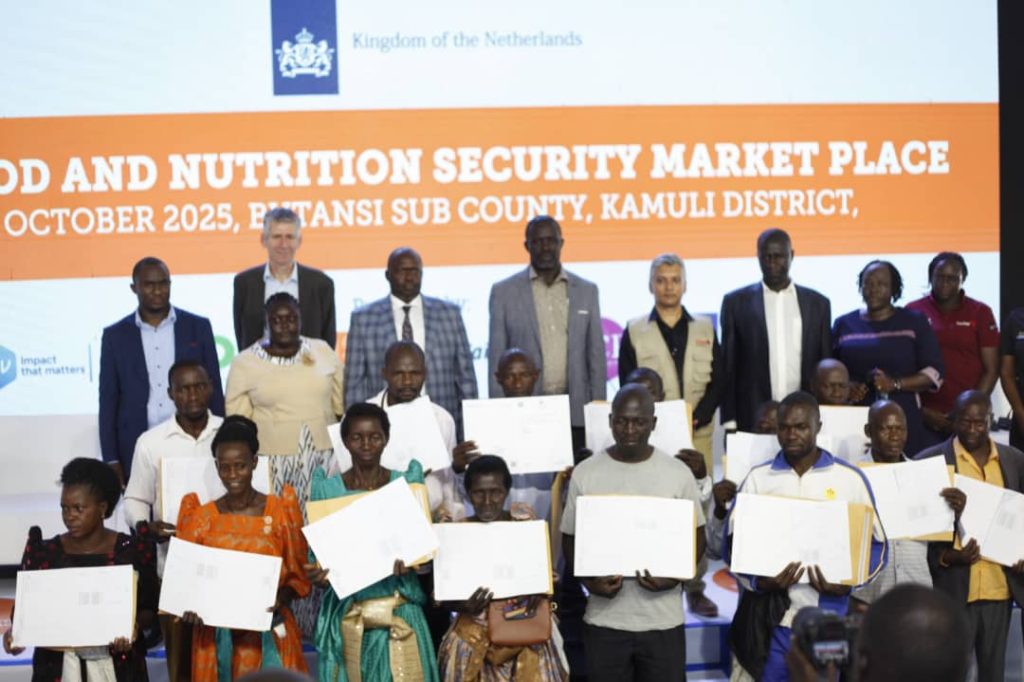
Business networking sessions facilitated relationships between cooperatives, input suppliers, financial institutions, and agribusinesses, creating opportunities for investment, market expansion, and technology adoption.
By linking these actors, the marketplace model fosters innovation and ensures that interventions have a lasting and scalable impact.
Smeding emphasized that agriculture, not oil, represents Uganda’s most sustainable long-term economic engine. Drawing on his experience across East Africa, he noted that Uganda’s fertile soils and favourable climate make it capable of feeding over 200 million people, far beyond its current population.
With the right investments in resilience, governance, markets, and nutrition-sensitive practices, Uganda has the potential to become the food basket of the region, supporting middle-income status for its citizens and economic stability for the broader East African community.
The marketplace also illustrated the importance of policy alignment in driving agricultural transformation. By ensuring that projects are consistent with national strategies, including NDP IV and MAAIF’s Strategic Plan 2020-2025, the EKN-supported initiatives strengthen government priorities, reinforce systemic improvements, and enable scalable solutions that enhance resilience, productivity, and food security nationwide.
As the event concluded, Smeding reiterated the vision behind the initiative: creating an agricultural sector in which smallholder farmers are empowered to innovate, participate, and thrive. “Uganda can feed 200 million people. If we get this right, agriculture will take the country to middle-income status,” he said, emphasizing the transformative potential of coordinated, market-oriented, and participatory approaches.
The marketplace model is expected to expand to additional regions, serving as a blueprint for integrating local knowledge, farmer organisation capacity, private sector engagement, and government oversight.
By linking household-level interventions with broader value chain development, the EKN portfolio is fostering systemic change that promises long-term benefits for rural communities, smallholder farmers, and the national economy.