



Health experts are warning that the success of antiretroviral therapy (ART) in transforming HIV into a manageable chronic condition has created a new public health challenge: a growing burden of non-communicable diseases (NCDs) among ageing people living with HIV.
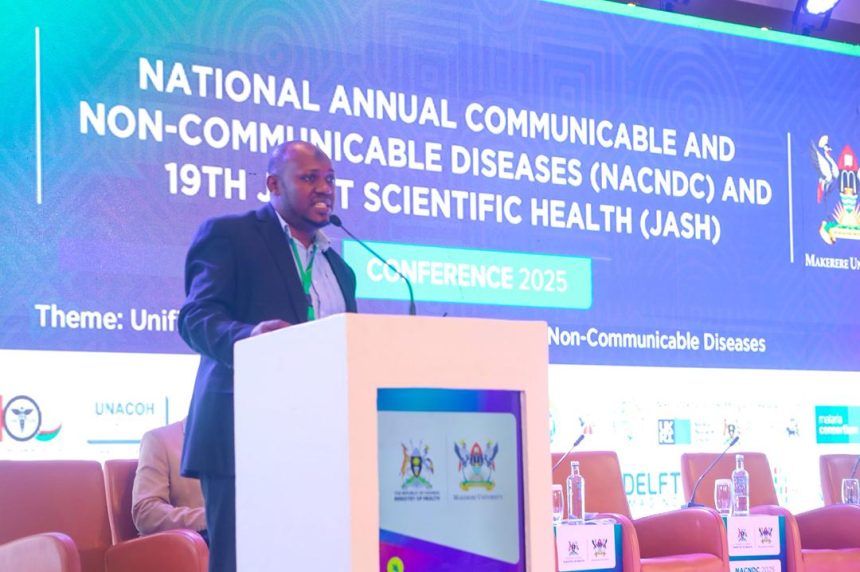
The concern was raised by Dr. Suleiman Kawooya of AIDS Healthcare Foundation (AHF) Uganda Cares, who presented new findings on the rise of chronic kidney disease (CKD) among clients receiving HIV care in AHF-supported facilities.
This was during the the 1st Annual National Non Communicable Disease & Communicable Disease conference held under the theme “Unified Action Against Communicable and Non-Communicable Diseases” at Speke Resort Munyonyo.
Dr. Kawooya said that while HIV treatment coverage and viral suppression rates have improved significantly over the years, the shift has exposed patients to chronic illnesses linked to ageing, drug toxicity and co-morbidities such as hypertension, diabetes and obesity.
“We are seeing a silent progression of chronic kidney disease as a hidden non-communicable condition, especially in ageing populations,” he said, noting that CKD is increasingly emerging as a major cause of disability and long-term treatment cost.
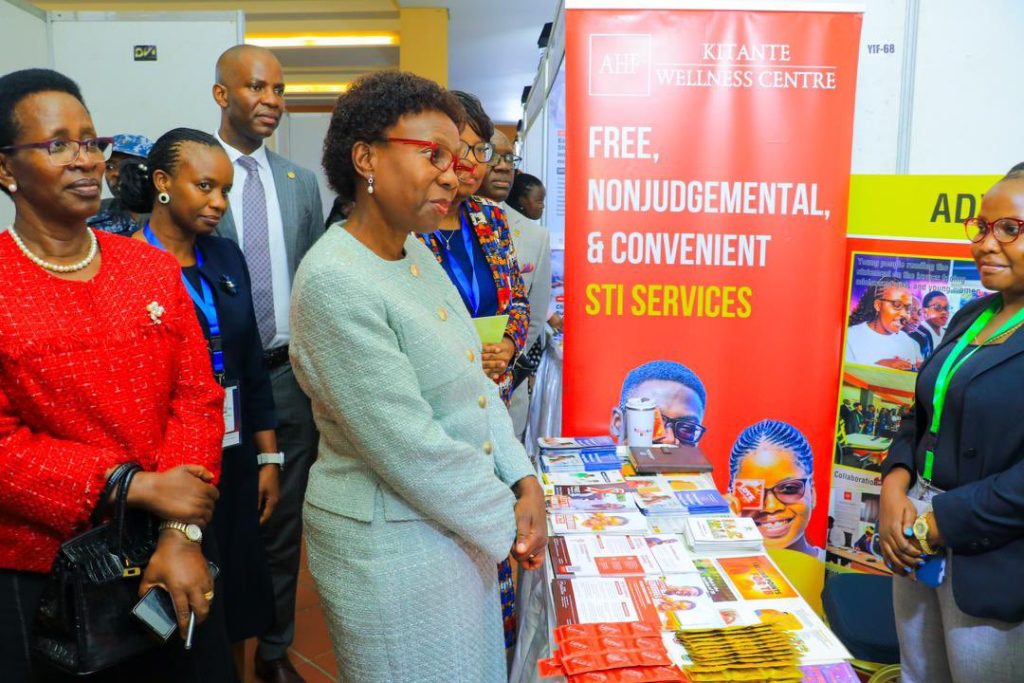
Citing global and regional data, he said CKD prevalence in sub-Saharan Africa ranges between 10% and 48%. In Uganda, previous studies led by Prof. Sula Karuhanga and colleagues have documented a prevalence of 21.5%, rising to 33.1% among people aged 60 and above living with HIV.
To understand the scale of the problem within AHF facilities, the organisation conducted a cross-sectional analysis of clinical records from four sites with functional electronic medical records.
The study reviewed data from 12,091 patients aged 40 and above who had visited the facilities between January and August this year. The median age of clients was 49, and 98% were virally suppressed.
However, despite the high viral suppression rates, the study found significant gaps in kidney disease screening. “Seventy-eight percent of clients had never received a renal function test,” Dr. Kawooya said. Among those tested, 24.1% had chronic kidney disease—equivalent to one in every four patients.
The findings also showed that CKD prevalence increased with age and was strongly associated with long-term exposure to ART, obesity, hypertension and diabetes. Patients on Abacavir-based regimens had a significantly higher CKD rate (27.7%) compared to those on tenofovir. About 11.4% of patients were already in advanced stages of kidney disease, with reduced glomerular filtration rates.
Dr. Kawooya said the study confirms an urgent need to integrate kidney screening into routine HIV care, recommending at least one renal function test per year for all patients aged 40 and above.
“We need to strengthen NCD-HIV care integration, because old age is now a strong predictor of chronic kidney disease in our clinics,” he said.
In a related presentation, Dr. Birungi Nabukeera Nicolette, a pediatrician with AHF Uganda Cares highlighted emerging evidence from a different but equally complex area of integrated care—early diagnosis of sickle cell disease among HIV-exposed infants.
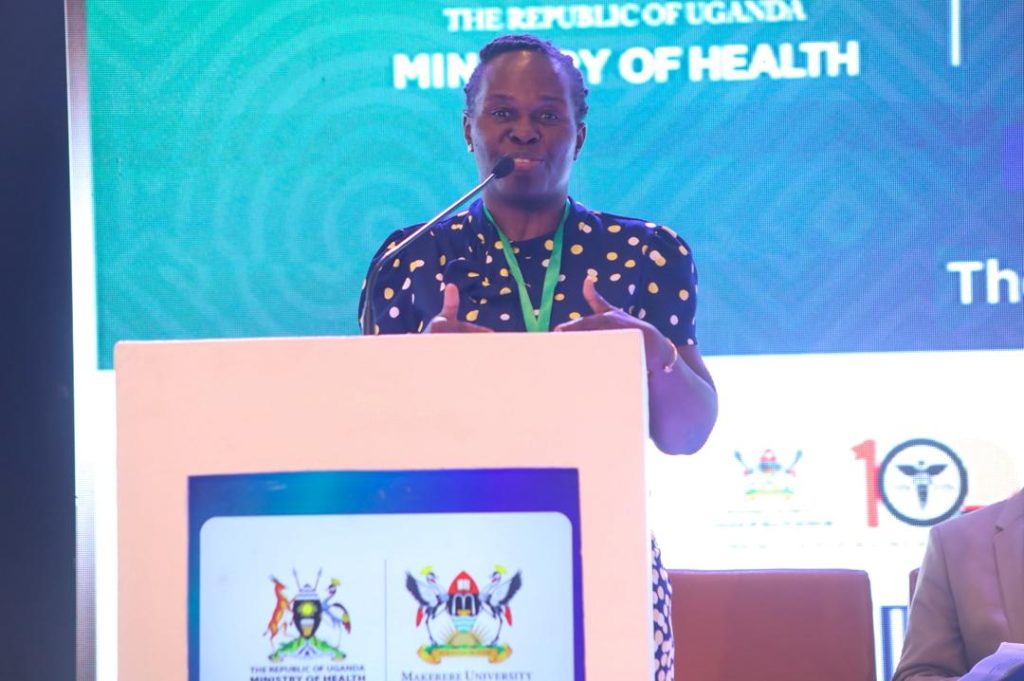
presenting on “Integration of HIV and sickle cell anaemia diagnosis and treatment: experiences at AHF Uganda Cares”
The programme screens infants for both HIV and sickle cell disease at six weeks of age using dried blood spot samples from AHF Uganda Cares sites in the central region. Between January and August, nearly 800 infants were screened. Of these, 86 were identified as carriers of the sickle cell trait (AS), while 15 had full sickle cell disease (SS).
While HIV-positive infants are immediately enrolled into care and follow-up, the study found a gap in post-diagnosis linkage for babies identified with sickle cell. Health workers reported that they routinely refer SS cases to Mulago Hospital’s sickle cell clinic, but many caregivers either do not travel, are unaware of next-steps, or abandon follow-up because the child is not visibly sick at six weeks.
“There is clear success in early diagnosis, but a breakdown after referral,” Nicolette said. She added that even among health workers, knowledge on sickle cell co-management is limited. “We found that HIV care providers understand HIV well but do not have the same capacity to manage sickle cell disease.”
She said Uganda is missing a major prevention opportunity, particularly for children with the AS trait, who grow up without guidance on genetic risk.
“Carriers are not sick, but they are the source of future sickle cell births. If carrier status was understood early in life and factored into marriage decisions, we could drastically reduce sickle cell in the country.”
Both speakers called for policy guidance on integrated HIV–NCD and HIV–sickle cell care, improved health worker training, and clear referral pathways backed by data tracking.