



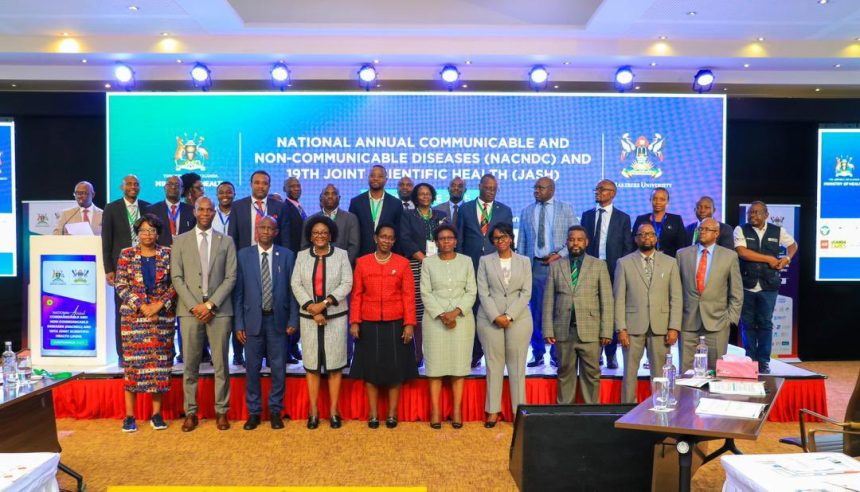
Uganda has opened a high-level national health conference aimed at reshaping the country’s response to both communicable and non-communicable diseases, at a time when the nation faces what experts describe as a “double burden” of illness.
The five-day meeting, which began with two days of pre-conference sessions on Monday and Tuesday, brings together researchers, health practitioners, policymakers and development partners to forge a unified and integrated approach to disease prevention and control.
The event, co-chaired by Dr. Andrew Kambugu of the Infectious Disease Institute and Professor Pauline Byakika- Vice Chancellor Mbarara University of Science & Technology, is expected to provide a policy roadmap for tackling Uganda’s shifting disease landscape.
While long-standing infectious diseases such as malaria, HIV, tuberculosis and pneumonia continue to claim lives, non-communicable diseases (NCDs) including hypertension, diabetes, cancers and cardiovascular illnesses are rising sharply, especially among younger populations.
“This conference comes at a time when we are facing a heavy burden of disease,” a senior organiser noted during the opening session. “We still have our long-standing communicable diseases, yet we are also seeing a significant increase in non-communicable diseases. The aim of this platform is to generate evidence, share experiences, and shape policy action toward integrated, multisectoral responses.”
The main conference, which runs for three days, features three keynote speeches, eight high-level panel discussions, over 120 oral presentations and more than 180 poster presentations.
Delegates are also expected to take part in exhibitions showcasing new technologies, innovations and health research tools. A signature session of the conference will be the Dr. Matthew Lukwiya Memorial Lecture, scheduled for the third day, marking one of the most anticipated moments of the programme.
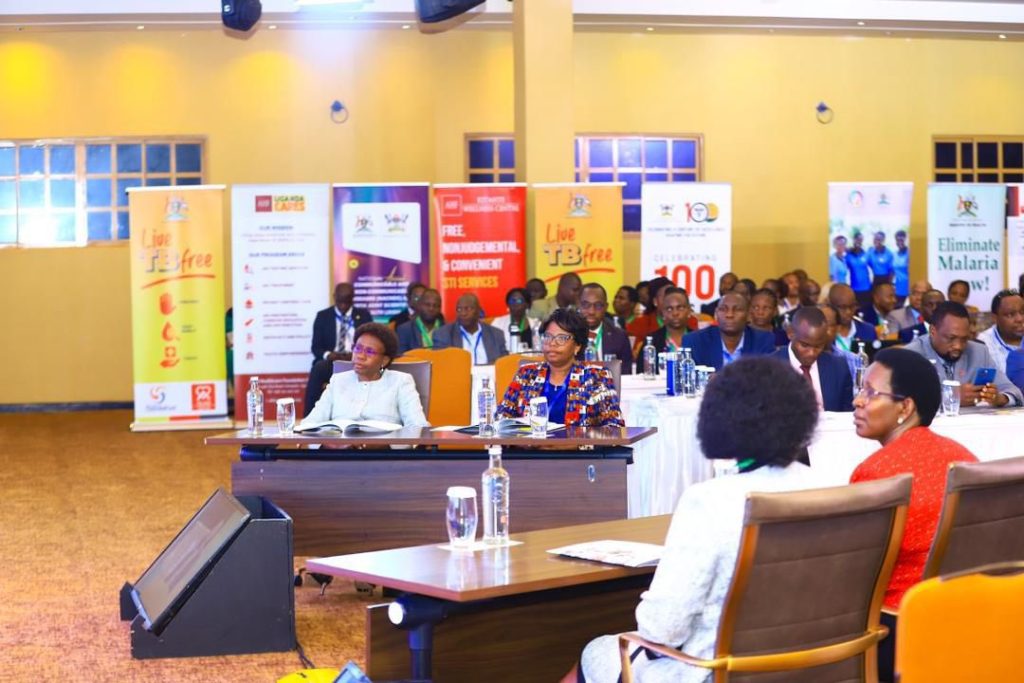
At the conclusion of the event, a formal conference statement will summarise policy proposals, best-practice models and collaboration frameworks to guide government and health partners over the next year.
Delivering the day’s keynote address virtually, Dr. Queen Dubé, a consultant paediatrician and clinical immunologist with the World Health Organization (WHO), urged African governments to abandon siloed approaches to disease control.
Speaking from Geneva, Dr. Dubé warned that fragmented programming—where malaria, HIV, TB, child health and NCD interventions operate independently—was weakening the overall health system.
“We are at such a time that we cannot afford fragmentation and verticalization,” she said. “Many countries, especially those with fewer resources, are grappling with multiple epidemics at once. We need integrated action, not parallel programs that duplicate effort and strain health systems.”
Dr. Dubé also presented new data on global disease trends, noting that although life expectancy has begun recovering after the COVID-19 pandemic, Africa still lags behind other regions. He pointed out that non-communicable diseases are rising faster in low-income countries, and yet most of the deaths occur among the poorest households.
She cited cardiovascular disease as the leading cause of death globally, with Africa recording the lowest average age at which people die from heart-related complications – in some cases up to 30 years younger than in high-income regions.
Speaking from a paediatric angle, Dr. Dubé highlighted the urgent need to link child and maternal health programmes with broader disease control strategies. She drew attention to the 2.3 million newborn deaths recorded worldwide in 2023—nearly half of all under-five deaths—and argued that most of these fatalities could have been prevented through early screening, better nutrition, maternal education and integrated antenatal services.
She further noted that children with congenital conditions, such as sickle cell disease or congenital heart defects, are up to 11 times more likely to die when they contract infections such as pneumonia or malaria.
“We often treat these conditions separately, yet they interact. A child born premature, malnourished or with a birth defect already enters life at a medical disadvantage. An integrated health system would ensure that this child is tracked, supported and protected from preventable causes of death.”
Delegates were urged to adopt a “life-course” public health strategy—shifting from disease-centred programmes to person-centred care that supports individuals from pre-pregnancy through adulthood. This model would require stronger partnerships between health, education, water, sanitation and environmental sectors.
“No matter how much we invest in the health sector, if we ignore what is happening in education, housing, climate or sanitation, we will not reach our health targets,” Dr. Dubé said.
She cited rising exposure to plastics, industrial waste, heat stress and malnutrition as emerging threats that cannot be resolved by hospitals alone. “A baby born today may survive, but environmental, social and economic conditions shape their long-term health. We need to stop treating health as something that starts at the hospital gate.”
Organisers hope the conference will produce actionable guidance for Uganda’s Ministry of Health, including collaborative models for disease surveillance, data sharing, financing and decentralised health delivery. The event is being supported by Makerere University, the Ministry of Health, and several international donor agencies.
“We expect the next three days to consolidate best practices on integrating disease control and inform Uganda’s policy direction,” Dr. Kambugu noted. “Our goal is not just dialogue, but implementation.”
With the country’s disease burden shifting rapidly, participants say Uganda’s health strategy must also evolve — not only to treat illnesses, but to prevent them, predict them, and reduce the structural conditions that fuel them.
The conference will close with a communique outlining government and partner commitments, expected to guide policy reforms ahead of the next national health sector review.