



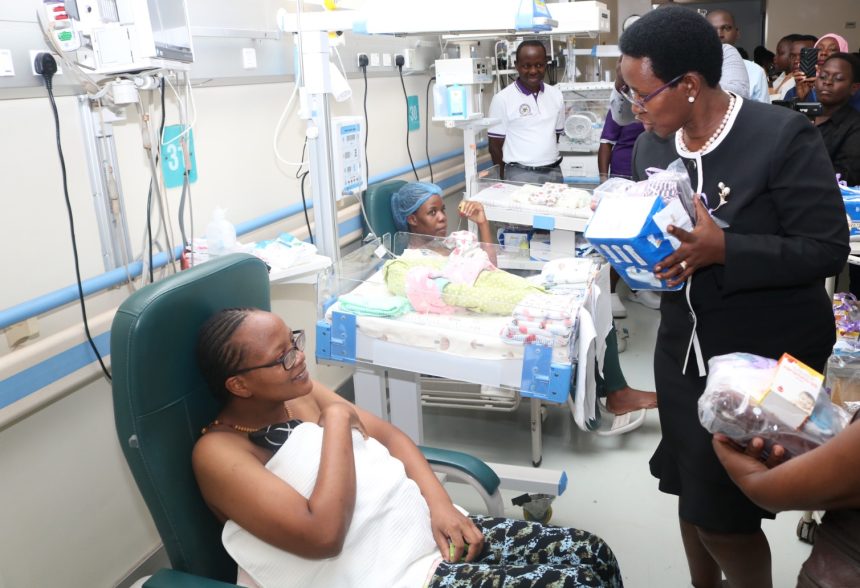
The Mulago Specialised Women and Neonatal Hospital on Monday hosted national commemorations for World Prematurity Day, with senior health officials warning that Uganda must urgently scale up investment in neonatal care to prevent avoidable deaths among premature babies.
The event, presided over by Ministry of Health Permanent Secretary Dr. Diana Atwiine, brought together preterm parents, medical experts, Ministry of Health officials and hospital staff. Dr. Atwiine handed over gifts to mothers in the neonatal unit and joined families in cutting cake to celebrate babies who were born prematurely but have since grown strong under specialised care.
Dr. Atwiine said premature babies remain among the country’s most vulnerable patients yet many complications—ranging from breathing difficulties to infections—can be prevented through timely and specialised intervention.
“We need stronger investment, more specialised equipment, more trained staff and better community awareness to reduce preventable deaths,” she said. “A baby born early is not condemned. With proper care, even a six-month-old premature infant can survive.”
Acting Executive Director Dr. Sam Ononge warned that the hospital continues to receive increasingly complex cases, including premature babies with lung disease, heart complications and conditions related to IVF conception. However, limited resources and staffing shortages are straining care capacity.
“At extreme preterm level you need one nurse per baby, but we often have one nurse caring for 10 to 12 infants,” he said. “We are grateful for the equipment available, but we need more staff, supplies and surfactant to keep these babies alive.”
Dr. Anna Kibuka Jessica, Head of the Neonatal Department, said the hospital is committed to providing long-term follow-up but requires additional support.
“We want to monitor babies up to 12 years, but we need resources. These tiny babies are surviving—we now need to ensure they thrive,” she said.
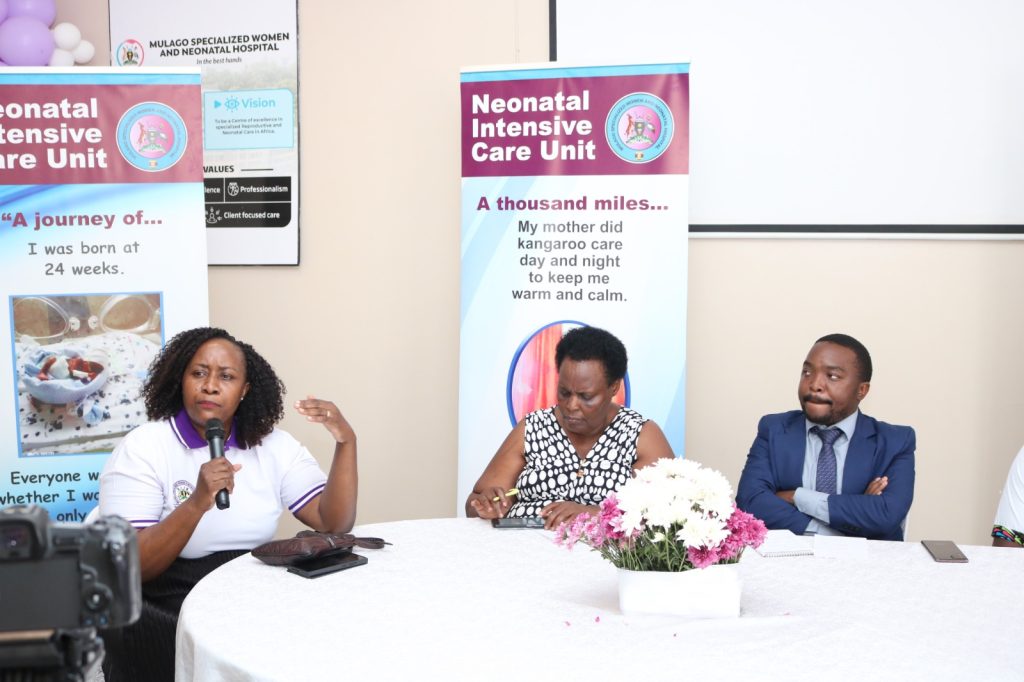
Senior Medical Officer for Reproductive and Child Health, Dr. Migadde Deogratious, emphasised the need for early antenatal care, hospital readiness, and expanded neonatal units at district hospitals.
“Our plan is that within the next five years, general hospitals and high-volume health centres will have incubators and trained staff. Prematurity is manageable if babies reach specialised hands early,” he said.
Parents also shared emotional testimonies. Katerega Bazilio, a father of a preterm infant, appealed to men to support their partners.
“Seventy percent of mothers with preterm babies are abandoned by their partners. Men must be present—our babies need both parents,” he said, adding that preterm parent groups will begin following up 50,000 premature babies nationwide.
Retired Assistant Commissioner for Family Affairs at the Ministry of Gender, Ruth Tusasire Muguta, called for stronger parental support systems and legal reforms to address the unique challenges faced by families with premature babies.
“We need laws that consider parents caring for premature or medically fragile infants. Parenting is a responsibility, and families must be supported emotionally, socially and financially,” she said.
The event was attended by members of the Uganda Preterm Parents Association, hospital staff and partners, all calling for a united effort to improve survival and outcomes for Uganda’s smallest citizens.