



The African Development Bank Group (AfDB) has begun high-level consultations with Africa’s leading development finance institutions (DFIs), stock exchanges, and private sector financial players to design a New African Financial Architecture aimed at closing the continent’s chronic development financing gaps.
The meetings, taking place at the Bank’s headquarters in Abidjan, bring together more than 50 representatives of regional and continental financial institutions.
AfDB president Dr Sidi Ould Tah described the two-day dialogue as “vital to the continent’s destiny,” noting that Africa’s capital markets remain underdeveloped and underutilised despite the continent’s immense investment needs.
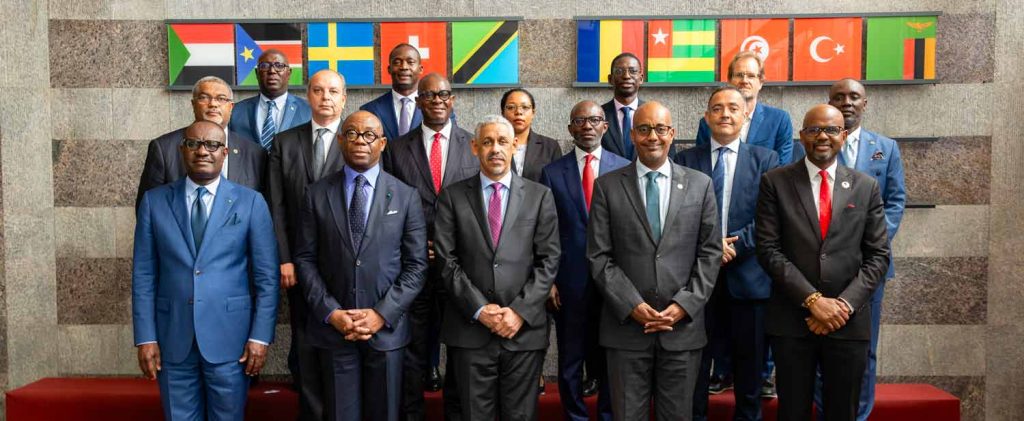
“As the architects of Africa’s capital markets, you are custodians of financial institutions and catalysts of our continent’s future,” Dr Ould Tah said while addressing leaders from Africa’s securities exchanges, private equity firms and venture capital funds.
The discussions—held for the first time between AfDB and multiple African stock exchanges—focus on reforming how Africa mobilizes capital, strengthening regulatory frameworks, and attracting long-term, “patient” investment funding to support sustainable economic growth.
The Uganda Angle:What This Means for UDB
Uganda Development Bank (UDB), as the country’s primary development finance institution, stands to play a key role in this emerging architecture.
The new AfDB initiative prioritizes long-term, affordable financing, improved capital market governance, and scalable funding structures for SMEs—areas where UDB has been actively seeking support.
With SMEs accounting for more than 90% of businesses and over 60% of jobs on the continent, the AfDB’s push to channel more private equity and venture capital into local enterprises aligns directly with Uganda’s long-standing challenge of inadequate risk capital.
UDB’s ongoing effort to support agro-industrialisation, manufacturing, and youth-driven enterprises could benefit significantly from the expanded capital flows and investment fund reinforcement envisioned under the new plan.
Moreover, Uganda’s shallow capital markets—where the Uganda Securities Exchange (USE) lists fewer than 20 companies—could gain momentum through AfDB-backed reforms targeting digitalisation, financial literacy for young people, and increased participation of institutional investors such as pension funds.
Stock Exchanges Call For Reform
Leaders of African securities exchanges highlighted major obstacles that must be addressed to unlock new capital.
Dr Felix Edoh Kossi Amenounve, CEO of the West African Regional Stock Exchange (BRVM), stressed the need for fundamental reforms, especially around pension fund mobilisation.
“There are gaps between financing needs and available resources… we need reforms to achieve the capitalisation of African pension funds,” he said.
Representatives from Nairobi, Tunis, Casablanca, Mozambique, Cabo Verde, Ghana and other exchanges echoed the need for regulatory convergence, modernised laws, and stronger regional integration—issues that similarly affect Uganda’s capital market ecosystem.
Nairobi Stock Exchange’s Donald Waweru Wangunyu underscored the importance of “scaling up, policy coordination and implementing reforms,” noting that Africa suffers from promising projects that nonetheless fail due to policy barriers.
Pillars of The New African Financial Architecture
Dr Ould Tah outlined three pillars that will shape AfDB’s approach:
1.Support for Capital Markets Institutions. AfDB will boost regulatory authorities, stock exchanges, and intermediaries through technical assistance, policy-based operations and institutional support—an area where UDB and Uganda’s Capital Markets Authority could partner closely.
2. Diversification Of Savings And Market Participants. The Bank aims to deepen markets by mobilizing savings through institutional investors and credit enhancement companies—key to expanding UDB’s funding base.
3.Research, Training and Policy Dialogue. Capacity building for African market participants is expected to improve governance, risk management, and innovation across DFIs, including UDB.
A core ambition of the New Financial Architecture is to reduce Africa’s reliance on overseas development assistance by empowering local and regional DFIs.
For Uganda, this shift could translate into stronger autonomy for UDB, more innovative financing tools, greater capital market participation, and a diversified pool of investors capable of supporting strategic national projects.
Dr Ould Tah emphasized that building this new system will require commitment across all institutions:
“We will build it together. It requires a collective effort from each of us.”
As AfDB leads the continent in rethinking how Africa finances its development, eyes will also be on national DFIs like UDB to seize the opportunity and expand their catalytic role in Uganda’s economic transformation.