



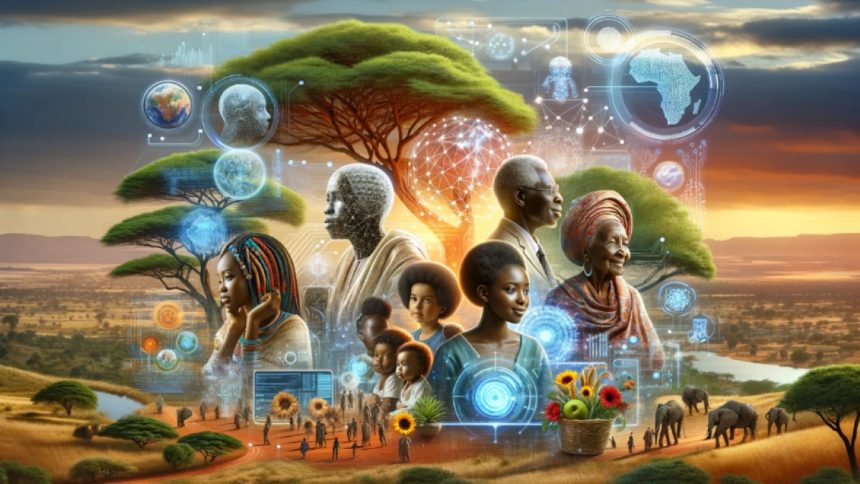
Africa’s push to build homegrown artificial intelligence is gaining momentum, driven by a fast-growing ecosystem of open datasets that could power solutions tailored to the continent’s needs.
A new review by the GIZ project AI Made in Africa examined 180 datasets compiled from more than 500 sources, including Kaggle and Open Africa, revealing how accessible, up-to-date African data is beginning to transform sectors from agriculture to healthcare.
The assessment shows that African innovators now have more high-quality datasets to work with than ever before. Agriculture leads with 56 datasets, or 31 percent of those reviewed, offering opportunities for tools that can monitor crop diseases, predict yields, or guide farmers through climate-related risks.
Healthcare follows with 28 datasets that support work in early malaria detection, while 27 language datasets aim to strengthen natural language processing for Africa’s more than 2,000 languages. Another 24 socioeconomic datasets are enabling entrepreneurs and researchers to build solutions around poverty reduction and inclusive growth.
Over 70 percent of the datasets were updated between 2023 and 2025, underscoring a shift toward fresher, more practical data for AI development.
Most are openly accessible, with 57 percent released under Creative Commons licences, allowing startups, researchers, and governments to adopt and repurpose them freely. They cover both continent-wide initiatives and country-specific collections in hubs such as Kenya, Ghana, South Africa, Ethiopia, Nigeria, and Uganda.
Real-world applications are already emerging. In Nigeria, a startup used datasets from Zindi to predict market trends and improve local trade. In Ethiopia, health data is supporting AI systems that help detect malaria earlier and more accurately. These use cases illustrate how African training data can unlock tools built for African environments—something global models trained largely on Western data often fail to do.
Yet the report also highlights the urgent need to boost the continent’s data capacity. Africa contributes only 2 percent of global AI training data, leaving most artificial intelligence technologies poorly aligned with local languages, names, and cultural contexts. As a result, global models frequently misinterpret African realities, potentially reinforcing digital exclusion.
Experts say the opportunity is clear: with open, local datasets, AI can deliver services in languages like Twi, Swahili, and Luganda; help farmers plan around weather patterns; support doctors with diagnostic tools; and create jobs through new digital startups.
But challenges remain, including fragmented data sources, inconsistent quality, infrastructure gaps, privacy-rule diversity across 54 countries, and vital information still locked away in paper archives or private systems.
Despite these hurdles, the momentum is building. With stronger data collaboration and investment, Africa could shape AI systems that reflect the continent’s complexity—and ensure the technology serves its people first.