



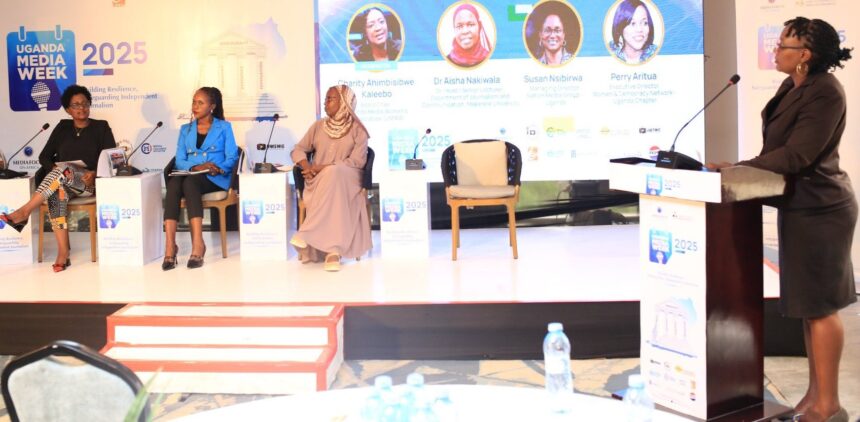
Media leaders and gender advocates have called for sustained, industry-wide action to address sexual harassment, gender bias and the underrepresentation of women in newsrooms, warning that isolated interventions will not deliver lasting change unless conversations are translated into measurable results.
This was among the key deliberations during the National Media Week commemorations at Four Points By Sheraton Kampala.
The call was made during a panel discussion moderated by the Uganda Media Women Association(UMWA), that examined the lived experiences of women in the media, highlighting what speakers described as a dual challenge of internal and external harassment faced by female journalists, particularly those at the start of their careers.
Susan Nsibirwa-Managing Director, Nation Media Group, noted that internal harassment often involves inappropriate conduct by male colleagues, with young interns and early-career reporters said to be especially vulnerable. Externally, female journalists face risks when pursuing assignments in unfamiliar or isolated settings, where personal safety cannot always be guaranteed.
Nsibirwa noted that these realities have long been discussed quietly within newsrooms, but are now increasingly being addressed openly through training and awareness programmes.
Several media organisations were cited as having introduced safety training, newsroom awareness campaigns and internal reporting mechanisms to address sexual harassment.
At Nation Media Group, they have gone as far as placing sexual harassment awareness messages on computer screensavers to help staff recognise inappropriate behaviour and understand reporting channels. However, she acknowledged that fear, shame and self-blame continue to discourage many victims from reporting incidents.
Sharing a personal experience, she disclosed that she had endured harassment as a young intern but chose not to report the perpetrator at the time, opting instead to leave the organisation. She said such silence is common and can have lasting emotional effects, underscoring the need to normalise conversations around harassment and reassure women that speaking up is both acceptable and necessary.
Beyond harassment, the panel also focused on women’s visibility and leadership in the media industry. Speakers pointed to deliberate efforts to mainstream gender at decision-making levels, including board appointments, as a way of changing institutional culture.
One panelist recalled joining a media board after a conscious decision was taken to appoint women, describing diversity in leadership as essential to reshaping newsroom priorities.
The discussion placed Uganda’s experience within a global context, noting that gender imbalance in media leadership and representation is not unique to the country. Panelists cited international media forums where questions about the absence of women’s voices persist, reinforcing the need for continued advocacy and reform.
Speakers emphasised that professional excellence remains a powerful tool for women navigating male-dominated spaces. They argued that confidence, competence and a strong sense of self help counter stereotypes and reduce the impact of gendered expectations. However, they cautioned that individual resilience alone cannot substitute for institutional reform.
Practical strategies to amplify women’s voices in media content were also discussed.
Perry Aritua-Executive Director Women and Democracy Uganda Chapter, urged editors and producers to expand their pools of female contributors, be flexible in how women participate in programmes and use digital tools such as voice notes, remote interviews and social media spaces to overcome time and mobility constraints.
She warned against repeatedly relying on male voices for public interest stories, citing examples where women were overlooked even when present.
Trainers and academics on the panel stressed the importance of preparing female journalists to cover complex and volatile beats, including politics.
Dr.Aisha Nakiwala-Head/Senior Lecturer Department of Journalism Makerere University encouraged collaborative reporting and networking as ways to mitigate risk while ensuring women’s perspectives are not excluded from critical national conversations.
The panel concluded with a call for collective responsibility across media houses, training institutions, regulators and technology platforms. Speakers urged the industry to set annual goals, review progress regularly and avoid waiting years to measure impact.
While acknowledging that progress has been gradual, panelists said continued dialogue, deliberate action and shared accountability could deliver meaningful change and help shape a more inclusive and ethical media industry for future generations.