



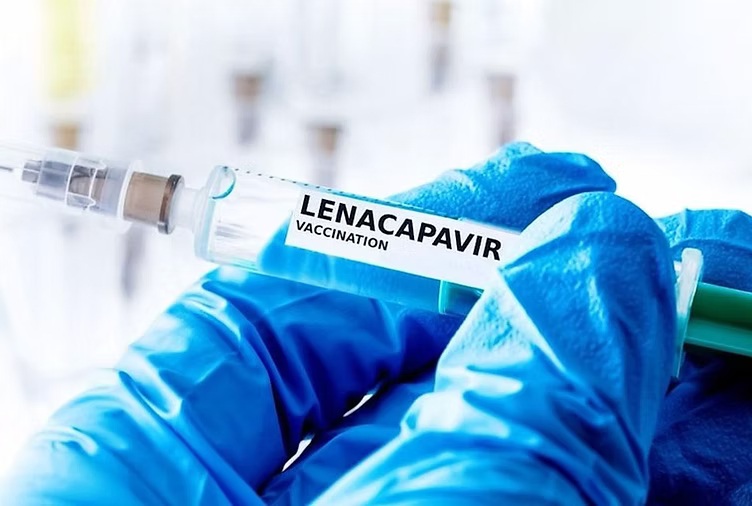
Uganda’s quiet approval of Lenacapavir on January 5, 2025 marked more than the addition of a new HIV prevention tool to the country’s drug register. It placed the country at the centre of a global scientific, commercial and political contest over who controls the next generation of HIV prevention, who gets access first, and at what cost.
Lenacapavir, developed by US pharmaceutical giant Gilead Sciences, is the first twice-yearly injectable pre-exposure prophylaxis (PrEP) shown to offer near-complete protection against HIV infection in clinical trials. In studies involving high-risk populations, including adolescent girls, young women and men who have sex with men, the drug demonstrated 100 per cent effectiveness, a result that has reshaped expectations around HIV prevention after decades dominated by daily oral pills.
Uganda’s National Drug Authority hailed the approval as a “game-changer” and aligned it with the country’s ambition to end AIDS as a public health threat by 2030. That language mirrors global messaging from UNAIDS and major donors, but beneath the optimism lie unresolved questions about affordability, equity and long-term sustainability.
Globally, Lenacapavir’s rise has been swift but tightly managed. The US Food and Drug Administration cleared the drug for PrEP use in June 2025, opening the door for regulatory approvals elsewhere. Gilead has since said it is pursuing approval in 18 countries by the end of 2025, targeting markets that together account for about 70 per cent of the global HIV burden. Sub-Saharan Africa, where most new infections still occur, is central to that strategy.
Yet access is not simply a regulatory issue. Gilead’s pricing model has drawn scrutiny from civil society groups and public health advocates who fear a repeat of earlier antiretroviral rollouts, when life-saving medicines remained out of reach for millions due to cost. While Gilead has announced plans for tiered pricing and voluntary licensing for generic production in low-income countries, details remain limited, and large-scale manufacturing of injectable formulations is more complex than that of oral tablets.
Uganda’s approval therefore raises an immediate practical challenge: how many people will actually receive the drug. The Ministry of Health has indicated that Lenacapavir will initially target key and high-risk populations, including sex workers, sero-discordant couples and populations with historically low adherence to daily oral PrEP. That targeted approach reflects both public health priorities and budget constraints, as donors increasingly signal funding fatigue after decades of financing HIV programmes.
Kenya’s planned rollout in 2026 illustrates similar tensions. Selected as one of nine countries for early introduction, Kenya intends to begin in 10 priority counties, including Nairobi, Kisumu and Mombasa. Health officials acknowledge that while the science is compelling, financing remains uncertain, particularly as global HIV funding competes with climate, conflict and pandemic preparedness for limited resources.
Lenacapavir’s promise also needs to be understood within a broader shift toward long-acting injectable HIV medicines. Parallel advances in treatment, not just prevention, are changing patient expectations and clinical practice. The IMPALA study, conducted across Kenya, Uganda and South Africa, examined injectable cabotegravir and rilpivirine administered every two months for people living with HIV whose viral loads remained unsuppressed despite previous therapy. Led by the Medical Research Council and the Uganda Virus Research Institute, and funded by Janssen Pharmaceuticals, the 24-month trial found the injectable regimen was non-inferior to standard daily oral dolutegravir-based treatment.
Participants consistently reported preferring injections, citing convenience, reduced stigma and fewer daily reminders of their HIV status. Researchers and clinicians argue that these factors are not marginal. Poor adherence to daily pills remains a major driver of treatment failure, drug resistance and preventable deaths in the region. Long-acting injectables could therefore reshape both prevention and treatment outcomes if scaled responsibly.
But scale is where optimism meets reality. Injectable therapies require cold-chain logistics, trained health workers and reliable follow-up systems. Missed doses can carry serious risks, particularly for prevention, where sub-therapeutic drug levels could facilitate infection and resistance. For under-resourced health systems already stretched by staff shortages, integrating these innovations without undermining existing services will be a delicate balancing act.
There is also a geopolitical dimension. The global HIV landscape has long been shaped by donor priorities set in Washington, Geneva and London. Lenacapavir’s development and distribution again highlight Africa’s dependence on external pharmaceutical innovation, even as the continent bears the heaviest disease burden. Calls for regional manufacturing and technology transfer have grown louder, especially after the Covid-19 vaccine inequities exposed structural weaknesses in global health governance.
UNAIDS estimates that 40.8 million people were living with HIV in 2024, with 1.3 million new infections and 630,000 deaths, most of them in sub-Saharan Africa. While treatment coverage in the region rose to 76 per cent in 2024, gaps remain stark among young people, men and key populations. Long-acting injectables like Lenacapavir could help close those gaps, but only if political commitments translate into sustained financing and equitable access.
For Uganda, the approval is both an opportunity and a test. It signals regulatory confidence and scientific ambition, but it also exposes the country to the global debate over who benefits first from medical breakthroughs. Whether Lenacapavir becomes a transformative public health tool or a niche intervention for a privileged few will depend less on clinical data than on policy choices made in the months ahead.
As governments, donors and pharmaceutical companies negotiate the terms of rollout, the stakes are high. The science suggests the tools to dramatically reduce new HIV infections are finally within reach. The unanswered question is whether the global health system will allow them to reach the people who need them most.