



dfcu Bank used the Harvest Money Expo 2026 to reaffirm its position as a leading financier of agribusiness, unveiling expanded agricultural financing solutions and structured support programmes aimed at farmers, cooperatives and agribusiness enterprises across Uganda.
The Expo, held from 27 February to 1 March at Kololo Ceremonial Grounds under the theme “Farming as Business,” attracted thousands of farmers, agripreneurs, policymakers and private sector players.
The event has grown steadily over the past decade. In 2025 alone, it drew nearly 18,650 attendees, featured 221 exhibitors and hosted 27 structured training sessions, highlighting agriculture’s central role in Uganda’s economy.
At this year’s exhibition, dfcu showcased its dedicated Food and Agriculture Unit, which provides value chain financing tailored to crop cycles, livestock production and agribusiness expansion.
The bank offers seasonal loans aligned to harvest periods, asset financing for irrigation systems, mechanisation and storage infrastructure, as well as trade finance solutions for exporters and structured grain traders.
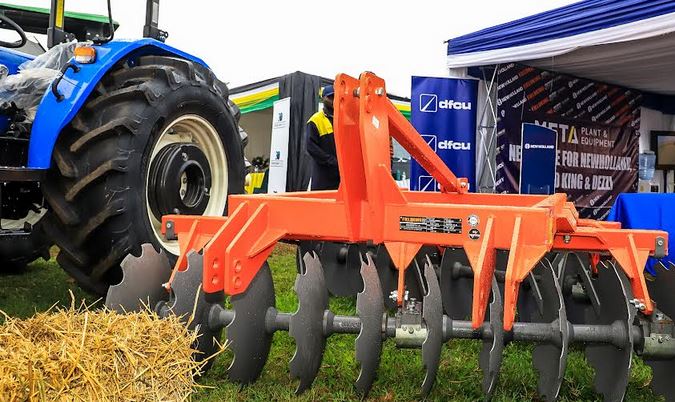
Through its Vehicle and Asset Financing (VAF) facility, dfcu enables farmers to acquire tractors, harvesters, irrigation equipment and transport trucks critical to scaling productivity and improving efficiency across the agricultural value chain.
Agriculture employs close to 70 percent of Uganda’s workforce and contributes significantly to export earnings, yet many smallholders continue to face limited access to formal credit. dfcu says its structured financing models are designed to account for seasonality, production risks and long cash conversion cycles common in farming.
At the Expo, the bank’s pavilion operated as an advisory and financing hub, offering on-site consultations, pre-qualification guidance and support on cooperative financing, value addition and export readiness.
By combining capital deployment with technical advisory and long-term partnerships, dfcu continues to position itself as a key player in transforming Uganda’s agriculture into a competitive and commercially viable sector aligned with national development goals.